Best Colony Sims for Steam Deck
The best colony sims for Steam Deck, ranked by controls, readability, performance, and how well they fit portable sessions.
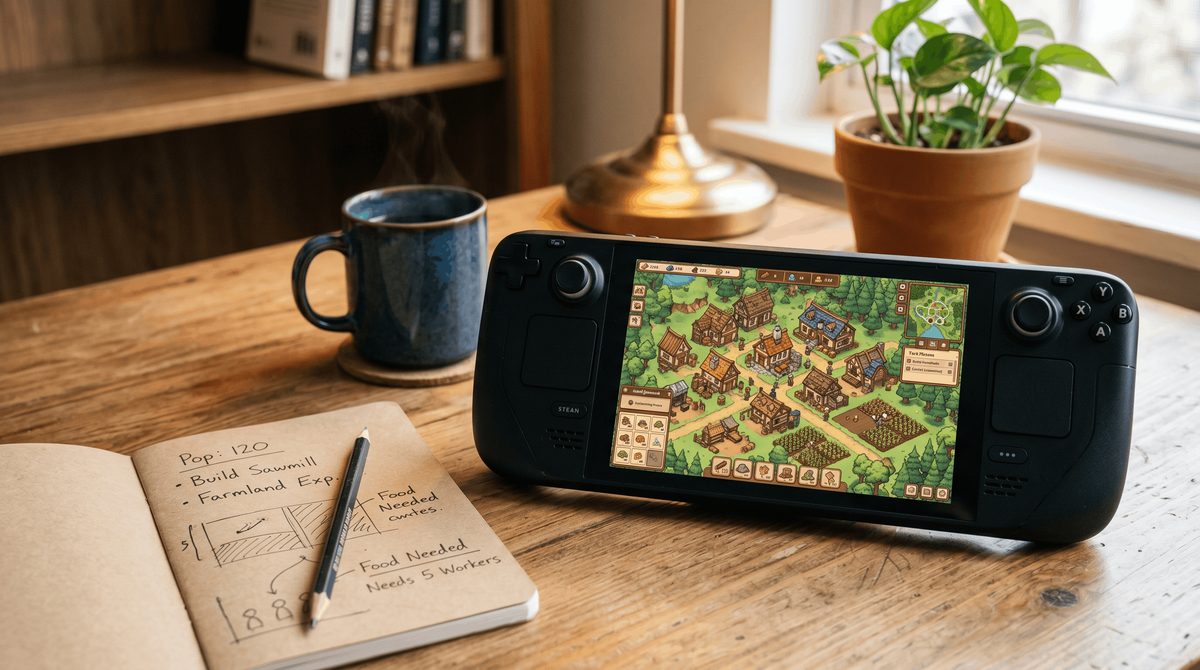
The best colony sims for Steam Deck are not always the deepest colony sims on PC.
That is the trap.
A great desktop colony sim can become a tiny-text punishment box on handheld. Nested menus, constant precision clicking, unreadable overlays, and late-game screen chaos can turn a brilliant management game into work.
This list focuses on colony sims that make sense on Steam Deck: readable enough UI, trackpad-friendly controls, pause-heavy pacing, manageable session length, and performance that does not fight the device. A few city-builder-adjacent games are included when they scratch the same colony management itch.
Quick take
Start here:
- Pick RimWorld if you want the strongest colony storytelling and can handle dense systems.
- Pick Against the Storm if you want short, structured runs instead of one endless settlement.
- Pick Oxygen Not Included if you want engineering problems, gases, heat, plumbing, and failure chains.
- Pick Clanfolk if you want slower family survival with less chaos.
- Pick Banished if you want lean, harsh town survival.
- Pick Settlement Survival if you want the Banished formula with more progression.
- Pick Surviving Mars if you want clean sci-fi colony planning.
- Pick Timberborn if you want water management, drought planning, and infrastructure puzzles.
- Pick Going Medieval if you want medieval colony stories with vertical building.
- Be careful with Dwarf Fortress. It belongs here for depth, not comfort.
The common mistake is choosing the most famous colony sim and assuming the Steam Deck will magically make it cozy. It will not. On handheld, friction matters.
What makes a colony sim good on Steam Deck?
For colony sims, Steam Deck quality is not just about whether the game launches.
The real questions are:
- Can you read the UI without leaning into the screen?
- Can you play with trackpads without fighting the cursor?
- Can you pause, inspect, queue orders, and resume cleanly?
- Does the game still make sense in 20 to 40 minute sessions?
- Does late-game scale make the screen too busy?
- Are the controls comfortable after the first hour, not just the first five minutes?
That is why this list does not simply rank the biggest or most complex games. It ranks the ones that fit the device.
The picks
RimWorld
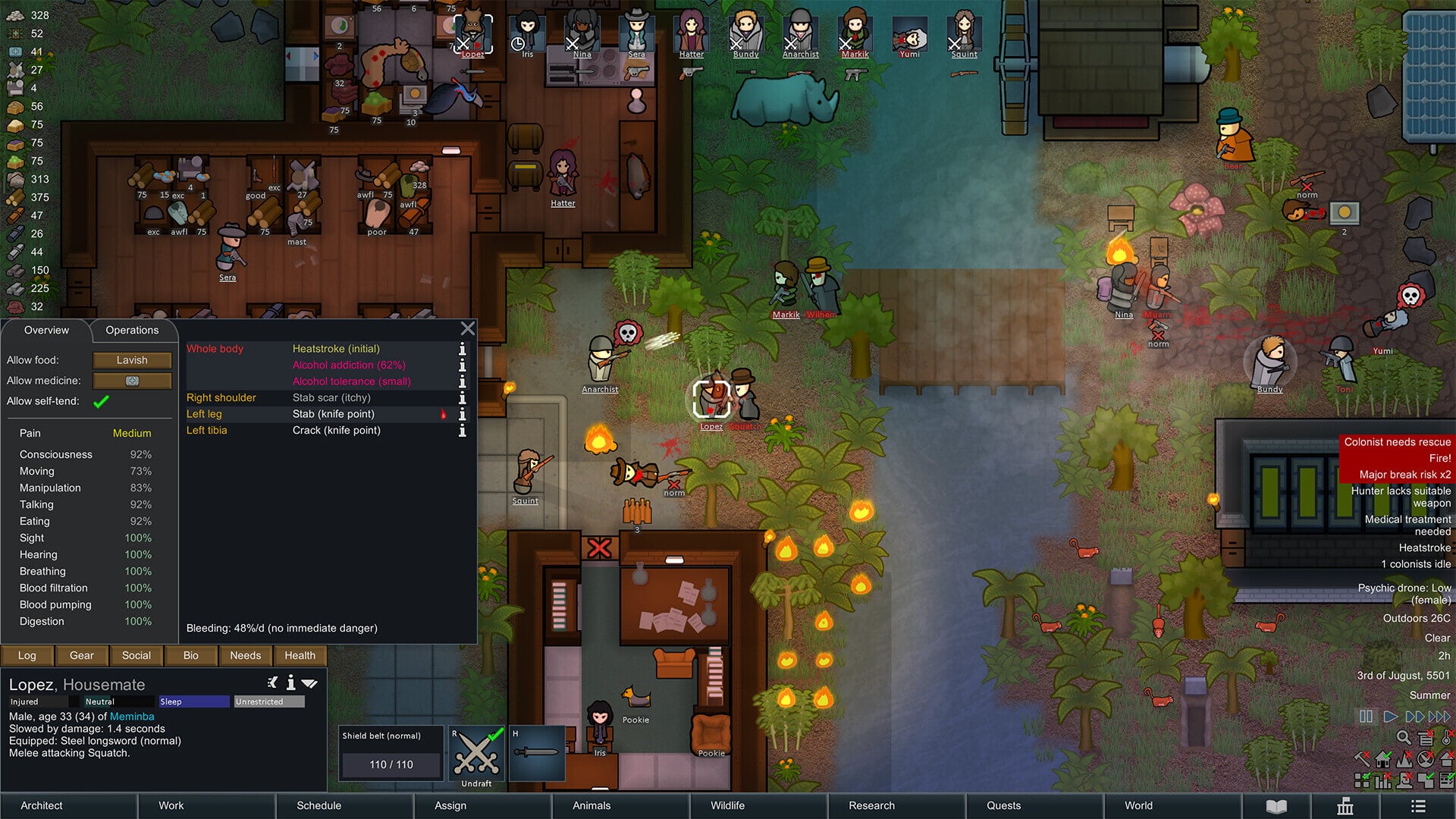
Best for: emergent colony stories
RimWorld is still the cleanest answer if you want a true colony sim on Steam Deck. It gives you everything the genre is known for: colonist needs, mood breaks, raids, injuries, bad weather, ugly medical outcomes, awkward labor shortages, and bases that slowly become personal.
It works well on handheld because the core loop is pause-friendly. You can stop time, issue orders, check needs, adjust priorities, and let the simulation run again. The 2D view also helps. You are not fighting a rotating 3D camera while trying to place beds or manage storage zones.
The warning is density.
RimWorld is playable on Steam Deck, but it is not effortless once your colony grows. Health tabs, bills, schedules, stockpile rules, combat alerts, animals, quests, prisoners, and ideology systems can all become small-screen work.
Pick it if you want the best overall colony sim experience. Skip it as your first choice if you want something relaxed and low-friction.
Against the Storm
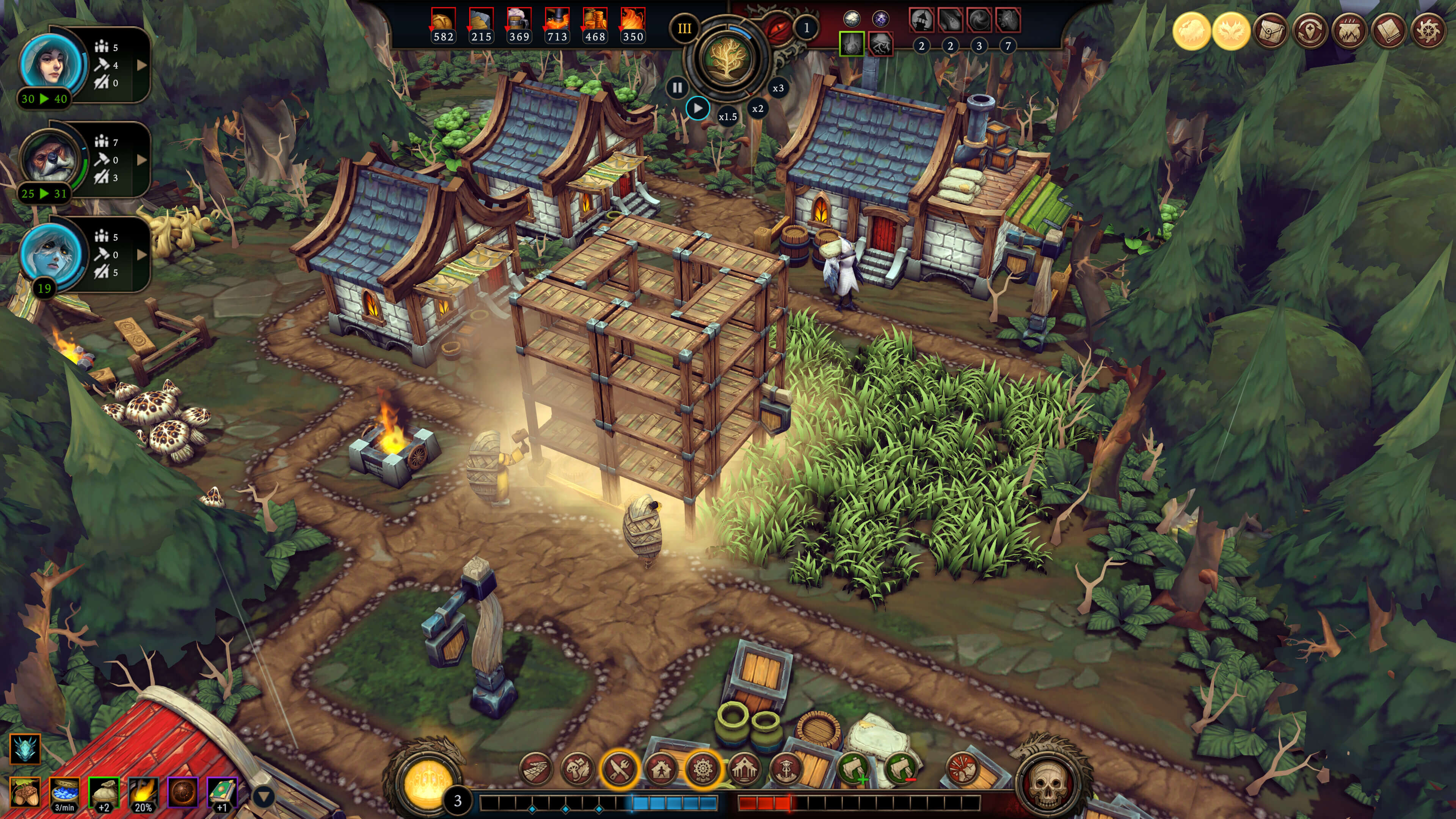
Best for: short portable sessions
Against the Storm is not a pure colony sim in the traditional sense, but it may be the best Steam Deck fit on this list.
Instead of managing one permanent colony forever, you build a series of settlements under roguelite pressure. Each run has a clear arc: gather resources, satisfy species needs, solve the current map, survive the storm, and move on.
That structure is excellent for handheld play. You do not need to remember the entire history of a 70-hour colony every time you pick up the Deck. You can play a focused session, make meaningful decisions, and stop without feeling like you abandoned a giant simulation mid-crisis.
The tradeoff is personality. Against the Storm is not about named colonists, weird family drama, or a base that becomes a historical disaster museum. It is about compact decisions, production chains, risk management, and replayable pressure.
Pick it if you want colony-style management that respects portable play.
Oxygen Not Included
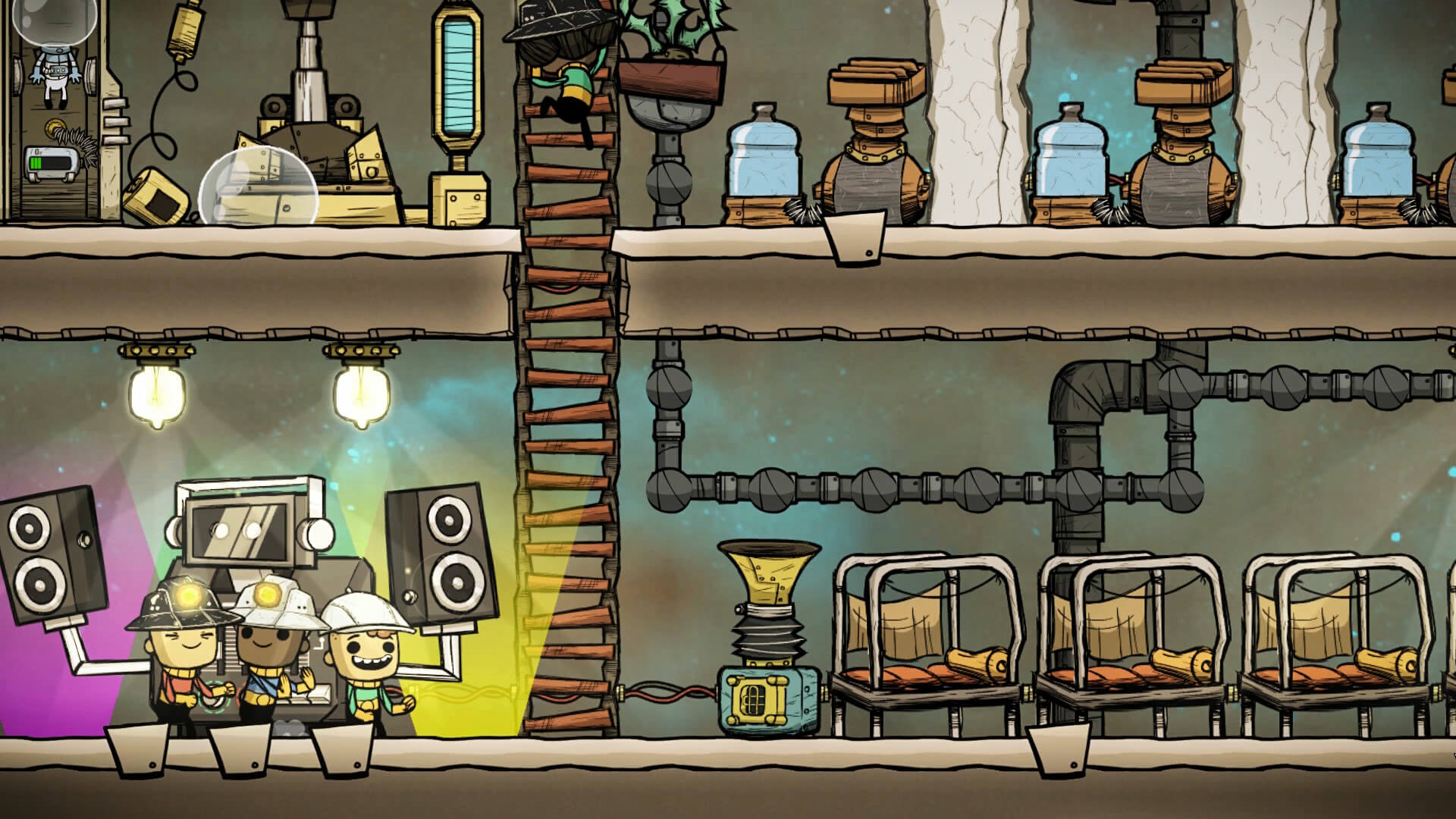
Best for: engineering problems
Oxygen Not Included turns colony survival into a chain reaction of technical problems.
Oxygen, water, heat, power, food, plumbing, gas pressure, germs, stress, and duplicant behavior all connect. Fix one thing badly and you create three new problems. That is the appeal.
The Steam Deck fit comes from the pause-heavy rhythm. You can stop time, inspect overlays, queue digging, reroute pipes, plan power lines, and let the simulation run again. It rewards thinking more than fast reactions, which helps on handheld.
The friction is obvious: information density.
Oxygen Not Included asks you to read overlays, warnings, numbers, materials, temperatures, gases, and tiny status icons constantly. If small UI elements annoy you, this game will not magically become comfortable because it is on a couch.
Pick it if you like systems. Avoid it if you want a clean, relaxed colony sim.
Clanfolk
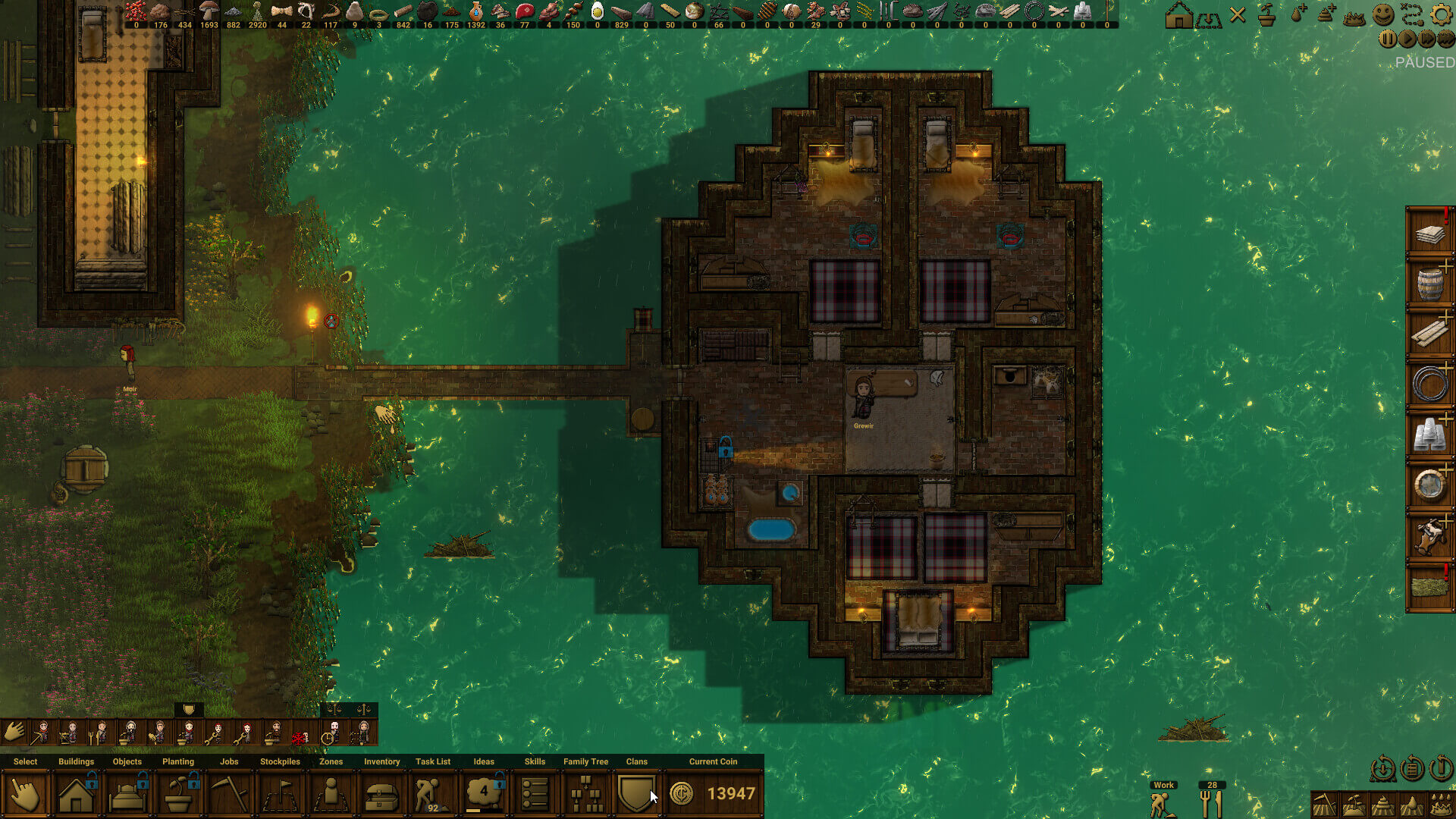
Best for: slower survival
Clanfolk is a strong pick for Steam Deck players who want colony survival without constant disaster noise.
It focuses on families, seasons, shelter, warmth, food, crafting, trade, and long-term homestead growth in the Scottish Highlands. The pressure is still there, but it is quieter and more grounded than something like RimWorld.
That makes it easier to dip into on Steam Deck. You are managing work priorities, stockpiles, food, clothing, shelter, and family continuity, but the game does not throw chaos at you every five minutes just to prove it has systems.
The limitation is intensity. Clanfolk will not satisfy players who want raids, brutal spirals, huge automation, or extreme simulation depth.
Pick it if you want preparation, seasons, and slow settlement growth.
Banished

Best for: stripped-down town survival
Banished is lean, cold, and still useful as a Steam Deck colony pick because it keeps the survival problem simple.
Food. Firewood. Tools. Housing. Labor. Health. Weather.
That simplicity helps on a small screen. You are not juggling a giant character drama interface or a massive tech tree. You are watching your population, assigning workers, planning expansion, and trying not to overbuild yourself into a food crash.
The catch is that Banished is quietly brutal. A bad labor split or weak food plan can take a while to reveal itself. By the time the problem becomes obvious, the recovery can be ugly.
Pick it if you want clean settlement survival with sharp consequences.
Settlement Survival
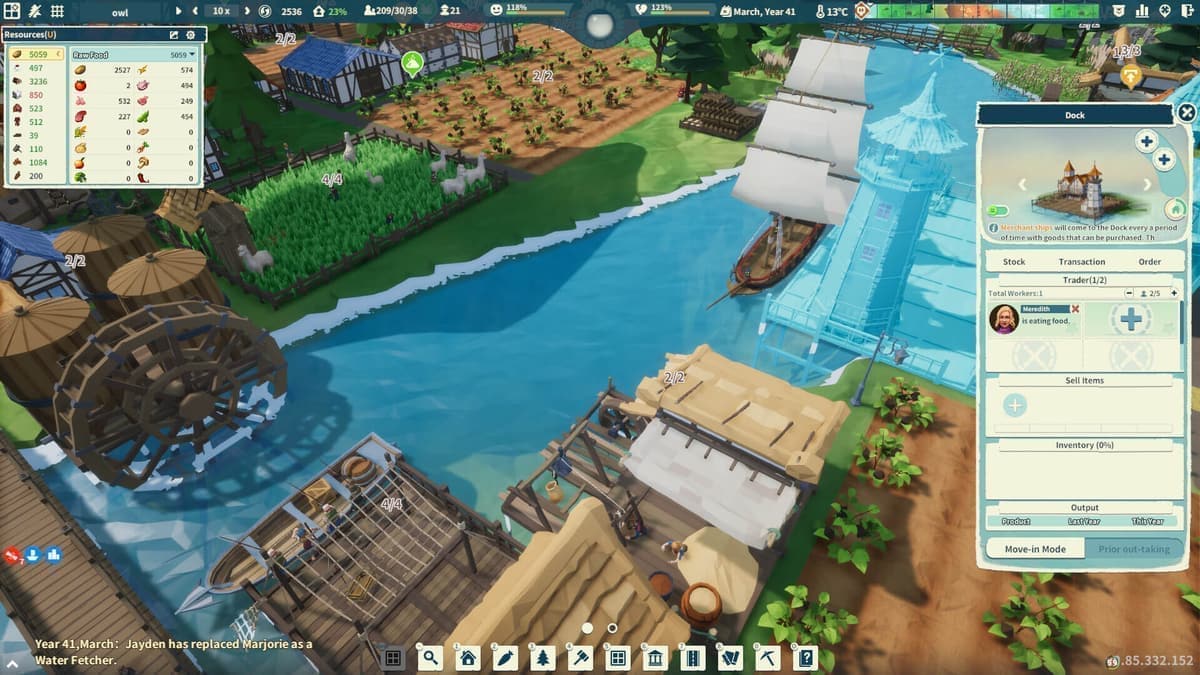
Best for: Banished-style growth with more progression
Settlement Survival is the better pick if you like the Banished formula but want more long-term production and development.
It leans into population management, infrastructure, production chains, resource planning, and seasonal pressure without becoming a full factory game. On Steam Deck, that makes it a solid middle option: deeper than Banished, less character-driven than RimWorld, and easier to parse than the most simulation-heavy colony sims.
The loop is readable: expand housing, secure food, organize work, improve production, unlock better systems, repeat.
The downside is that it can feel familiar if you have already played a lot of survival town sims. It is more about settlement throughput than unforgettable colonists.
Pick it for structure and progression, not emergent storytelling.
Surviving Mars

Best for: clean sci-fi colony planning
Surviving Mars works well on Steam Deck because its problems are easy to understand at a glance: domes, power, life support, drones, resources, research, and expansion timing.
It is more orderly than RimWorld and less technically punishing than Oxygen Not Included. You are not managing every emotional breakdown or every gas pocket. You are planning a Martian settlement and trying to keep the machine alive.
That makes it a good handheld fit. Dome placement, resource flow, and colony expansion give it enough pressure without turning every session into emergency triage.
The tradeoff is emotional distance. Surviving Mars is not as personal as pawn-driven colony sims, and it does not have the same endless story engine as RimWorld.
Pick it if you want readable sci-fi management with less chaos.
Timberborn
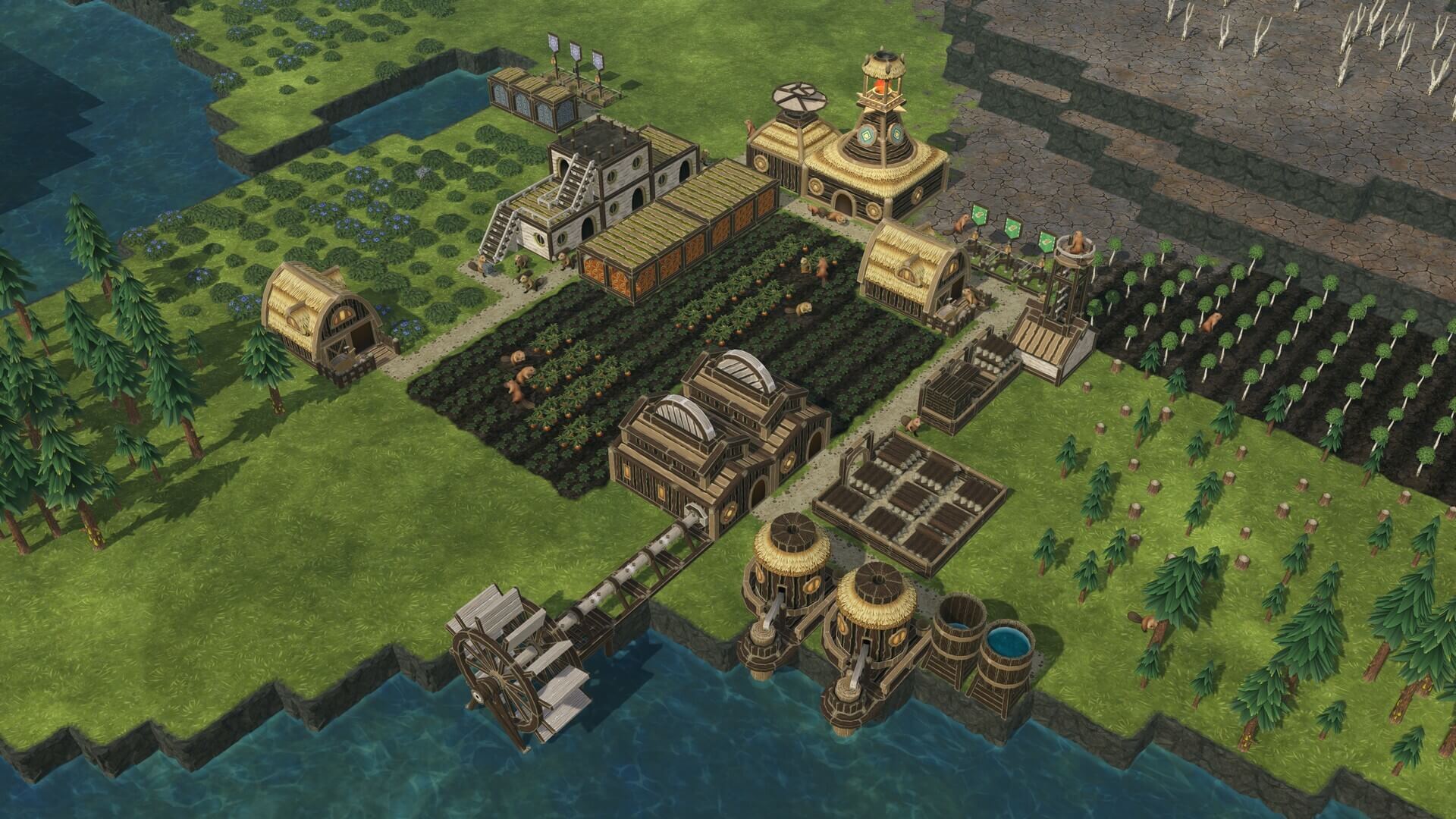
Best for: water management and infrastructure puzzles
Timberborn is more city builder than traditional colony sim, but it belongs here because the survival loop is colony-minded.
You manage drought cycles, water storage, food, housing, vertical construction, labor, and long-term settlement planning. The beaver theme looks cozy. The water management gives it teeth.
For Steam Deck, the central problem is clear: shape rivers, store water, survive droughts, expand without stranding your population, and keep the settlement alive.
The tricky part is spatial precision. Timberborn uses vertical construction, dams, levees, platforms, and layered districts. That can demand more camera work and placement accuracy than a flat 2D colony sim.
Pick it if you want infrastructure puzzles. Avoid it if you want the cleanest possible handheld UI.
Going Medieval
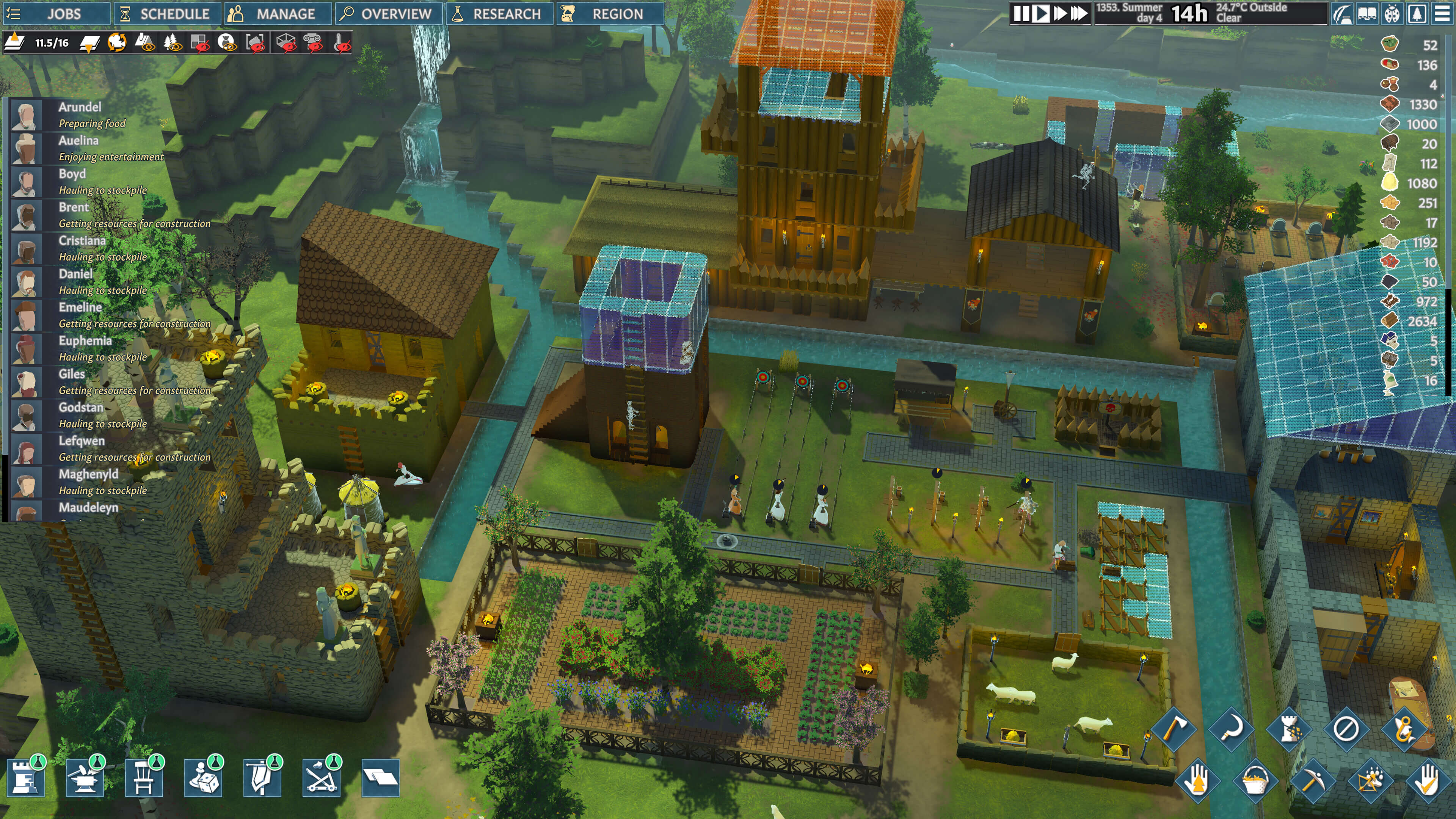
Best for: medieval colony defense and vertical building
Going Medieval is the pick for players who want RimWorld-style colony management but prefer a medieval 3D settlement.
Farming, construction, room planning, defense, social management, temperature, food storage, and raids all matter. The big difference is verticality. You can build upward, dig downward, shape castles, and create settlements that feel physically different from flatter colony sims.
That verticality is also the Steam Deck warning.
Checking interiors, managing levels, placing structures, and organizing defenses can feel more hands-on than a top-down 2D colony sim. The trackpads help, but this is not as effortless as RimWorld or Clanfolk.
Pick it if you specifically want castles, defenses, and layered medieval settlements.
Dwarf Fortress
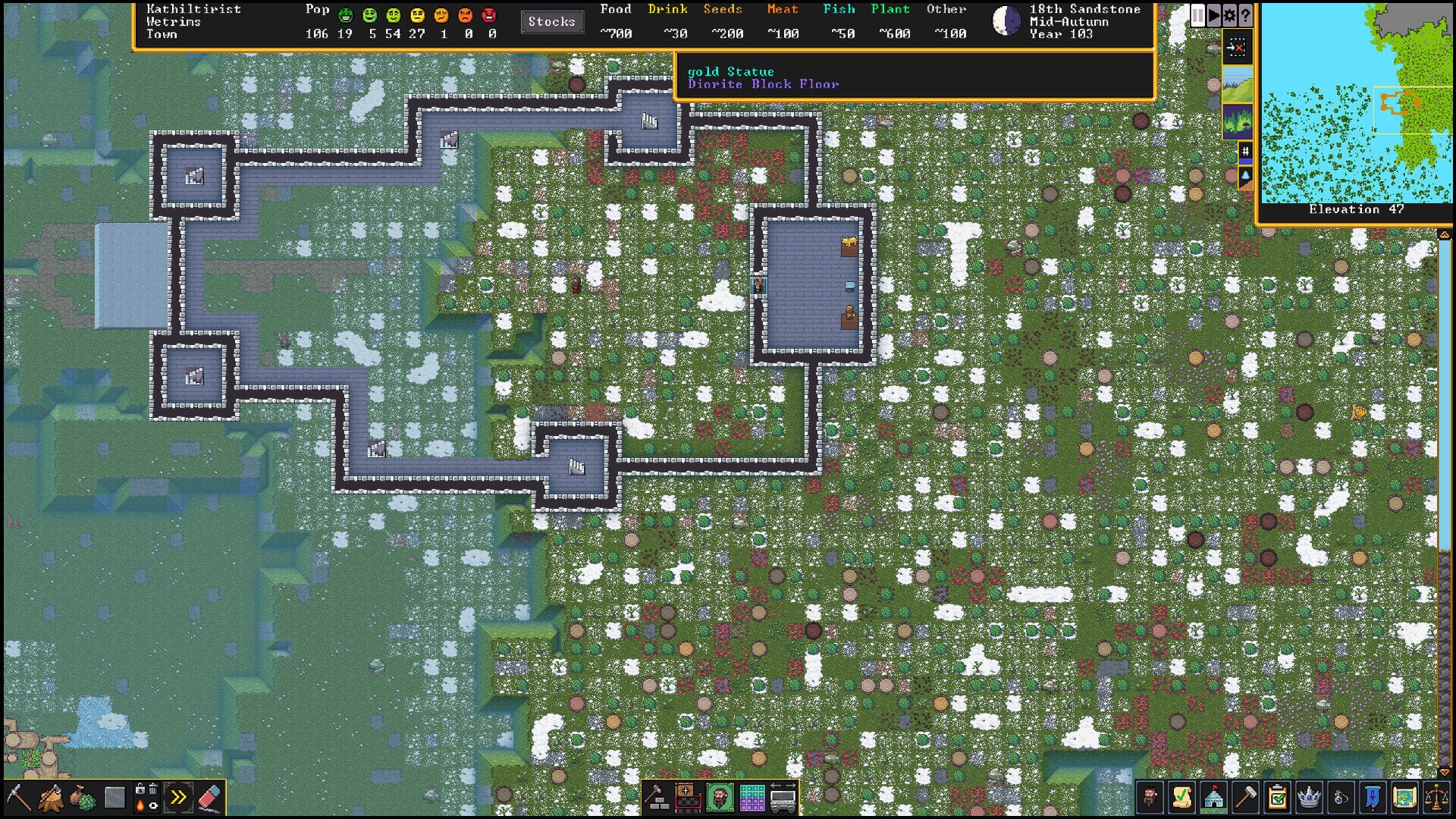
Best for: simulation depth, not comfort
Dwarf Fortress is the deep end.
It belongs in any serious colony sim conversation because its procedural worlds, fortress histories, simulation detail, and systemic chaos are unmatched. Very few games can produce stories this strange, specific, and disastrous.
On Steam Deck, though, the recommendation is narrow.
This is for patient players who value depth enough to tolerate friction. You need to pause often, read carefully, navigate menus, and treat the Steam Deck like a compact strategy machine rather than a relaxed handheld.
The main problem is information density. Text, menus, alerts, layers, jobs, materials, creatures, and simulation details can overwhelm the small screen.
Do not start here because it is famous. Start here because you know you want the deep end.
Which Steam Deck colony sim should you choose?
If you want the safest overall pick, choose RimWorld. It has the best mix of replayability, colony identity, pause-friendly play, and emergent survival.
If you play mostly in short sessions, choose Against the Storm. Its run-based settlement structure is better for handheld play than managing one endless colony forever.
If you want engineering over storytelling, choose Oxygen Not Included. It is demanding, but the problems are concrete and satisfying.
If you want a calmer survival rhythm, choose Clanfolk. It still has pressure, but it is more about preparation than chaos.
If you want frontier town survival, choose Banished or Settlement Survival. Banished is harsher and cleaner. Settlement Survival gives you more progression and production depth.
If you want city-builder-adjacent colony management, choose Surviving Mars or Timberborn. Both are less intimate than RimWorld, but their main problems are readable at the settlement level.
If you want medieval defense and vertical building, choose Going Medieval.
If you want maximum simulation depth and do not care about friction, choose Dwarf Fortress.
How to choose before you buy
Do not start with complexity. Start with friction.
Before buying a colony sim for Steam Deck, check:
- Text size: Can you read menus, warnings, and tooltips comfortably?
- Controls: Does the game work well with trackpad cursor control?
- Pacing: Can you pause and issue orders without fast reactions?
- Session length: Does the game make sense in 20 to 40 minute chunks?
- Late-game scale: Will the colony become too busy for the screen?
- Save flow: Can you suspend and resume cleanly?
- Mental load: Will you remember what you were doing after two days away?
Performance matters, but controls and readability usually decide whether a Steam Deck colony sim survives past the first weekend.
A game can run well and still feel wrong if every menu makes you squint.
Optional comfort pick for long sessions
Colony sims are slow-burn games. You can spend hours listening to alerts, ambience, rain, machinery, colony chatter, and warning sounds while barely noticing the time.
A comfortable headset is not required, but it does make long Steam Deck sessions feel less compromised when you are away from a desk.

HyperX Cloud III S Wireless
Comfortable wireless headset for long sessions—clear audio, detachable mic.
FAQ
What is the best colony sim on Steam Deck overall?
For most players, RimWorld is the best overall pick. It has deep colony systems, strong replayability, and a pause-friendly structure that works well on Steam Deck.
What is the best colony sim on Steam Deck for short sessions?
Against the Storm is the best fit for short sessions. Each settlement has a defined arc, which works better on handheld than managing one massive colony forever.
Are colony sims hard to control on Steam Deck?
Some are. The Steam Deck trackpads help a lot with mouse-driven colony sims, but dense menus and tiny text can still be a problem. Readability matters more than genre reputation.
Should I play Dwarf Fortress on Steam Deck?
Only if you are comfortable with friction. Dwarf Fortress is brilliant for simulation depth, but it is one of the least relaxed handheld recommendations on this list.
What is the easiest colony sim here to start with?
Clanfolk, Surviving Mars, and Against the Storm are friendlier starting points than Dwarf Fortress or Oxygen Not Included. They still have meaningful systems, but they are less punishing upfront.
Is Steam Deck Verified enough for colony sims?
Not always. Verification is useful, but colony sims live or die by comfort over long sessions. Text size, cursor control, overlays, pause flow, and late-game readability matter just as much.
Takeaway
The best colony sims for Steam Deck are the ones that respect the small screen.
RimWorld is the strongest all-around pick. Against the Storm is the best portable-session choice. Oxygen Not Included is the right call for players who want engineering problems instead of colony drama.
Do not force the hardest game just because it is famous. On Steam Deck, comfort is not a bonus. It is the whole damn point.