Why Colony Sims Keep Killing Your First Run (and Which Ones Won’t)
Why your first colony sim run collapses hours later, which games hide the danger best, and which colony sims are easier first picks.
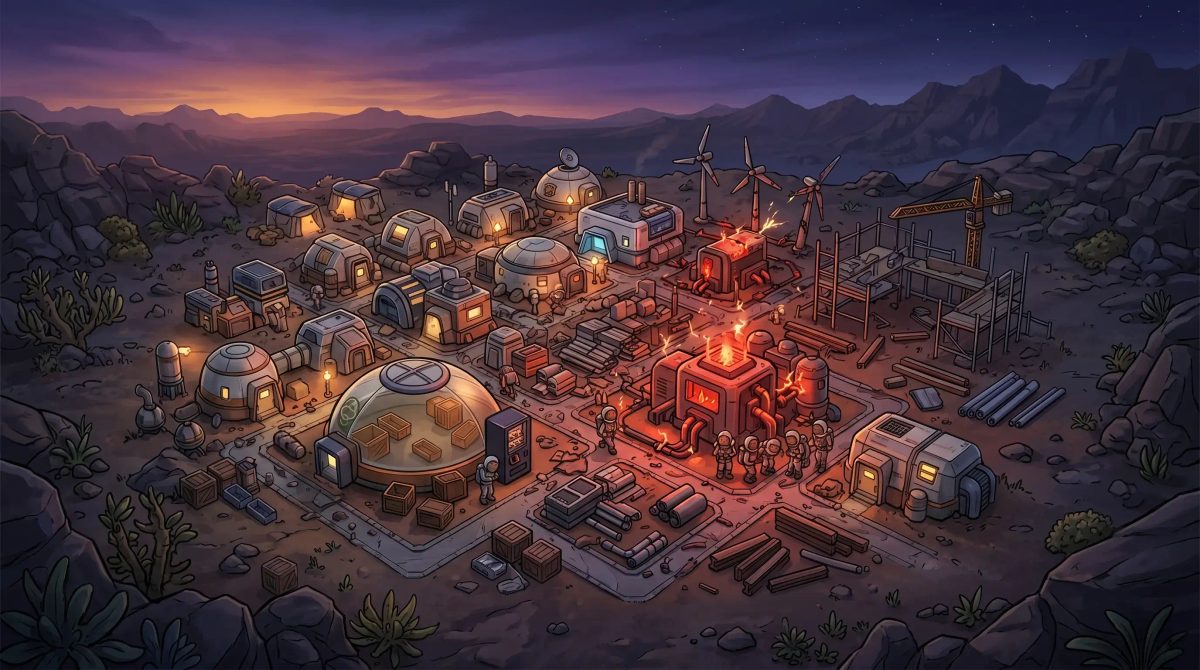
A colony sim first run usually does not die in one dramatic moment. It dies quietly.
Food looks fine until it is not. Workers look busy until nothing important gets done. Storage fills up. Hauling slows down. Moods crash. Winter arrives. Then the whole colony collapses, and the game acts like you should have seen it coming.
That is the colony sim death spiral: the mistake happens early, but the punishment arrives hours later.
This guide is for players who bounce off colony sims in the first few hours and want a better first pick. Not every colony sim is trying to be gentle. Some teach through failure. Some hide their resource curves. Some give you clear warning signs before everything falls apart.
The trick is not choosing the “easiest” colony sim. It is choosing one that makes its problems readable.
Quick picks
| If you want... | Start with... | Why |
|---|---|---|
| A forgiving first colony sim | Foundation | Softer pressure, relaxed growth, fewer brutal failure chains |
| Shorter runs with less save anxiety | Against the Storm | Settlements are run-based, so failure teaches without wasting a huge save |
| Clear sci-fi systems | Surviving Mars | Domes, oxygen, power, and resources are easier to separate mentally |
| Character drama and crisis stories | RimWorld | Amazing, but harsher if you dislike chaotic failure |
| Engineering problems | Oxygen Not Included | Deep systems, but hidden problems can mature into disaster |
| Maximum simulation depth | Dwarf Fortress | Legendary, but not the gentlest first step |
What the colony sim death spiral really is
The worst colony sim failure is not the raid, the cold snap, or the obvious food shortage.
It is the quiet math problem you lost an hour ago.
A common first-run collapse looks like this:
- You build more housing.
- More people arrive.
- More people need more food, beds, heat, tools, clothes, storage, and jobs.
- More jobs pull workers away from food production, hauling, or maintenance.
- Items stop reaching the right places.
- Shortages create mood, health, or productivity problems.
- Lower productivity makes every shortage worse.
- The colony collapses, even though it looked fine earlier.
That is why colony sims can feel unfair at first. The visible disaster is often not the real mistake. The real mistake was expanding too early, assigning too many jobs, ignoring logistics, or assuming “more buildings” meant “more progress.”
Good colony sims make that chain readable. They show which pressure is growing, give you time to react, and let a bad decision become a lesson.
Harsh colony sims can still be excellent. They just expect you to enjoy the postmortem.
The genre punishes the wrong beginner instinct
Most beginners try to make their colony safer by building more.
More houses. More farms. More workshops. More storage. More production chains. More everything.
In many colony sims, that is exactly how you die.
Extra buildings are not free. Even when they do not cost much, they create hidden debt:
- Someone has to build them.
- Someone has to haul materials.
- Someone has to work there.
- Someone has to supply them.
- Someone has to maintain the chain around them.
- Someone is now not doing food, hauling, or survival work.
A new player sees growth. The simulation sees pressure.
This is why colony sim beginner advice often sounds boring: stabilize food, keep spare labor, avoid overbuilding, watch bottlenecks, and stockpile before expansion.
That advice is not conservative because experts hate fun. It is conservative because most first-run deaths come from expanding faster than the colony can support.
Some colony sims teach failure better than others
Failure is not the problem.
Opaque failure is the problem.
If a game lets you see why the colony is failing, you can learn. If the game hides the dependency chain until everything collapses, the first run can feel like a waste.
That is why the best beginner colony sim is not always the simplest one. A game with more systems can still be easier to learn if those systems are clearly separated.
Against the Storm
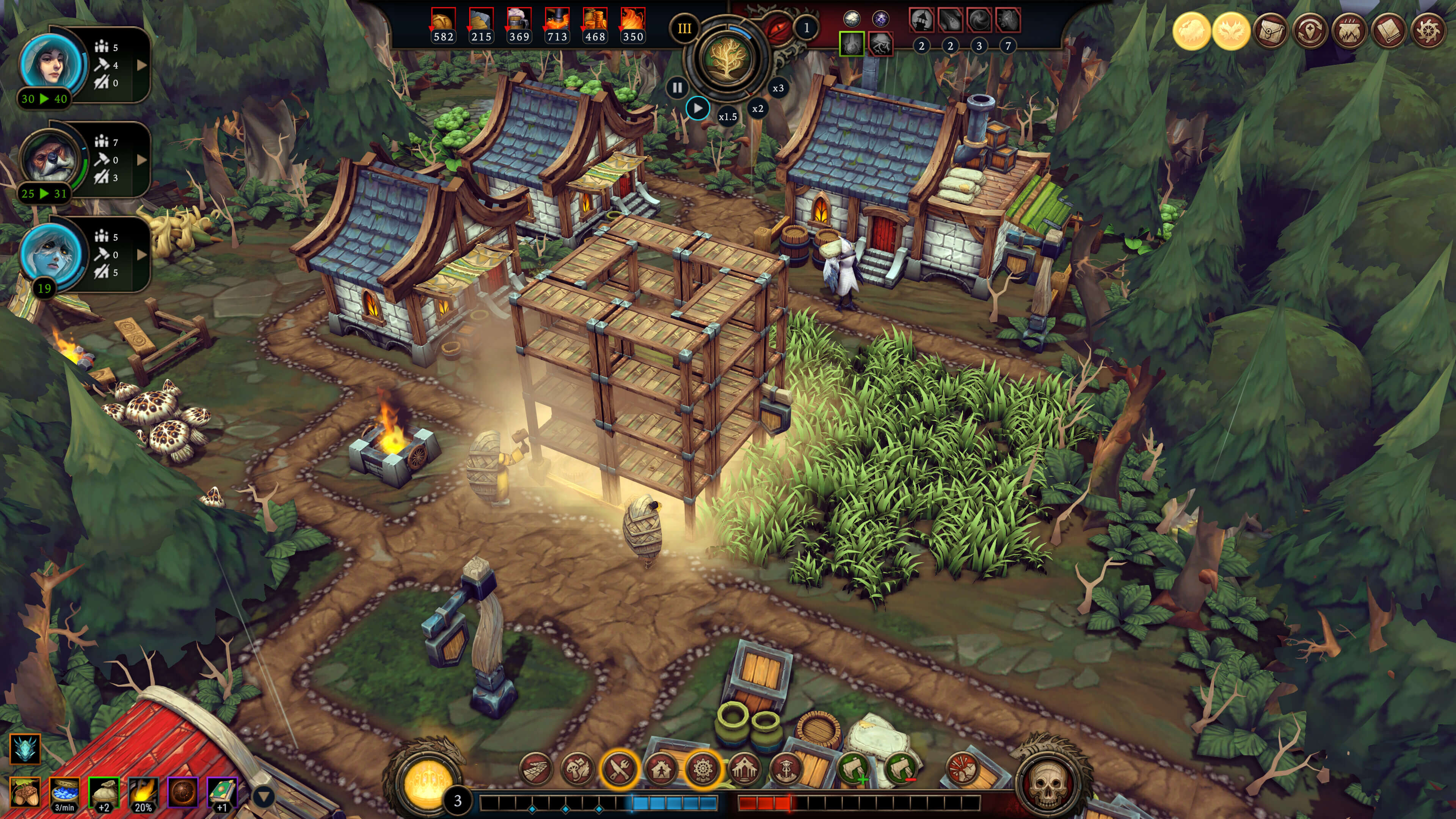
Against the Storm is one of the best first picks for players who want colony sim pressure without losing a giant long-term save.
Its biggest beginner advantage is structure. Instead of asking you to keep one fragile colony alive forever, it gives you shorter settlements with roguelite progression. You still make bad calls. You still misread production needs. You still run out of something important. But the failure cost is lower.
That matters a lot.
In a traditional colony sim, a five-hour collapse can feel exhausting. In Against the Storm, a failed settlement is part of the loop. The game is built around learning across runs, not preserving one perfect colony forever.
It is not the best pick if you want deep emotional attachment to a single settlement. The run-based structure means your colony is more of a mission than a permanent home.
But if your main problem with colony sims is “I hate realizing I ruined the save three hours ago,” Against the Storm solves that better than most.
Foundation

Foundation is the gentlest pick here.
It is a medieval city-building colony sim with organic roads, softer pressure, and a much more relaxed rhythm than the survival-heavy classics. You still manage growth, jobs, resources, and economy layers, but the game is less interested in murdering your first settlement because you misunderstood one hidden curve.
That makes it a strong first colony sim for players who want to learn the genre without constant panic.
Foundation works because it lets you experiment. You can care about layout, village growth, production, and beauty without feeling like every mistake is about to become a death sentence.
The tradeoff is pressure. If you want raids, starvation, brutal weather, and cascading disaster, Foundation may feel too soft.
But that softness is exactly why it belongs here. If you bounced off harsher colony sims, Foundation is a better doorway into the genre.
Surviving Mars
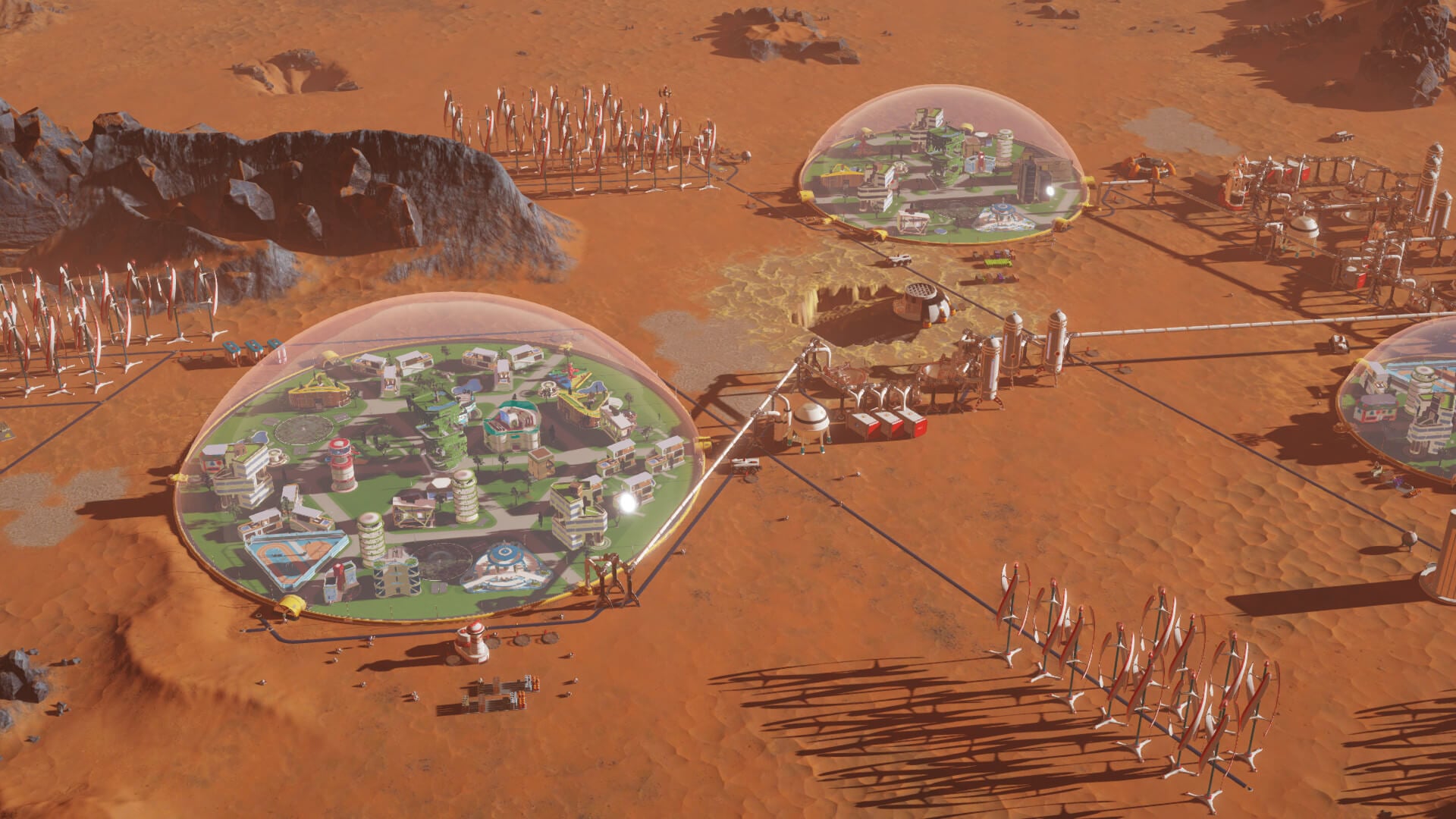
Surviving Mars is a good middle-ground pick because its problems are easier to separate.
You are managing a colony on Mars, so survival still matters. Power, oxygen, water, domes, colonists, resources, and exploration all create pressure. But the game often gives you clearer boxes to think in.
If something goes wrong, you can usually ask:
- Is this a power problem?
- Is this an oxygen problem?
- Is this a water problem?
- Is this a housing problem?
- Is this a workforce problem?
- Is this a logistics problem?
That structure helps beginners. The colony can still fail, but it usually fails in a way you can understand.
The limitation is that the dome system can feel restrictive if you want total freeform settlement building from the start. Surviving Mars is not the most organic colony sim. It is cleaner, more compartmentalized, and easier to reason about.
For many first-time players, that is a good thing.
RimWorld
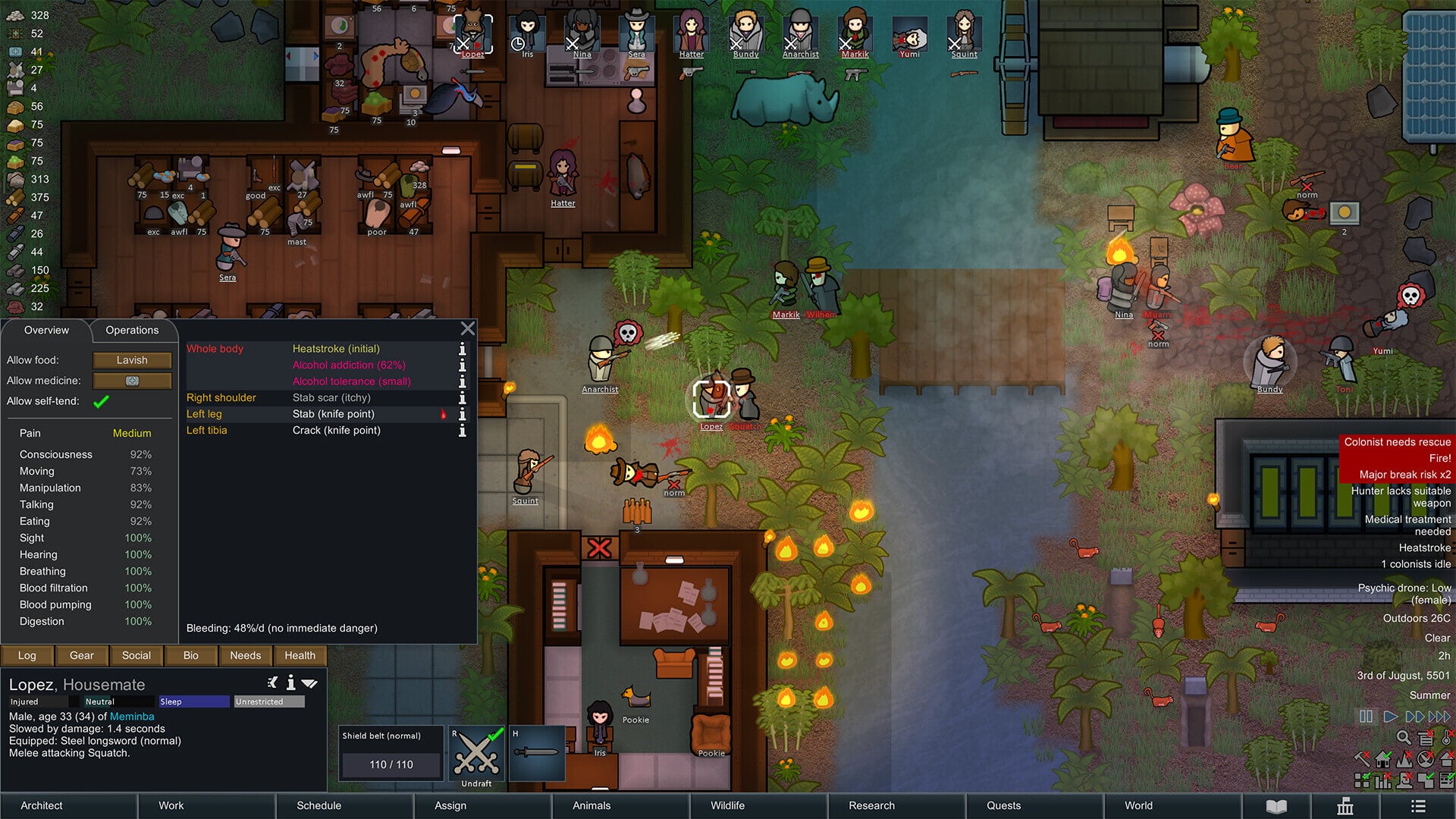
RimWorld is brilliant, but it is not always the best first colony sim.
It is a survival storytelling machine. Colonists have moods, injuries, relationships, skills, needs, breakdowns, and terrible timing. Raids happen. Fires happen. Food runs out. Someone goes insane. Someone loses a leg. Someone important refuses to work because their room is ugly.
That chaos is the appeal.
RimWorld is not only asking whether you can manage resources. It is asking whether you can survive drama. A failed colony is often part of the story, not just a fail state.
That makes it amazing for players who enjoy crisis, improvisation, and emergent stories. It can be rough for players who want the game to calmly teach them the basics before testing them.
Pick RimWorld if you want stories from disaster.
Avoid it as your first colony sim if you already know you hate losing control.
Oxygen Not Included
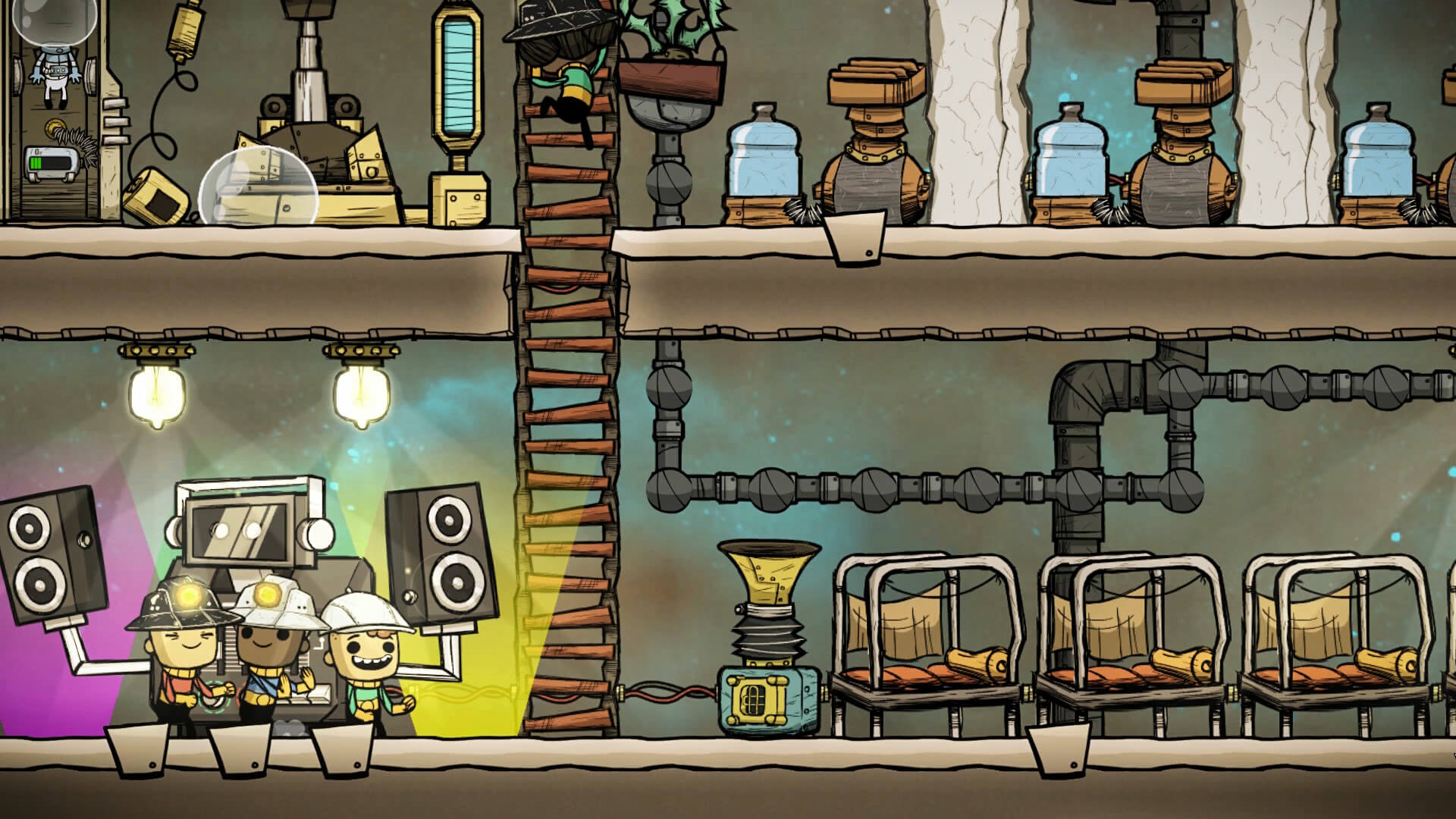
Oxygen Not Included is one of the clearest examples of a colony sim that can look stable while secretly becoming doomed.
The reason is simple: its systems physically interact.
Gas moves. Heat spreads. Liquids flow. Power grids overload. Plumbing backs up. Stress builds. Space gets cramped. A solution that works for the first hour can become the thing that kills you later.
That is what makes it great, and also what makes it dangerous for beginners.
Oxygen Not Included is not just about managing people. It is about engineering a living machine. If you enjoy solving systems, testing designs, and watching your mistakes teach you painful lessons, it is fantastic.
If you want a forgiving first run, it is probably not the safest start.
The game teaches a lot, but it often teaches by letting your design reveal its flaws later.
Dwarf Fortress
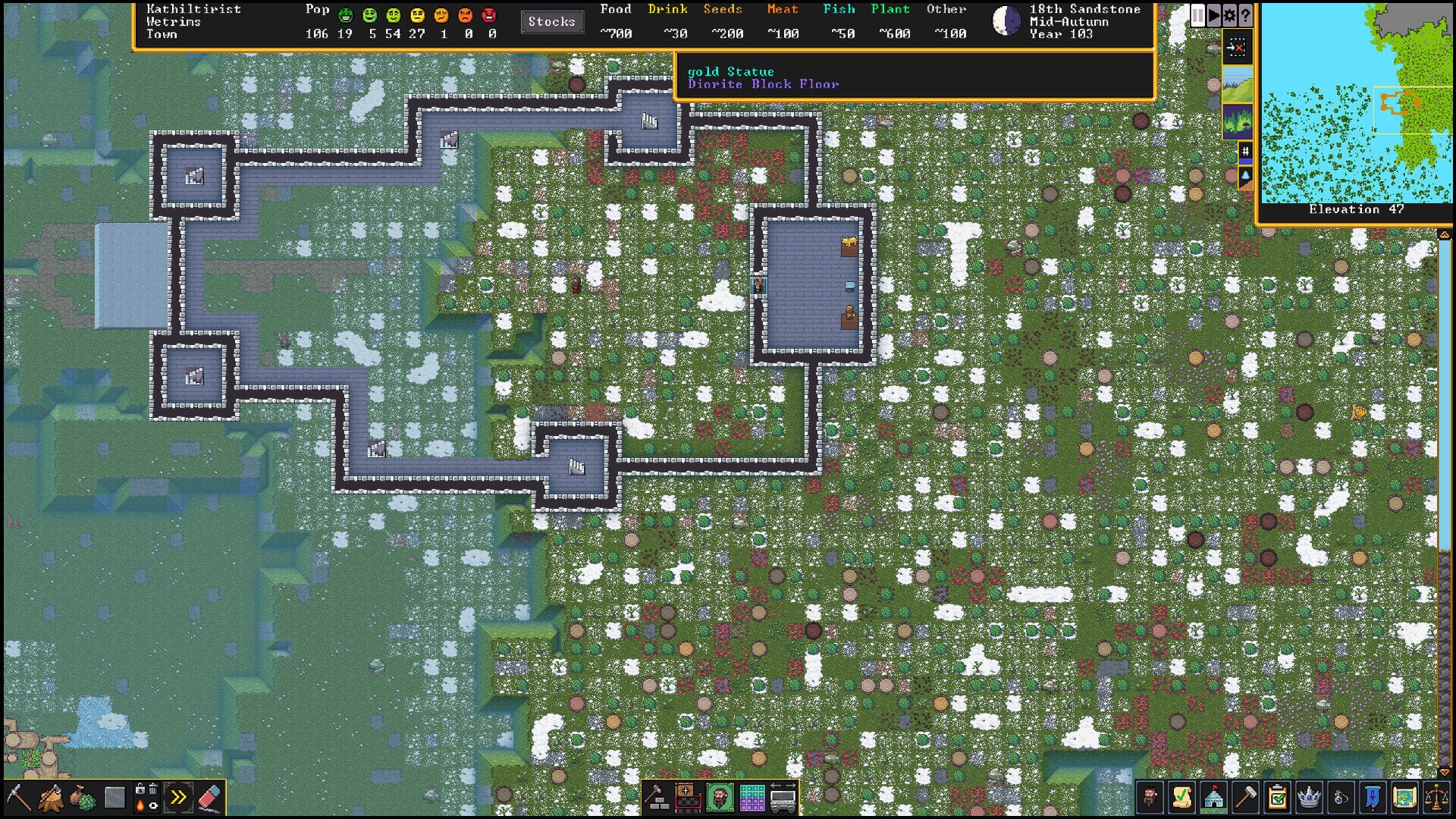
Dwarf Fortress is not mainly trying to be beginner-friendly.
It is trying to simulate a world.
That world can include fortress stories, geology, moods, combat, strange accidents, social weirdness, forgotten beasts, bad planning, and glorious collapse. The depth is the reason people love it.
It is also the reason it can be a rough first colony sim.
Dwarf Fortress asks for patience. It rewards curiosity more than comfort. If you want maximum simulation and you are okay with friction, it can become unforgettable. If your problem with colony sims is that they already feel unreadable, this is not the gentlest fix.
Choose Dwarf Fortress when you want depth and chaos more than smooth onboarding.
Do not choose it just because it is famous.
The best first colony sim is not always the easiest one
Easy difficulty helps, but readability matters more.
A forgiving colony sim gives you time.
A readable colony sim tells you what is going wrong.
A good first colony sim does both.
That is why a medium-pressure game can be better for beginners than a simple-looking one. If the game separates problems clearly, you can learn. If it hides dependency chains, even a “simple” colony can collapse in a way that feels arbitrary.
For players who want pressure without losing a massive save, Against the Storm is the safest recommendation.
For players who want a relaxed sandbox, Foundation is the gentlest pick.
For players who want clear survival systems, Surviving Mars is a strong middle ground.
For players who want the full crisis-story version of the genre, RimWorld is excellent, but it should be picked knowingly.
The wrong move is choosing the harshest colony sim first because it is famous, then deciding the whole genre is hostile.
How to pick a colony sim that will not waste your first run
Use this filter before buying or starting over:
- If you hate losing long saves, choose Against the Storm.
- If you want a relaxed first colony, choose Foundation.
- If you want clear sci-fi systems, choose Surviving Mars.
- If you want stories from disaster, choose RimWorld.
- If you want engineering failure chains, choose Oxygen Not Included.
- If you want maximum simulation and can tolerate friction, choose Dwarf Fortress.
The practical rule is simple: do not start with the game that has the most depth. Start with the game that makes its problems visible.
Once you understand labor pressure, food curves, storage, morale, and expansion timing, harsher colony sims become much easier to enjoy. You are no longer reacting to collapse. You are reading the warning signs before the spiral starts.
Beginner habits that prevent the death spiral
The safest beginner habit is slower expansion.
That sounds boring, but it works.
Before growing the colony, ask:
- Is food stable?
- Do I have spare labor?
- Are items actually being hauled?
- Is storage close enough to production?
- Are workers wasting time walking too far?
- Do I have a buffer before winter, raids, storms, or disaster?
- Am I adding a useful building, or just adding more work?
Most first-run colonies do not die because the player did nothing. They die because the player did too many things at once.
A smaller stable colony is stronger than a bigger colony held together by hope.
A small gear note for long colony sessions
Colony sims turn into long sessions fast. You start by fixing one food problem, and suddenly it is two hours later. A comfortable mouse with extra buttons helps here because colony sims lean on menus, camera movement, and repeated selection more than most genres.
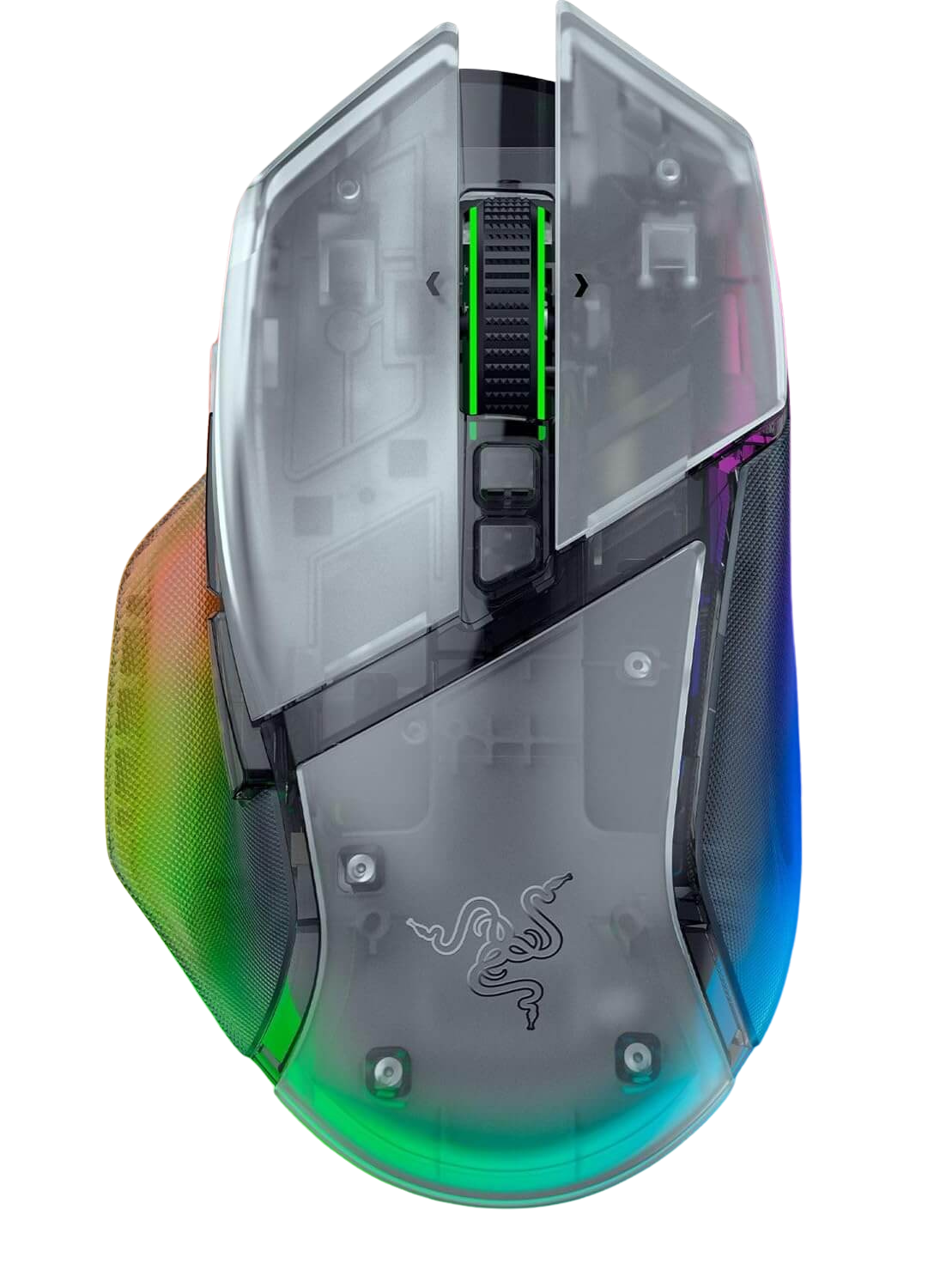
Razer Basilisk V3 Pro
Comfortable shape, extra buttons, and smooth scroll for long colony sim sessions.
FAQ
Why do my colony sims always collapse after a few hours?
Usually because the real failure started earlier than the visible crisis. Food, labor, hauling, morale, heat, power, or storage can drift into deficit while the colony still looks stable. By the time colonists are starving or refusing to work, several systems may already be failing together.
Are colony sims too hard for beginners?
Some are. More often, the issue is poor fit. RimWorld, Oxygen Not Included, and Dwarf Fortress reward players who enjoy learning through failure. Foundation, Surviving Mars, and Against the Storm are easier first picks for players who want clearer feedback or lower save-ending risk.
What is the safest beginner habit in colony sims?
Expand slower than you want to. Stabilize food, keep spare labor, avoid building too many production chains at once, and watch whether resources are actually reaching the places they are needed. Most first-run deaths come from overextension, not from doing too little.
Which colony sim is most forgiving?
Foundation is the gentlest pick from this list. Against the Storm is also forgiving in a different way because its settlements are shorter and failure feeds into learning across runs. Surviving Mars sits in the middle, with clearer systems but real survival pressure.
Is RimWorld a good first colony sim?
It can be, but only if you enjoy chaos and failure stories. RimWorld is one of the best colony sims ever made, but it is not always the calmest introduction to the genre.
Is Oxygen Not Included beginner-friendly?
It is readable once you understand its logic, but it is not very forgiving. Oxygen Not Included is best for players who enjoy engineering problems, delayed consequences, and redesigning systems after they break.
Takeaway
The colony sim first-run death spiral is often a design readability problem, not a personal failure. Some games hide the danger until collapse is already happening. Others make pressure visible and give you room to recover.
Pick the game that matches how you want to learn.
Start with Foundation if you want a gentle first colony. Pick Against the Storm if you want shorter runs and less save anxiety. Try Surviving Mars if you want clear survival systems. Save RimWorld, Oxygen Not Included, and Dwarf Fortress for when you are ready to treat failure as part of the story.
The goal is not to avoid failure forever. It is to pick a game where failure teaches you something before it burns down the whole colony.