Factorio Early Game Guide: What to Do in Your First 10 Hours
A practical Factorio beginner guide: what to accomplish in your first 10 hours, the best first goals in order, the 7 mistakes that hurt the most, and when your starter base is good enough.
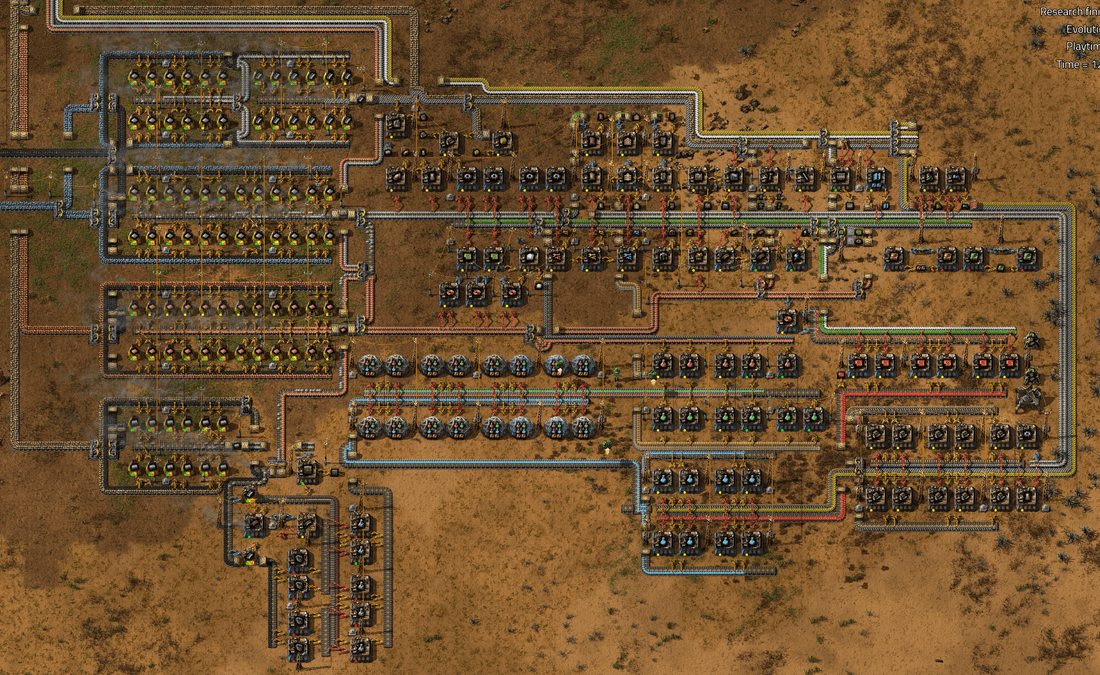
This guide is for you if you're new to Factorio (or to factory games in general) and want a clean first run. You're not here for megabase theory or perfect beacon layouts. You're here because the game feels overwhelming, your bases turn into spaghetti, and you want to know what to do in your first 10 hours without restarting every time it gets messy. Most new players restart too early; pushing through usually teaches you more. Factorio can look intimidating at first, but once belts, power, and science start working together, the rest of the game makes a lot more sense. For more on the genre, see automation games.
Before you start: If this is your first run, use the Default or Rich Resources preset. Rich Resources mainly reduces how fast you must expand for ore. If combat stresses you out, peaceful mode is great for learning automation: enemies don't start fights (pollution won't trigger raids). They only react if you or your buildings fire at them, and enemy expansion is disabled. Turning peaceful on mid-save won't instantly stop already-angry enemies.
Turn on Alt-mode: Press Alt to show what machines are making and make your factory readable. If you also enable “show inserter arrows when detailed info is on” in settings, inserter direction becomes much easier to understand.
I'll cover what those first hours should actually accomplish, the best goals in order, the beginner mistakes that hurt the most, whether you need a main bus, and when your starter base is good enough. No fluff — just the order of operations that keeps you moving.
What your first 10 hours should actually accomplish
Aim for a base that can run without you hand-feeding it. Think of these as your first-10-hours priorities, not a strict timer. By around that point, you'll ideally have:
- Stable raw inputs: Iron plates, copper plates, coal, and stone flowing reliably. You don't need huge throughput — you need consistency.
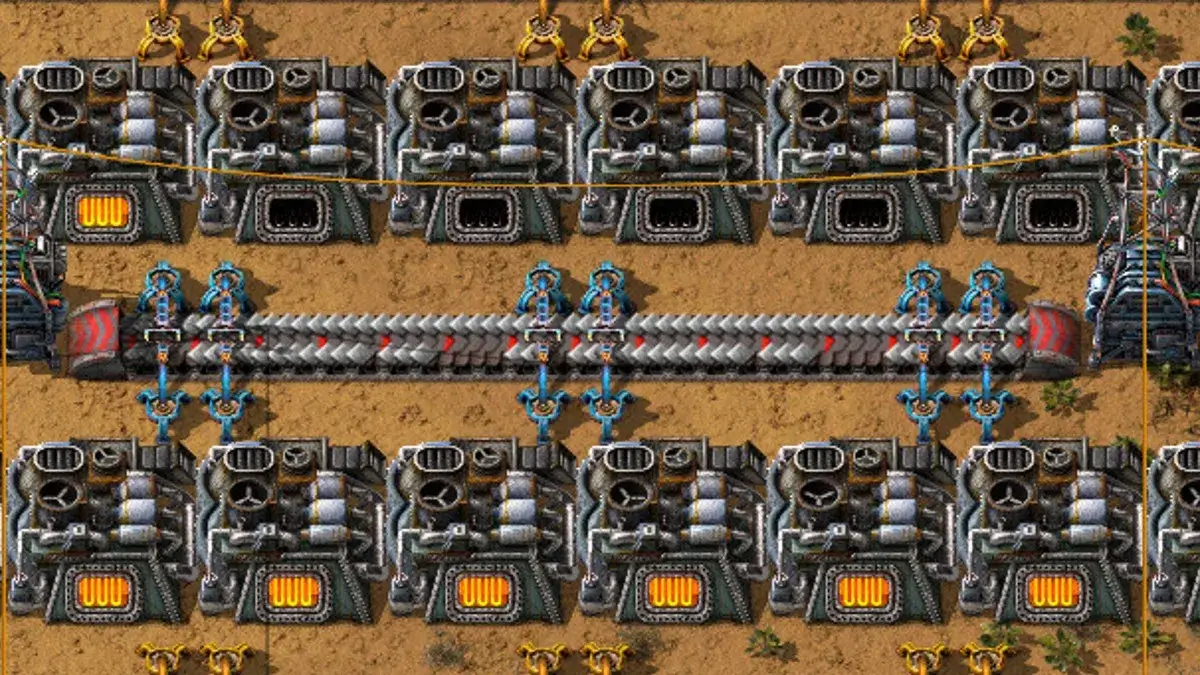
- Basic power: Steam engines fed by coal, with a buffer so a brief coal hiccup doesn't black you out.
- Red science automated: Science packs building and feeding into labs so research ticks without you crafting.
- Green science automated: Same idea — green packs produced and consumed automatically.
- Simple defenses (if enemies are on): Enough walls, turrets, and ammo to survive early attacks without constant babysitting. Raids usually start when your pollution cloud reaches nests. If you're getting attacked, check pollution on the map and either clear nests inside the cloud or slow expansion until you can defend.
- Early mall: A small area that automatically makes common building parts like belts, inserters, and assemblers.
You are not trying to build a perfect bus or nail every ratio yet. You're building a base that works and leaves room to expand.
Best first goals in order
Do these in roughly this order. Each one unblocks the next.
- Automate plates — Miners on iron and copper, furnaces turning ore into plates, belts moving them somewhere central. Hand-feeding furnaces is fine at first; then add inserters so plates flow without you. Early fuel tip: burner mining drills can refuel each other if placed facing each other on coal. Burner inserters run on coal and can fuel themselves from a belt.
- Automate power — Boilers, steam engines, and a coal line. One or two pump–boiler–engine columns are enough. Rule of thumb: 1 boiler can support 2 steam engines when running at full capacity. Make sure coal reaches the boilers automatically.
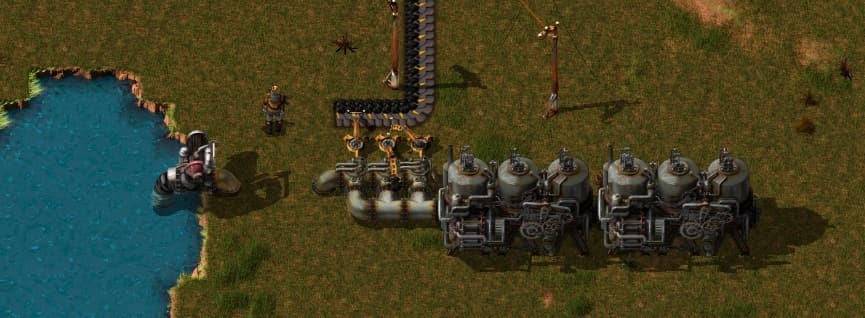
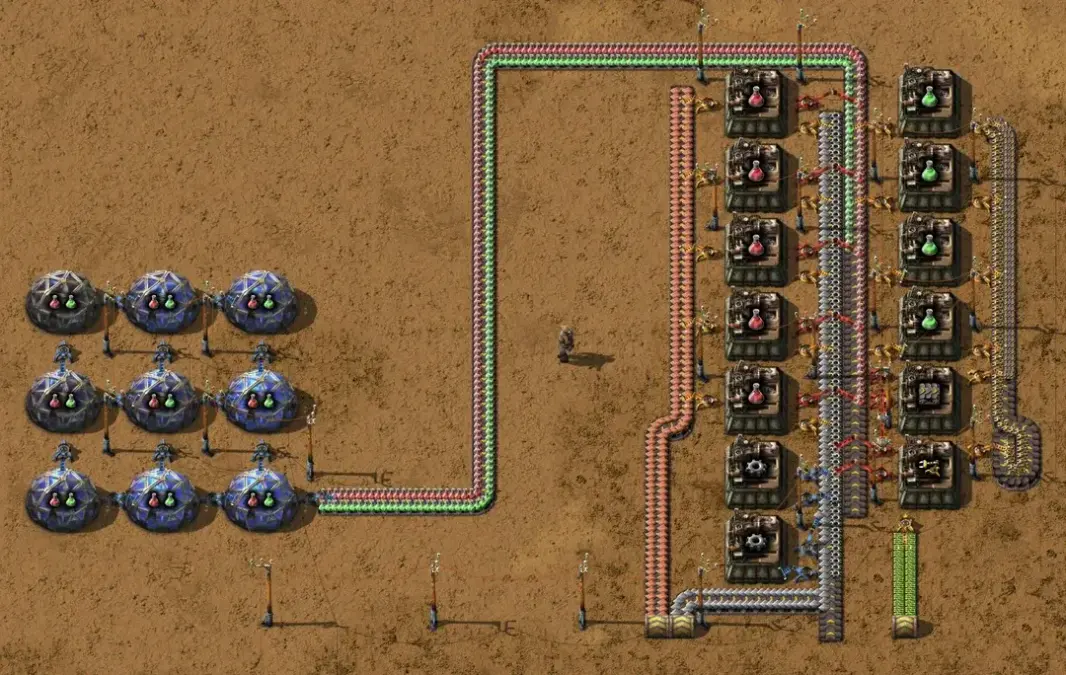
- Automate red science — Copper plates + iron plates + gears and copper wire into red science packs, then belts into labs. As soon as this runs, research can progress while you do other things. Research picks: Prioritize Automation first (unlocks assemblers and inserters), then Logistics (splitters, underground belts, fast inserter).
- Automate belts and inserters — A small area that builds yellow belts and basic inserters (and later undergrounds and splitters) so you're not hand-crafting them. This is your first “mall.”
- Automate green science — Inserters and transport belts (and the intermediates) feeding into green science, then into labs. Now both red and green research run on their own.
- Leave room to expand — Don't cram everything into one block. Leave space for more furnaces, more assemblers, and later more science. Tight bases are the ones you tear up at hour 20.
If you hit most of these, your start is in a good place. Everything else — oil, blue science, trains, and bigger-scale rebuilding — comes after.
The 7 beginner mistakes that hurt the most
These are the ones that waste time, cause restarts, or make the game feel harder than it is.
- Hand-crafting too much — The moment you need more than a handful of something, put an assembler on it. If you're crafting the same item again and again, it's probably time to automate it. Belts, inserters, gears, circuits: automate early. Hand-crafting is for one-offs and emergencies.
- Building too tightly — You will need more space. Leave gaps. Run belts with room to add another row of assemblers or furnaces. Dense builds look neat until you have to rip them apart.
- Not automating belts and inserters — You use them everywhere. One assembler each for belts and inserters, fed by plates and gears, saves hours of clicking.
- Ignoring power margins — When you're at 100% power use, the next laser or assembler can brown you out. In the electric network screen, Satisfaction should be full; if it isn't, you're underpowered. If Production is maxed, you have no buffer and the next build can cause brownouts. Build extra steam capacity before you need it.
- Overthinking perfect ratios too early — Early game, “close enough” is fine. Six assemblers on red science when the ratio says 5? It doesn't matter. Fix ratios when you care about throughput, not in the first 10 hours.
- Expanding into biter territory too soon — Push out when you have bullets, turrets, and walls. Going in with a pistol and no defenses gets you killed and wastes time. Clear and secure before you build there.
- Restarting because the base looks messy — Messy is normal. Ugly is fine. If the base works, keep going. You'll rebuild sections later. Restarting resets progress and teaches you less than pushing through.
Avoid these and the early game gets a lot less frustrating.
Should beginners use a main bus?
Yes — but only loosely.
The “main bus” is a set of parallel belts (often iron, copper, steel, green chips, etc.) that feed the whole factory. Tutorials and Reddit talk about it a lot, and new players often think they have to build a perfect one from the start.
You don't. In the early game, momentum matters more than a pretty bus. For your first run, think of it as “a few central belts of the stuff I use most.” Run 2–4 belts of iron and copper (or one of each to start), and branch off when you need plates somewhere. Add more belts as the factory grows. You can formalize it later or never; the point is to avoid spaghetti by having a clear direction of flow, not to copy a blueprint.
So: use the idea (central belts, branch off). Don't stress the exact layout or width. A loose bus is enough.
When your starter base is “good enough”
New players often think they're failing if the base is ugly or not optimized. You're not. Your first base is supposed to be ugly.
Your starter base is good enough when:
- Science is running (red and green automated).
- You're not constantly hand-crafting basics.
- Biters aren't overrunning you (or you're on peaceful).
- You have space to add more production without tearing everything down.
It does not need to be pretty. It does not need perfect ratios. It does not need a main bus with 16 lanes. It needs to work and to leave room for the next step (blue science, oil, trains, or just “make more of everything”). You can rebuild parts of it later. You can start a new base in the same save once you have bots and better tech. In the first 10 hours, “good enough” is the win condition.
FAQ
Is Factorio too hard for beginners?
No. It's deep, but the early game is learnable. The game can feel overwhelming at first; that's normal. Focus on one goal at a time (plates, then power, then red science), automate early, and don't restart when things look messy. The difficulty curve is steep only if you try to do everything at once or avoid automation.
Should I play the campaign first?
Factorio's tutorial/campaign content teaches the basics (movement, crafting, belts, combat). It's optional but useful if you've never touched the game. If you prefer to learn by doing, you can start in freeplay and use this guide as your structure. If you like a guided intro, an hour or two in the campaign won't hurt.
When should I rebuild my base?
When the current layout is blocking you — e.g. no room for blue science or oil, or traffic is impossible. Not because it's ugly. Rebuild in sections: replace one area at a time, or build a new block and move production there. Full teardowns are rarely necessary.
Do I need perfect ratios early on?
No. Approximate is fine for red and green science and for your first mall. Perfect ratios matter when you're scaling up or building a megabase. In the first 10 hours, “enough” beats “exact.”
Is main bus necessary?
No. It's one way to organize a factory. For beginners, a loose bus (a few central belts you branch from) helps avoid spaghetti. You can also build in blocks, use trains early, or mix styles. The main bus is a tool, not a requirement.
One comfort upgrade for early factory sessions
The first 10 hours of Factorio are keyboard-heavy: placing belts, assemblers, labs, and power while you chase red and green science. A wrist rest is a simple quality-of-life upgrade when you are repeating those build patterns for hours at a time.
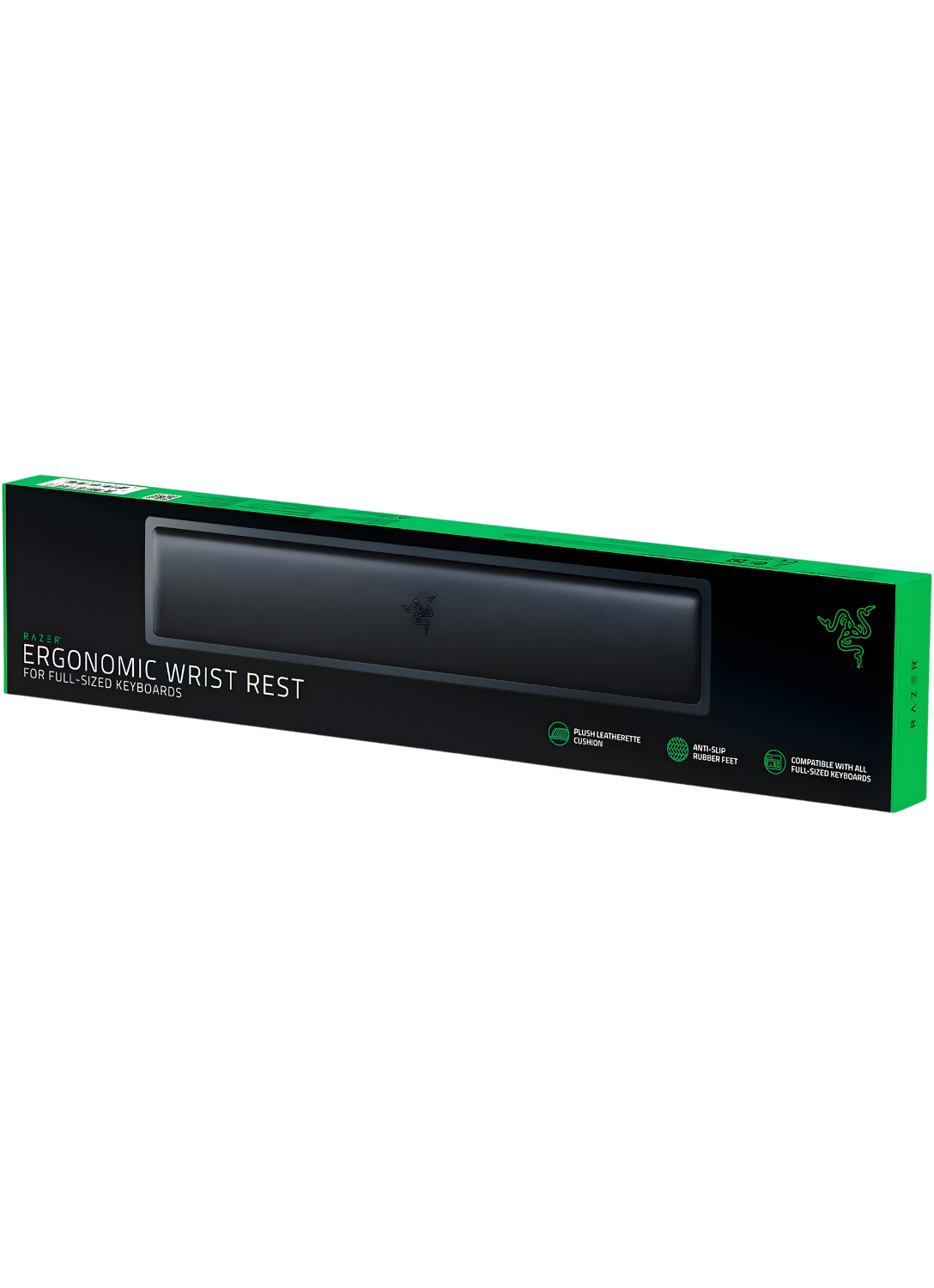
Razer Ergonomic Wrist Rest
An easy comfort upgrade for long keyboard-heavy factory sessions.
Your first 10 hours in Factorio are about getting to a base that runs: stable plates, power, red and green science, simple defenses (if you have enemies on), and a small mall. Hit those goals in order, avoid the seven mistakes, use a loose bus if it helps, and don't restart just because it's messy. When science is automated and biters are under control (or you're on peaceful), your starter base is good enough. Everything else is the next run or the next section of the same save. For more on how Factorio fits among similar games, see games like Factorio.
If this guide helped you get plates, power, and red and green science moving without another restart spiral, you can support Game Foundry through Buy Me a Coffee.
It helps fund more practical guides like this.
Chip in for more guides