7 Factorio Early-Game Mistakes Ranked by Cost
Factorio early game mistakes ranked by cleanup cost, from cramped layouts to weak power planning, with good-enough fixes that restore momentum.
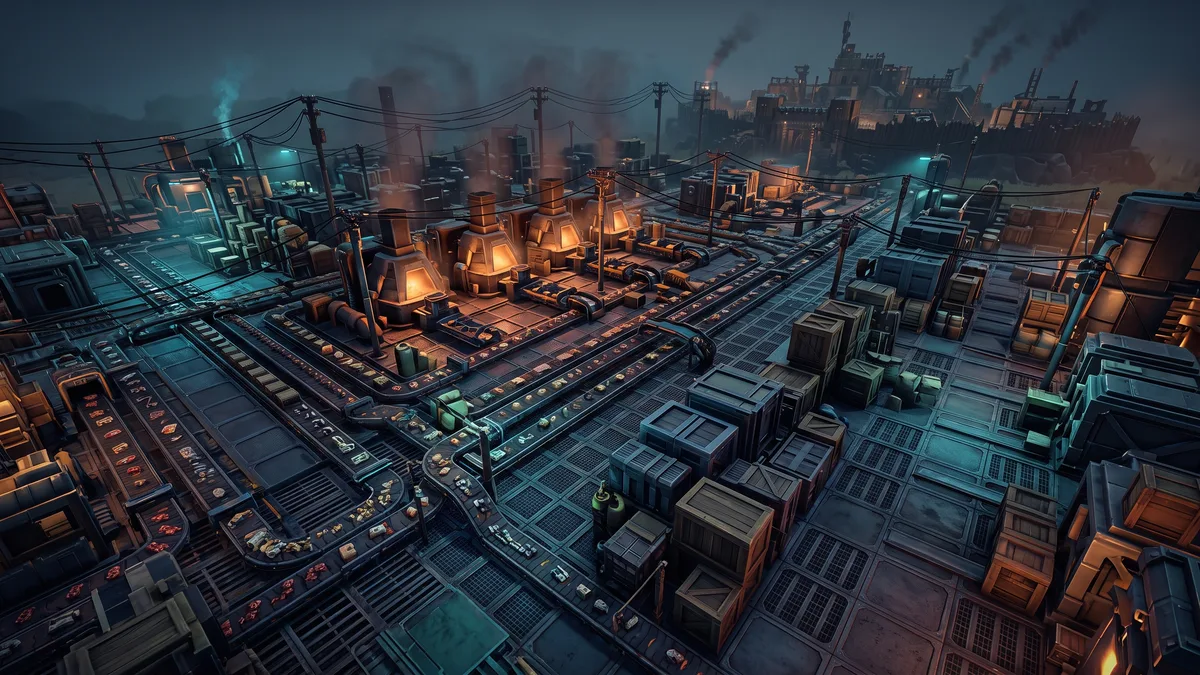
The worst Factorio beginner mistake is not spaghetti. It is building spaghetti with no room to untangle it.
Most Factorio early game mistakes look worse than they are. Crooked belts, uneven production, and temporary hand-feeding can all support progress. The expensive problems are the ones that prevent recovery: boxed-in production, unreadable material flow, and a power network that weakens whenever you add another machine.
This ranking is for new or returning players whose first automated base has begun shifting from pride to panic. It is not for experienced players seeking optimized ratios, megabase design, circuit-network instruction, or blueprint books. The goal is to rescue a working starter base, not turn it into a permanent monument.
How cleanup cost determines the ranking
Cleanup cost is not the number of messy belts on screen. It is the amount of disruption required to make the factory useful again.
Each mistake is ranked using four criteria:
- Cleanup time: How much construction, demolition, and rerouting does the repair require?
- Connected systems affected: Does the mistake hurt one assembler, or does it spread across mining, smelting, power, and production?
- Delayed visibility: Can the factory appear healthy while inventory buffers or temporary work conceal the problem?
- Next-milestone impact: Does the mistake merely look untidy, or does it stop the production needed to move forward?
Ugly construction is not automatically harmful construction. A visibly messy base can remain recoverable if belts have understandable destinations and production lines have somewhere to extend. A neat, compact build can be far worse if adding one assembler requires moving three belts, several inserters, and a power line.
Good enough means the factory can reveal a bottleneck, accept a repair, and resume production. It does not mean every machine runs continuously or every belt carries a perfectly balanced load.
The seven mistakes at a glance
| Rank | Mistake | Cleanup judgment |
|---|---|---|
| 7 | Optimizing ratios before demand is stable | Tolerate it: Build an approximate line and adjust when a real shortage appears. |
| 6 | Continuing manual work after automation is practical | Fix later, then automate: Temporary handcrafting is fine; recurring chores are not. |
| 5 | Using storage to hide weak throughput | Fix later, but expose it: Keep useful buffers while tracing whether supply can meet demand. |
| 4 | Treating the starter base as the final factory | Tolerate the base, abandon the premise: Let it supply the next phase instead of perfecting it. |
| 3 | Creating belts that cannot be read or extended | Fix the blocked route now: Repair one material flow rather than beautifying the whole base. |
| 2 | Adding production without watching power | Fix now: Stabilize electricity before connecting more load. |
| 1 | Packing production so tightly that repairs require demolition | Fix the affected block now: Create expansion space instead of restarting the save. |
7. Optimizing ratios before the factory has stable demand
Symptom: You delay construction because you want an exact assembler count, balanced belt, or perfectly matched smelting line before you know what the base actually consumes.
Ratio planning is useful once demand is sustained. Early precision can instead freeze progress around assumptions that change as new recipes and production lines begin drawing from the same materials. A line designed around one consumer may become insufficient when another branch starts using its output.
The deeper cost is attention. Time spent correcting harmless underproduction is time not spent discovering which product is genuinely blocking the next milestone.
Smallest useful repair: Build a short, comprehensible production line with room to add another machine. Feed it, let it run, and observe whether output accumulates or disappears immediately. That result is more useful than optimizing against demand that does not yet exist.
What can wait: Exact ratios, full belt saturation, symmetrical layouts, and rebuilding machines that are idle because their output is already backed up.
Judgment: tolerate it. An approximate line that produces the required item is good enough. Optimize only after a shortage becomes persistent enough to identify.
6. Continuing manual work after automation is practical
Symptom: You repeatedly handcraft the same belts, inserters, science ingredients, or intermediate products even though the relevant inputs could be delivered to an assembling machine.
Handcrafting is not inherently a mistake. It is useful for one-off buildings, emergency replacements, and filling a small gap while construction catches up. It becomes expensive when manual work conceals a production line that should exist.
The problem compounds quietly. If you keep crafting an intermediate yourself, the factory never displays its true demand for that item. You may conclude that plate production is adequate because part of the load is passing through your inventory rather than through belts and inserters.
Manual feeding causes a similar blind spot. A machine that works only when you remember to refill it is not stable automation. It can stop without creating an obvious upstream backup, leaving you to diagnose a missing product much later.
Smallest useful repair: Automate the item you keep returning to make. The line does not need to be fast or permanent. One machine with reliable input and an output chest can remove the recurring task and reveal actual material consumption.
What can wait: Rarely used buildings and products needed in small bursts. There is no prize for automating every available recipe immediately.
Judgment: fix later, then automate. Finish the urgent task, but treat repeated handcrafting as evidence that the factory needs one more basic production block.
5. Using storage to hide a throughput problem
Symptom: Production appears healthy because output chests are full, then collapses after expansion drains the accumulated inventory.
Storage changes when a shortage becomes visible; it does not solve the shortage. A chest filled during low demand can support a burst of construction or research even when the upstream line cannot replace items at the same rate. Once the buffer empties, the neglected bottleneck finally reaches the rest of the factory.
This can happen on either side of a machine. Large input buffers let production continue after a supply line becomes inadequate. Large output buffers can consume resources for items that are not currently helping progression. In both cases, inventory makes it harder to read what the belts are saying.
Buffers still have legitimate uses. Construction materials are consumed unevenly, so keeping a limited supply available is practical. The mistake is assuming stored inventory proves that throughput is sustainable.
Smallest useful repair: Follow the empty belt backward from the stalled consumer. Check whether the shortage begins at assembly, smelting, mining, or transport. Keep the chest if its contents are useful, but stop using it as evidence that the line is healthy.
What can wait: Replacing every chest or eliminating all buffers. Storage is not the enemy; invisible material flow is.
Judgment: fix later, but expose it. If the next milestone is still moving, observe the buffer under real demand. If depletion stops production, repair the upstream constraint rather than adding another chest.
4. Treating the starter base as the permanent final factory
Symptom: You keep rebuilding early production because every line feels as though it must support all future expansion.
A starter base has a narrower job: automate dependable basics, support research, and provide the materials needed to build what comes next. Treating it as permanent encourages premature optimization and makes every temporary compromise feel like failure.
This creates paralysis. You avoid placing a useful line because its position might be inconvenient later, or you rebuild functioning production around needs you have not encountered. The factory spends resources recreating its current capability rather than reaching the next milestone.
Temporary choices become expensive only when you keep wrapping permanent assumptions around them. One awkward assembler is cheap. Surrounding it with belts, poles, storage, and several dependent lines makes moving it much harder.
Smallest useful repair: Decide what the current starter base must continue supplying and stop demanding more from it. Preserve reliable basics, then place the next production block in open space where it can develop independently.
What can wait: Cosmetic cleanup and relocation of functioning lines. An old block can remain in service until a replacement is producing.
Judgment: tolerate the base, abandon the premise. Do not demolish useful automation merely because it is not a final design. Let the starter base finance its own successor.
3. Creating belt routes that cannot be read or extended
Symptom: You cannot tell where a belt comes from, which lane carries which material, or where a new consumer could connect without interrupting something else.
Spaghetti is survivable when each route has intent. A belt can bend repeatedly and still be useful if its direction, contents, and destination remain visible. The harmful version is accidental routing: belts merge without a clear purpose, branches cross expansion space, and one correction cuts supply to an unrelated block.
Unreadable flow raises the cost of every diagnosis. When an assembler stops, you should be able to trace the missing ingredient backward. If that path disappears into crossings and improvised merges, a local shortage becomes a base-wide investigation.
Smallest useful repair: Choose the material blocking progress and rebuild only its route. Give it a visible direction and a clear point where future consumers can branch. Underground belts can help a route cross local obstacles, but they should clarify the path rather than hide an already confusing network.
What can wait: Straightening unrelated belts, aligning every machine, and correcting visual asymmetry. Cosmetic neatness does not restore throughput.
Judgment: fix the blocked route now. Do not conduct a base-wide belt cleanup. Repair one flow from source to consumer, confirm that production resumes, and move on.
2. Expanding production without monitoring power capacity
Symptom: Several unrelated production lines slow down together after you connect another group of machines.
Power problems have a wide blast radius because electrical entities share the network. Weak generation slows mining, inserters, assembly, and other connected production at the same time. The resulting shortages look like separate logistics failures even though they have one cause.
That is what makes this mistake expensive: one more production block exposes a deficit that was already there, and the slowdown then cuts supply to several systems at once. If fuel delivery runs on that same stressed network, recovery gets more awkward.
Check power stress at the network level rather than inferring it from one machine. The electricity interface shows supply and consumption, which lets you distinguish an energy shortage from missing materials or blocked output.
Smallest useful repair: Stop connecting new load, inspect the electrical network, and restore generation or fuel delivery. Stabilize existing production before expanding again. You do not need an elaborate permanent power complex; you need enough headroom that normal additions do not weaken the whole factory.
What can wait: Perfectly arranged power infrastructure and speculative capacity for a distant phase. Build for the next group of machines, not an imagined final base.
Judgment: fix now. When multiple systems slow together, power takes priority over belt beautification or ratio tuning. Expansion on an unstable network multiplies the symptoms.
1. Packing production so tightly that every repair requires demolition
Symptom: Adding one machine requires moving another machine, rerouting two belts, replacing inserters, and cutting power to a neighboring line.
This has the highest cleanup cost because it converts every future correction into demolition. The original production block may work, but it cannot respond when demand rises, a new input is needed, or output must travel somewhere else.
Dense construction is not automatically bad. Compact blocks can be legible and expandable when their inputs and outputs have planned edges. The dangerous layout is boxed in on every side by unrelated production, with no direction in which machines, belts, or inserters can be added.
A messy base with an empty strip beside its production lines is therefore healthier than a neat rectangle packed against other rectangles. The first can absorb another assembler. The second requires surgery.
Smallest useful repair: Create one expansion lane. Move or rebuild the single production block currently preventing progress, then reserve an open side for extension and a separate route for material movement. Do not clear the entire factory.
If the block is deeply entangled, build its replacement in open space first. Feed the new line, verify its output, and only then remove the obsolete section. Keeping the old block alive during construction prevents the repair from starving itself.
What can wait: Other cramped sections that still meet demand. A bad layout becomes urgent when it blocks a required addition, not merely when you notice it.
Judgment: fix the affected block now. Rebuilding one production block is almost always smarter than restarting the save when mining, power, research, and other useful automation still function.
How to triage a starter base without rebuilding everything
When the factory becomes a knot, repair it in this order:
- Stabilize power. If unrelated machines are slowing together, diagnose electricity before touching their belts.
- Expose the real bottleneck. Follow the missing ingredient backward instead of filling another storage chest or hand-feeding the consumer.
- Create one expansion lane. Move the block that prevents the next necessary addition, not every awkward machine in sight.
- Automate the repeated task. If you keep crafting or feeding the same item, give it a small dependable line.
- Resume progress. Once the next milestone is moving again, stop cleaning. The base has done its job.
Restarting makes sense when you want the experience of beginning again, not when you feel embarrassed by an amateur-looking layout. A restart deletes working mining, smelting, power, and automation along with the mistakes. A sectional rebuild preserves those assets and teaches the more valuable skill: changing a factory while it continues to operate.
The rule for Factorio early game mistakes is simple: repair systems that prevent recovery and tolerate the mess that does not. Keep ugly belts you can trace, imperfect ratios that still deliver, and a starter base that can supply the next build. Do not restart solely because your first factory looks like a first factory.