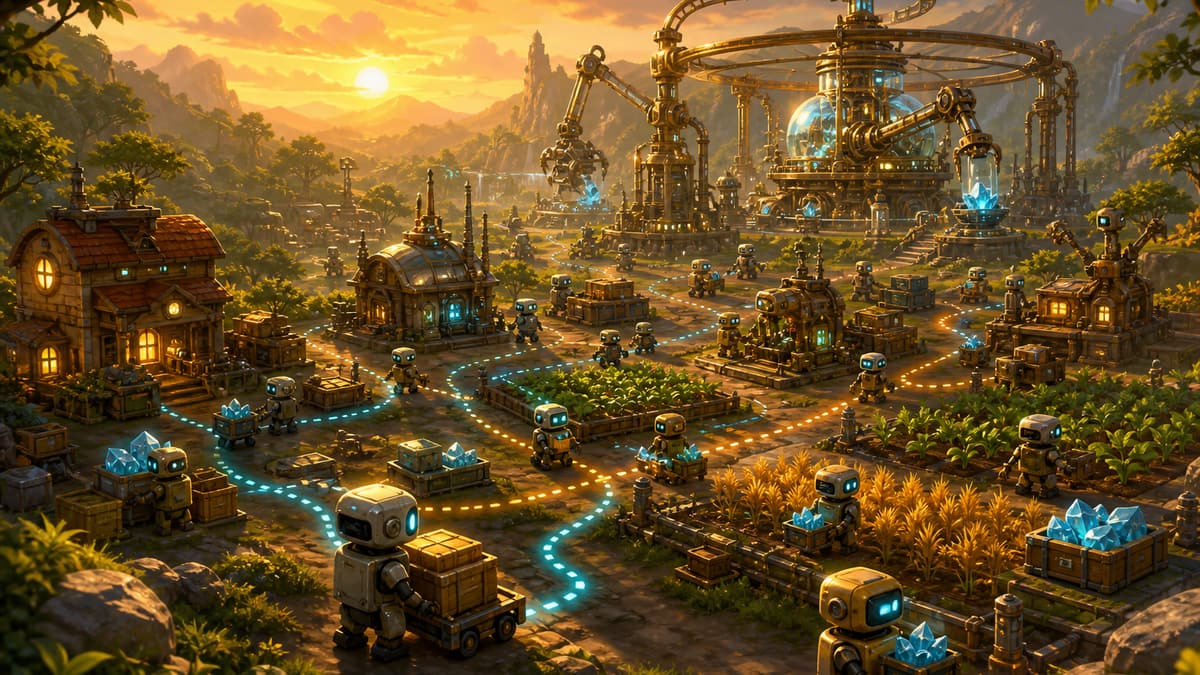
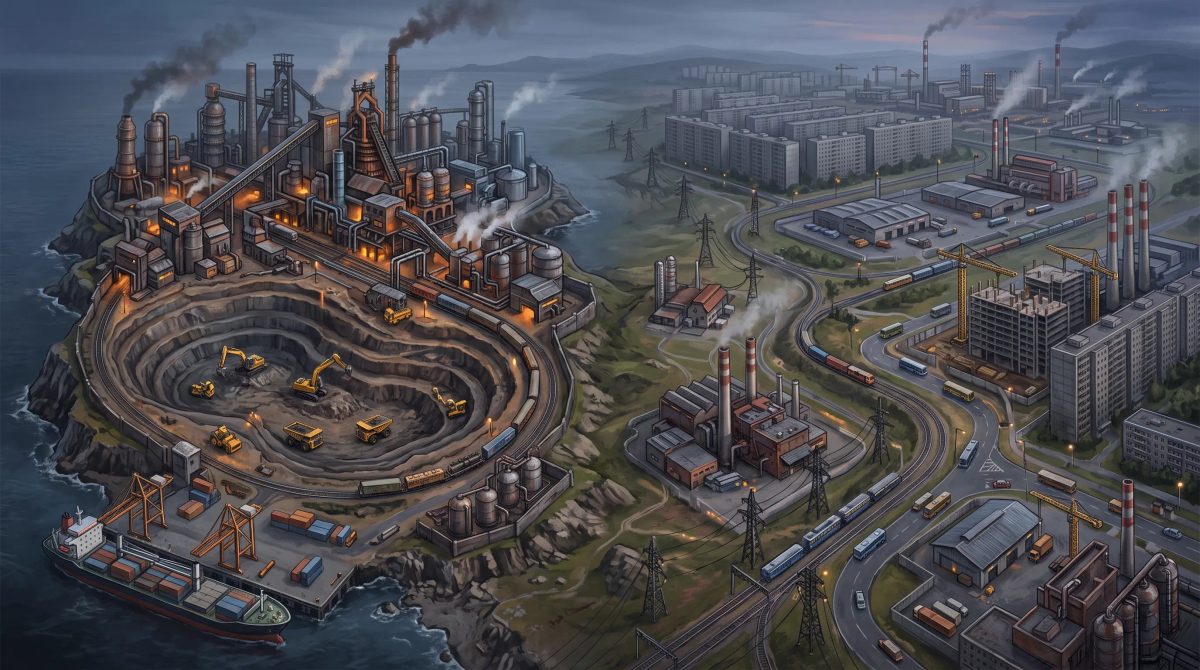
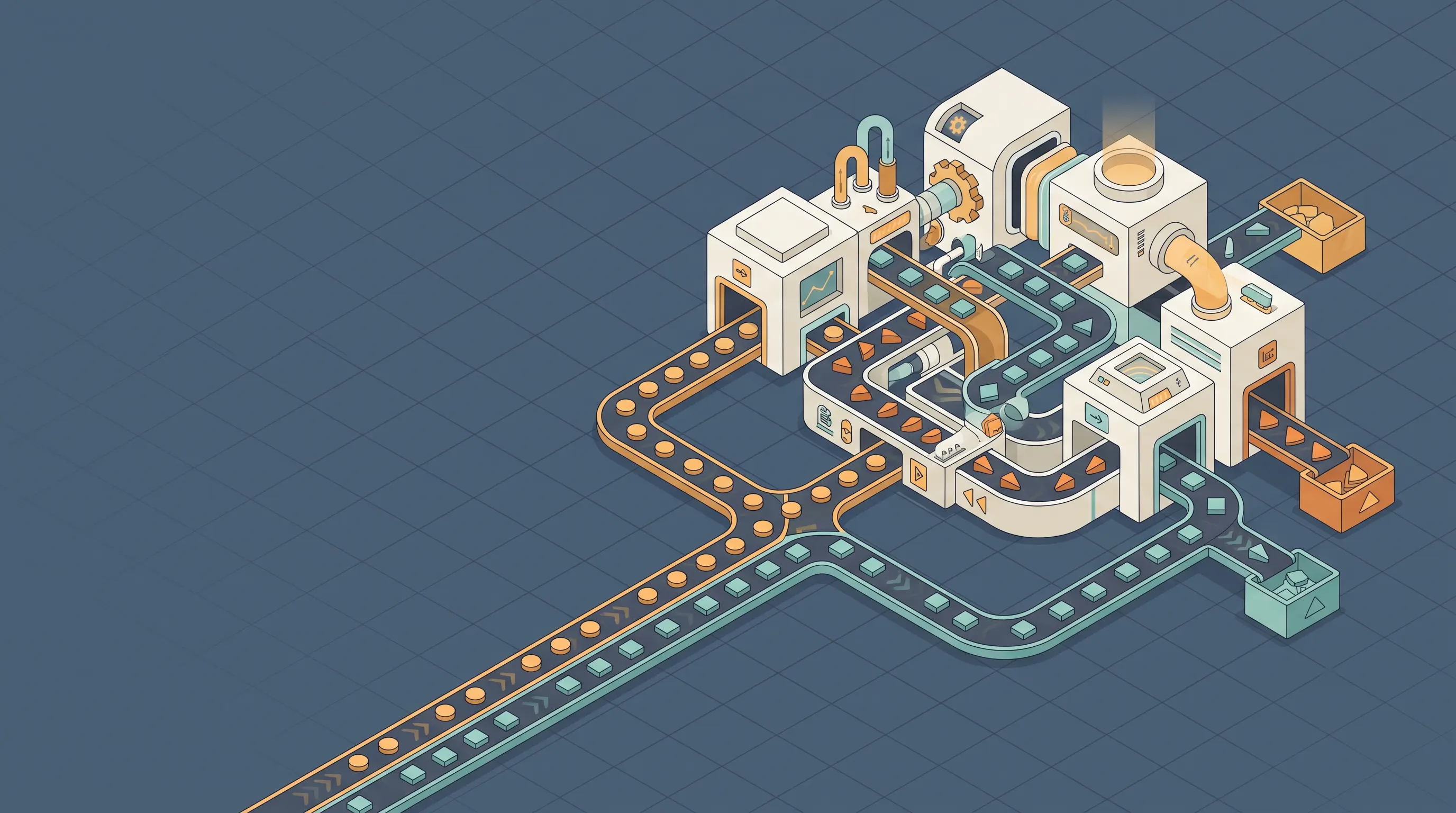
Factory Games Where Watching the Machine Run Is the Whole Point
The best factory games for players who love visible automation, readable bottlenecks, belts, bots, trains, drones, and production systems that feel alive.
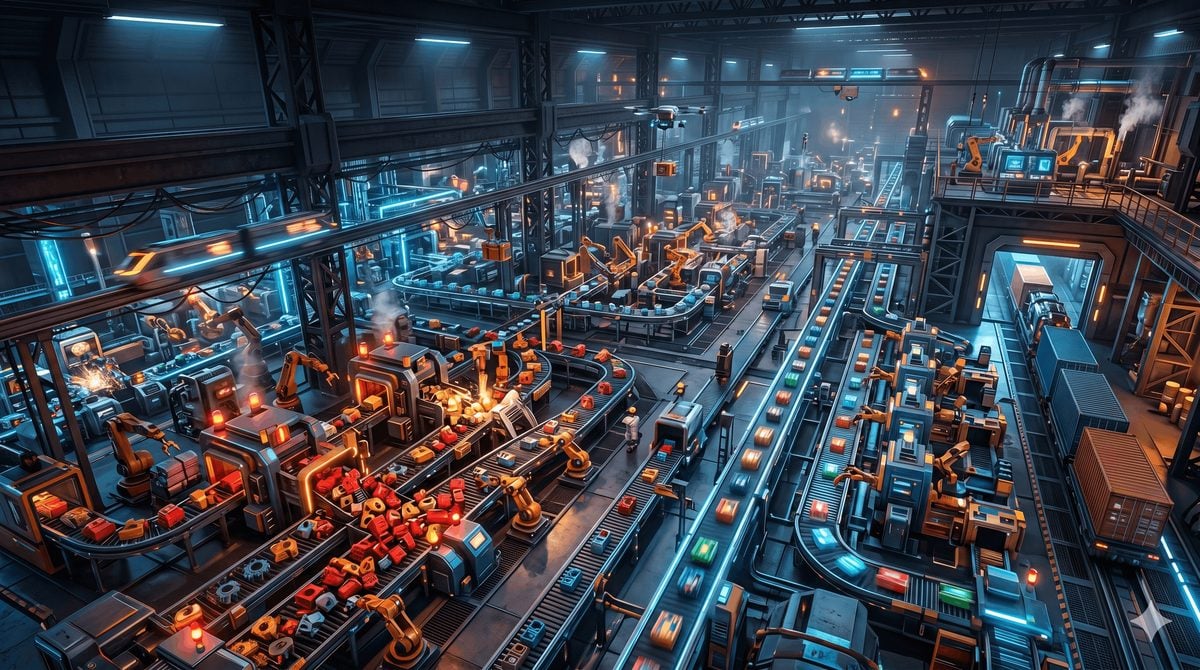
Factory games are not just spreadsheet puzzles with belts.
The best ones let you watch the system tell on itself.
A starving machine.
A clogged belt.
A train route backing up.
A drone network barely keeping up.
A bad layout slowly turning into something that looks intentional.
That is the real hook.
The most satisfying automation games are not satisfying because everything is clean. They are satisfying because the motion means something. You can see the mistake. You can see the fix. You can watch the whole factory breathe easier when the system finally clicks.
This list focuses on factory games where watching the machine run is part of the reward. Some are pure belt-and-machine logistics games. Some overlap with city builders, colony sims, or combat games. Every pick here earns its place through visible automation, production rhythm, readable bottlenecks, or satisfying logistics friction.
Quick answer
If you play factory games for satisfying automation, start with the kind of motion you actually enjoy watching.
- Factorio is the best overall pick if you want belts, inserters, trains, throughput, and brutal clarity.
- Satisfactory is the best 3D pick if you want huge factories you can walk through.
- Dyson Sphere Program is the best scale fantasy if you want production spreading across planets.
- Shapez 2 is the cleanest low-pressure automation puzzle.
- Captain of Industry is the best pick if you want heavy industrial systems with real consequences.
- Mindustry is the best factory game if you want logistics under combat pressure.
- Foundry is a strong fit if voxel construction and factory building sound like the same itch.
- Techtonica works best if you want first-person factory building with underground exploration.
- Factory Town is the relaxed, cozy logistics option.
- Oddsparks is best creature-powered automation — Sparks do the hauling while you watch the network run.
- Desynced is for players who prefer bot logic and flexible automation networks over classic belt spectacle.
The common mistake is treating every automation game like it scratches the same itch.
It does not.
Some games are satisfying because every item is visible on a belt. Some are satisfying because trains, drones, or planetary networks create a wider rhythm. Some only click if you enjoy fixing bottlenecks more than building pretty layouts.
The right game depends on what you want to watch after the design starts working.
Best overall: Factorio
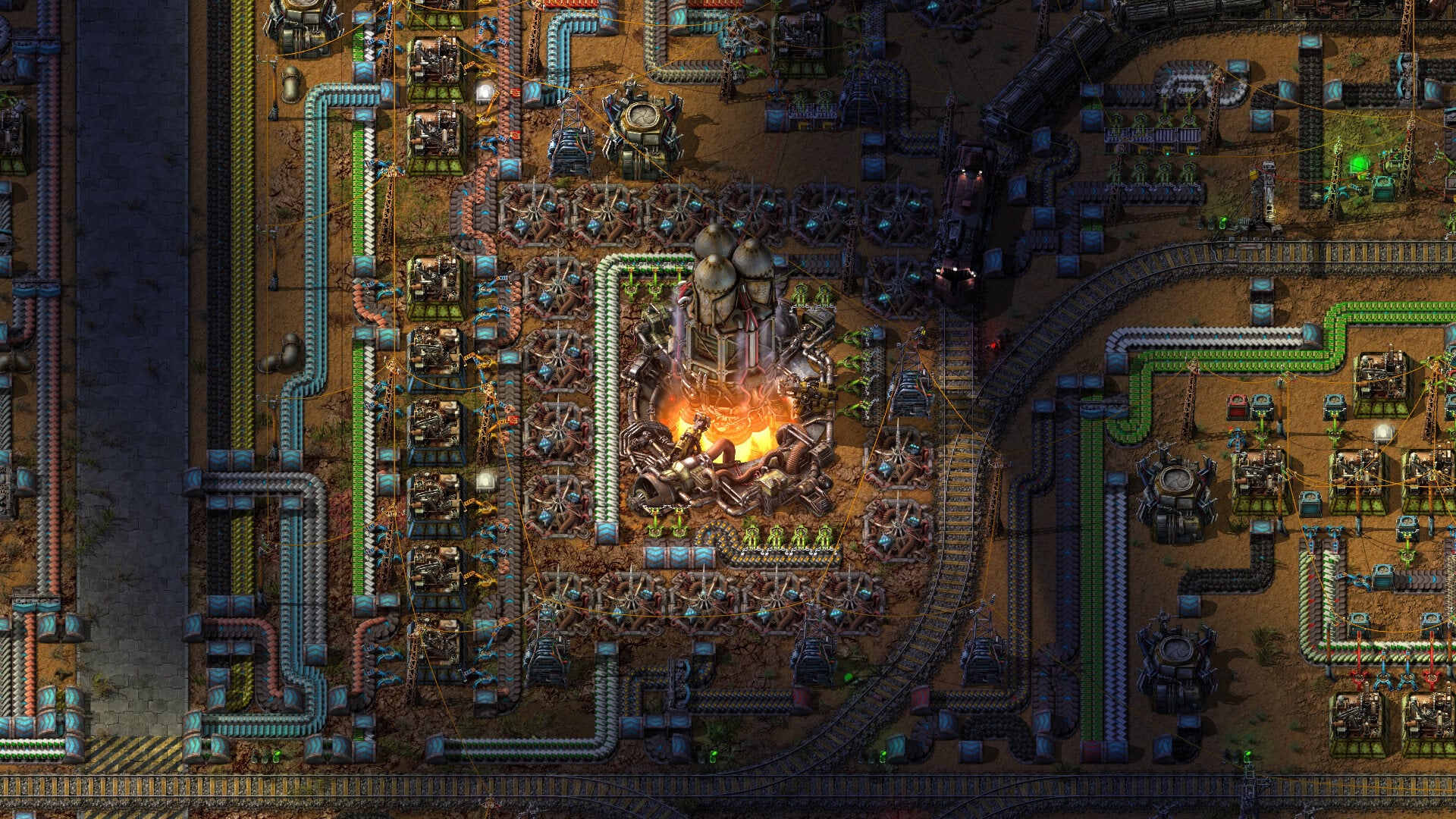
Factorio is still the king because its motion is not decoration. It is diagnosis.
A single inserter feeding a machine tells you something. A belt backing up tells you something. A train network starving one production block while flooding another tells you something. The factory is always talking. You just have to learn how to read it.
That is why Factorio belongs at the center of any serious factory games discussion. It has the strongest link between design and motion. When production backs up, you can usually see why. When throughput improves, you can watch the whole system loosen up.
The early game is messy in the best possible way. You slap belts down, patch ugly fixes into uglier fixes, and slowly realize your layout is not a factory. It is a confession.
Then the game pushes you to think harder.
Ratios. Modules. Trains. Oil. Blueprints. Defense. Expansion. Throughput.
The satisfaction comes from turning chaos into something that still looks dangerous, but now works on purpose.
Factorio is the best fit if you want:
- visible belt and inserter choreography
- sharp cause and effect
- deep optimization
- train logistics
- factories that are readable even when they become enormous
The tradeoff is pressure. Combat can annoy players who only want a peaceful logistics sandbox, and the complexity curve eventually gets dense. If you want pretty factory tourism, Satisfactory is better. If you want clean puzzles without survival noise, Shapez 2 is better.
But if you want automation that tells the truth fast, Factorio is hard to beat.
Best 3D factory spectacle: Satisfactory
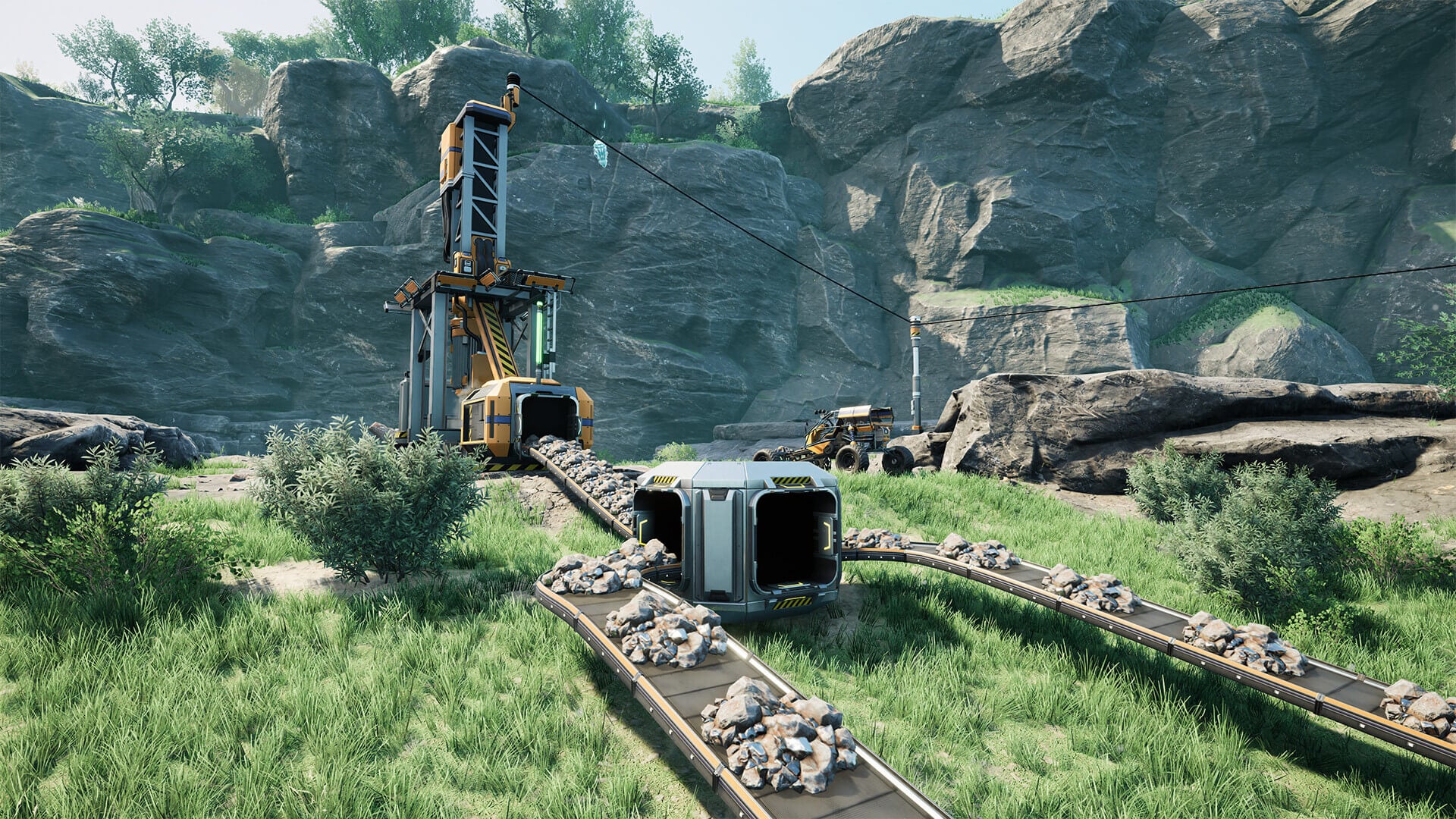
Satisfactory looks better than Factorio, but Factorio tells you the truth faster.
That is the trade.
Satisfactory turns automation into architecture. Belts climb cliffs. Constructors line up across giant floors. Pipes snake around platforms. Factories stack vertically. Production lines become physical spaces you can walk through instead of diagrams you inspect from above.
The motion is slower and more scenic than Factorio, and that is exactly why people love it. You are not just watching items move. You are standing inside the machine.
That makes Satisfactory ideal for players who care about layout aesthetics as much as output. A good factory can feel like a tourable industrial building. A ridiculous one can feel like an alien megaproject held together by conveyor lifts and stubbornness.
Co-op also makes more sense here than in many factory games. One player can explore, another can build, another can optimize, and another can spend three hours making the factory look less like a crime scene.
The friction is scale management.
First-person construction makes the world feel massive, but it also makes large revisions slower. Ripping out a bad setup can feel physical in a way top-down games avoid. If you want fast blueprint-heavy iteration and tight control, Satisfactory can feel cumbersome compared with Factorio or Shapez 2.
Pick Satisfactory if the fantasy is not just “my system works.”
Pick it if the fantasy is “I want to walk through the beast I built.”
Best for massive scale: Dyson Sphere Program
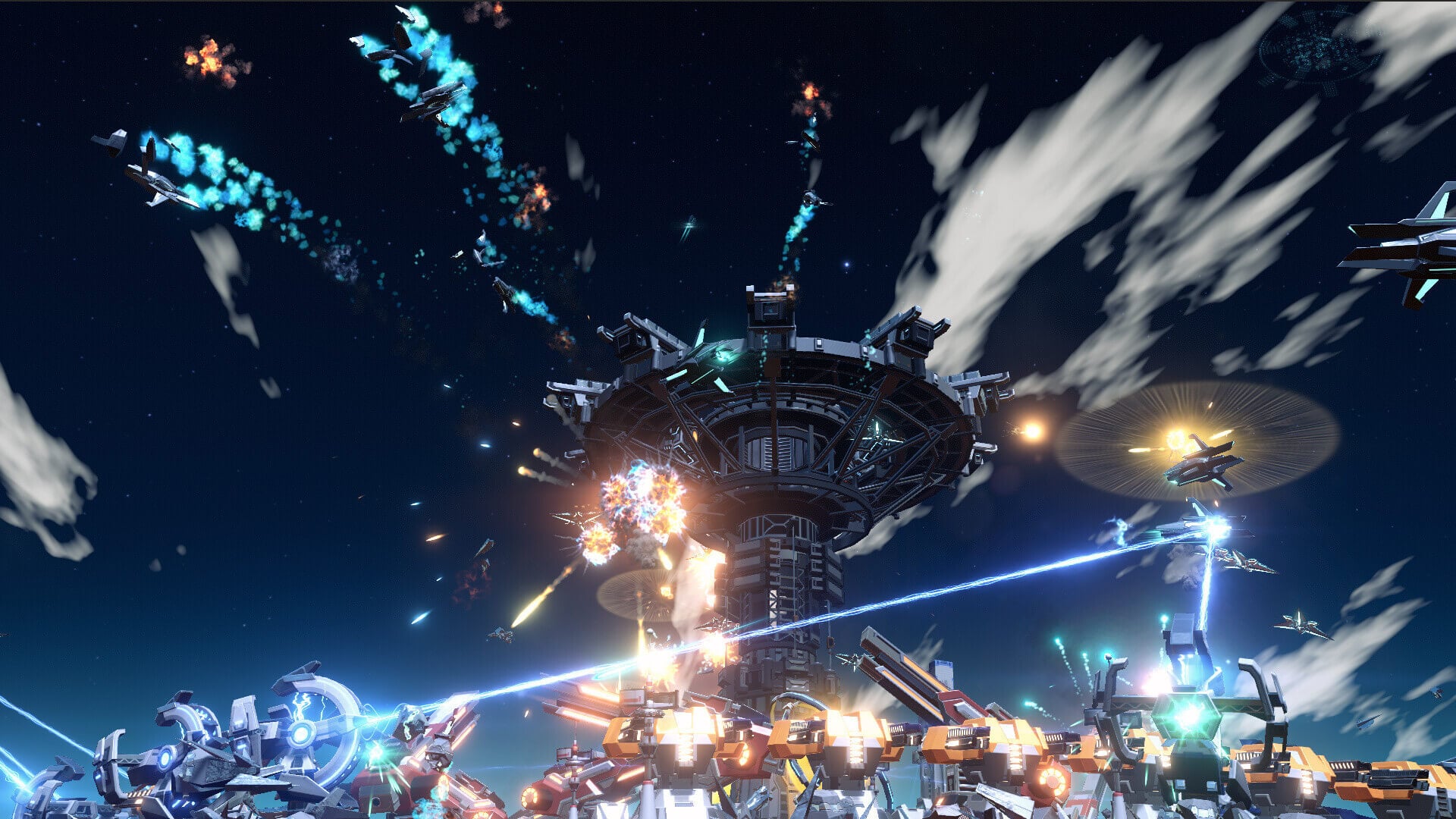
Dyson Sphere Program is what happens when the factory floor is not enough.
The appeal starts with familiar automation: belts, sorters, machines, production chains. Then the game stretches that loop across planets, solar systems, shipping routes, and eventually megastructure-scale production.
That is the reason Dyson Sphere Program belongs here. It makes scale visible in a way most factory games do not. You are not only watching items travel across a belt. You are watching industrial logic spread across planets.
The best moments are not always small and local. Sometimes the satisfaction comes from realizing that one planet is feeding another, another is shipping rare materials somewhere else, and your entire operation has become a solar-system-sized supply chain.
It is less intimate than Factorio. Less physical than Satisfactory. Less clean than Shapez 2.
But it owns its fantasy.
Dyson Sphere Program is the right pick if you want:
- interplanetary logistics
- huge production arcs
- sci-fi escalation
- automation that starts small and becomes cosmic
- the feeling of building toward something absurdly large
The limitation is that the best motion is not always close to your face. Some of the payoff lives in logistics networks, production totals, and long-distance routing rather than staring at one perfect belt array.
If you want micro-level inserter choreography, Factorio is sharper.
If you want the factory to outgrow the planet, Dyson Sphere Program is the better match.
Best clean automation puzzle: Shapez 2
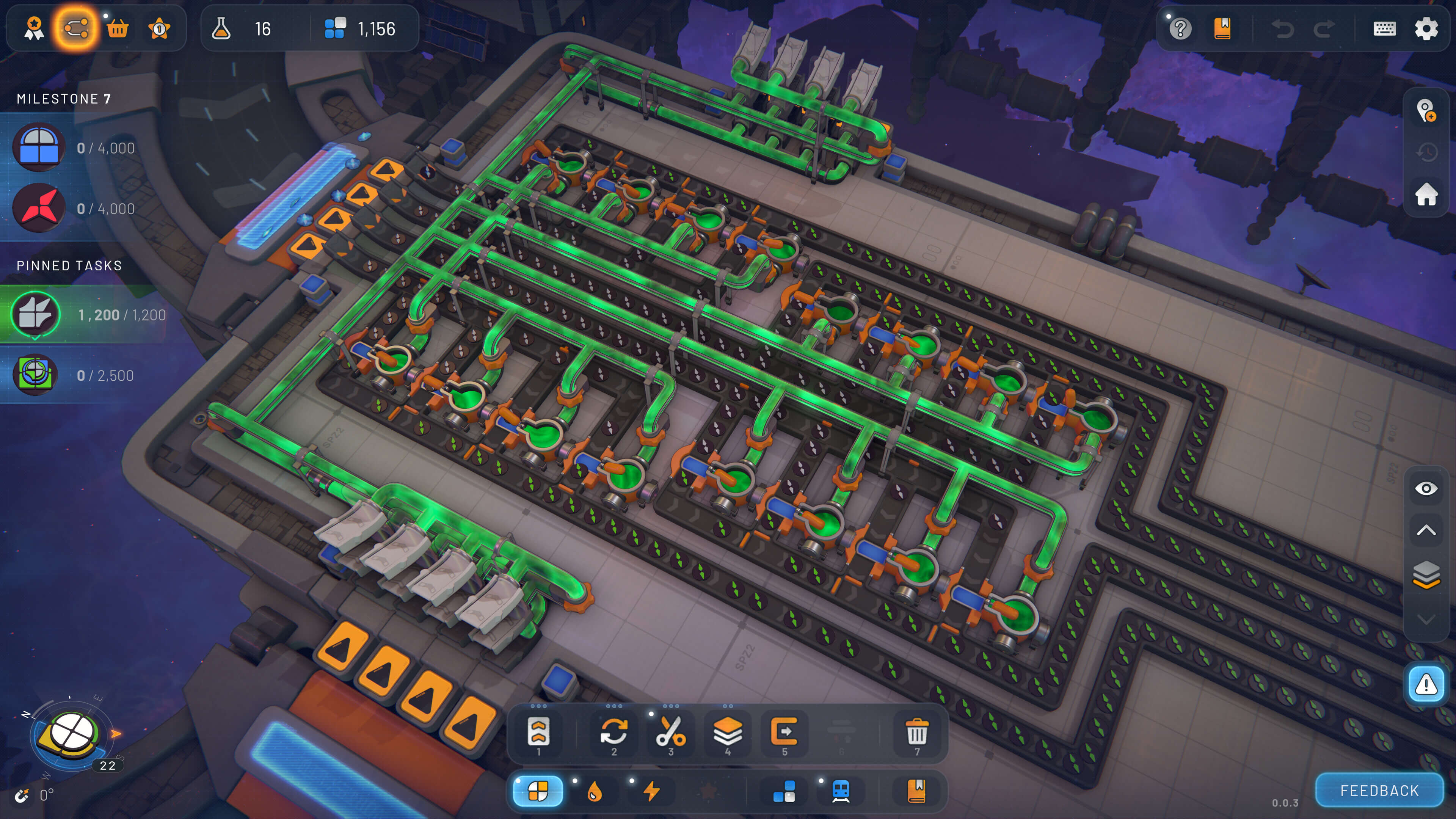
Shapez 2 removes almost everything that gets in the way.
No survival pressure.
No enemies.
No colonist needs.
No terrain drama.
No industrial grit.
Just cut, rotate, stack, color, route, repeat, and scale.
That sounds sterile if you need atmosphere. It sounds perfect if you want automation as a clean visual language.
Shapez 2 is one of the easiest recommendations for players who want satisfying logistics without the extra baggage. The presentation is clear. Bottlenecks are obvious. The lines read almost like a moving puzzle solution.
When a design works, the reward is immediate. You see the shapes flow. You see the system hold. You see the mistake the second one piece of the chain falls out of rhythm.
That is the strength.
Shapez 2 does not hide weak design behind theme. There is no colony to distract you. No pretty terrain to soften the failure. No combat panic. The system either moves correctly or it does not.
The tradeoff is exactly what makes it good.
It is abstract. There is no strong fantasy of operating a real plant. No heavy machinery. No workers. No dirty industrial consequence. If you need place, atmosphere, and texture, Shapez 2 may feel too clean.
But if what you want is pure automation logic with almost no noise, it is one of the strongest games in the genre.
Best heavy industrial sim: Captain of Industry
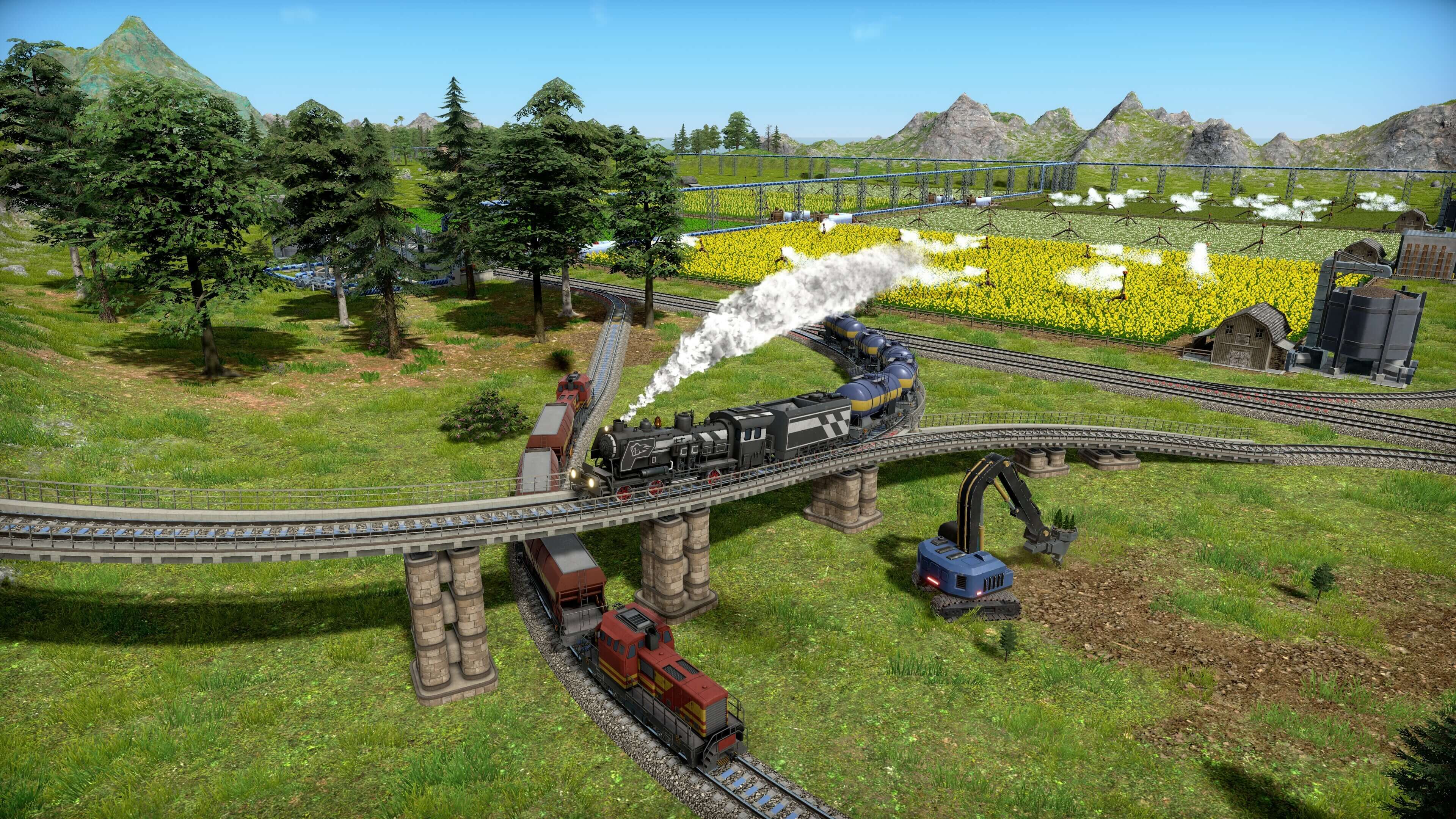
Captain of Industry is not the prettiest automation game.
Good.
Pretty is not the point here.

Captain of Industry is satisfying because everything feels heavy. Mining, refining, shipping, farming, terrain excavation, maintenance, fuel, settlement needs, and production chains all pull on the same industrial web.
This is not a tidy conveyor playground where the main problem is adding one more belt.
Resource movement has weight. Land changes. Dependencies matter. A shortage does not politely sit in one corner of the factory. It spreads. One bad input can crawl through the system and turn into a bigger failure somewhere else.
That is what makes it satisfying to watch.
The motion feels burdened. Trucks move because something actually needs moving. Machines stop because the chain behind them broke. Terrain excavation is not cosmetic. It is part of the factory’s body.
Captain of Industry is the right pick if you want:
- industrial planning
- terrain deformation
- resource chains with consequences
- logistics tied to survival and infrastructure
- systems that punish lazy assumptions
The warning is simple: this is not a relaxed automation toy.
It is harder, denser, and less immediately elegant than the cleaner factory games on this list. If you want smooth belt poetry, play Shapez 2. If you want readable mechanical truth, play Factorio.
If you want an industrial machine that can choke on its own bad planning, Captain of Industry earns its place.
Best factory game under combat pressure: Mindustry
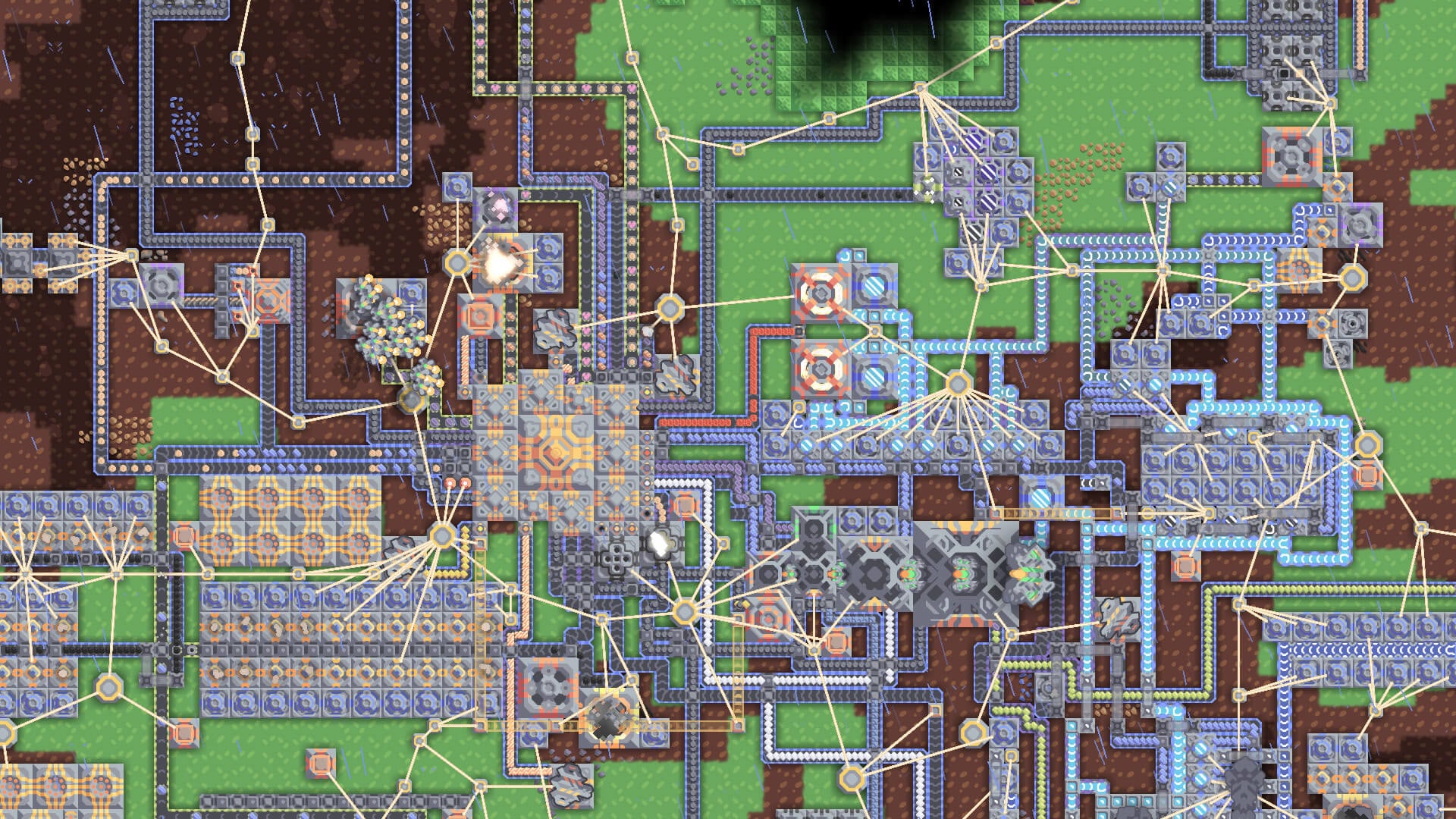
Mindustry is what happens when logistics stop being calm.
Conveyors matter. Supply lines matter. Production efficiency matters. But they are not just there to make more stuff. They feed a war machine.
That changes the whole mood.
In many factory games, a bottleneck is annoying. In Mindustry, a bottleneck can get you killed. A broken route or underfed turret can turn from “I should fix that later” into “the base is falling apart right now.”
That urgency is the hook.
The best moments come when production, ammo flow, power, and defenses all lock into rhythm under pressure. The factory is not just producing progress. It is holding the line.
Mindustry works best for players who find pure optimization too calm. It gives you automation, but keeps punching it with external threats. That makes the motion leaner, faster, and more tactical than something like Factorio.
The downside is obvious.
If you want long, meditative planning, Mindustry can feel abrupt. It is satisfying, but not always relaxing. The automation is readable and efficient, but it is not luxurious.
Pick Mindustry if you want the factory to matter immediately.
Not eventually.
Immediately.
Best voxel factory sandbox: Foundry
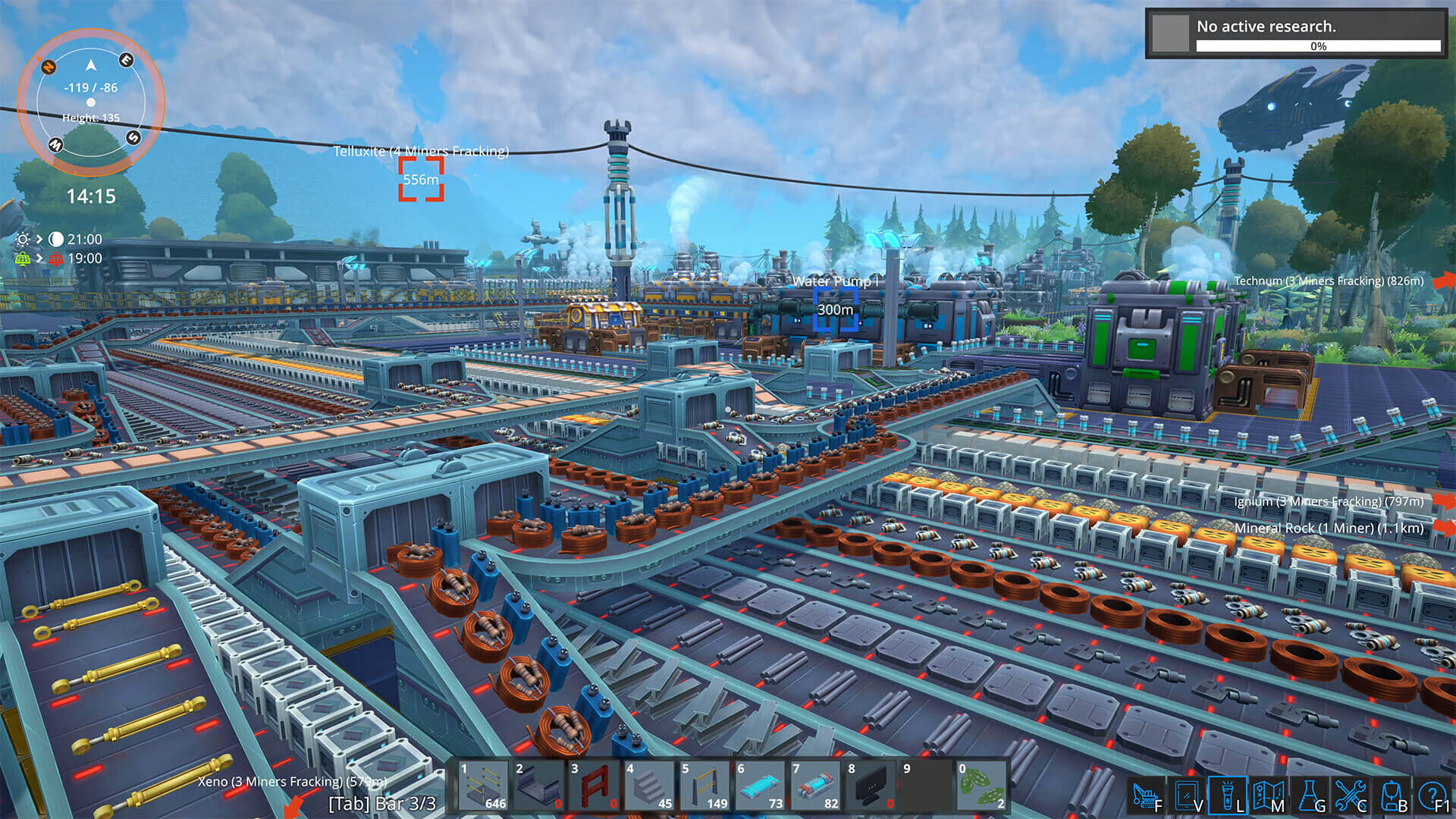
Foundry is for players who look at factory automation and construction sandboxes and think, yes, obviously those should be the same thing.
The appeal is the combination of voxel building and production chains. You are not only placing machines. You are shaping the world they sit inside.
That gives Foundry a different kind of satisfaction. Belts and machines are still central, but the factory feels embedded into a modular block-based space. Compared with Satisfactory, it is less about scenic alien landscapes and more about construction freedom. Compared with Factorio, it is more physical and spatial.
The “watch it run” payoff comes from seeing a factory carved into a world you have reshaped around it.
That is also the tradeoff.
Voxel freedom can blur priorities. Players who want strict, clean factory layout may find themselves spending as much time shaping space as solving throughput. That is a plus if you like construction sandboxes. It is a drawback if you mainly want tight automation pacing.
Foundry is a good pick if you want a factory that feels built into the world, not just placed on top of it.
Best underground first-person factory game: Techtonica
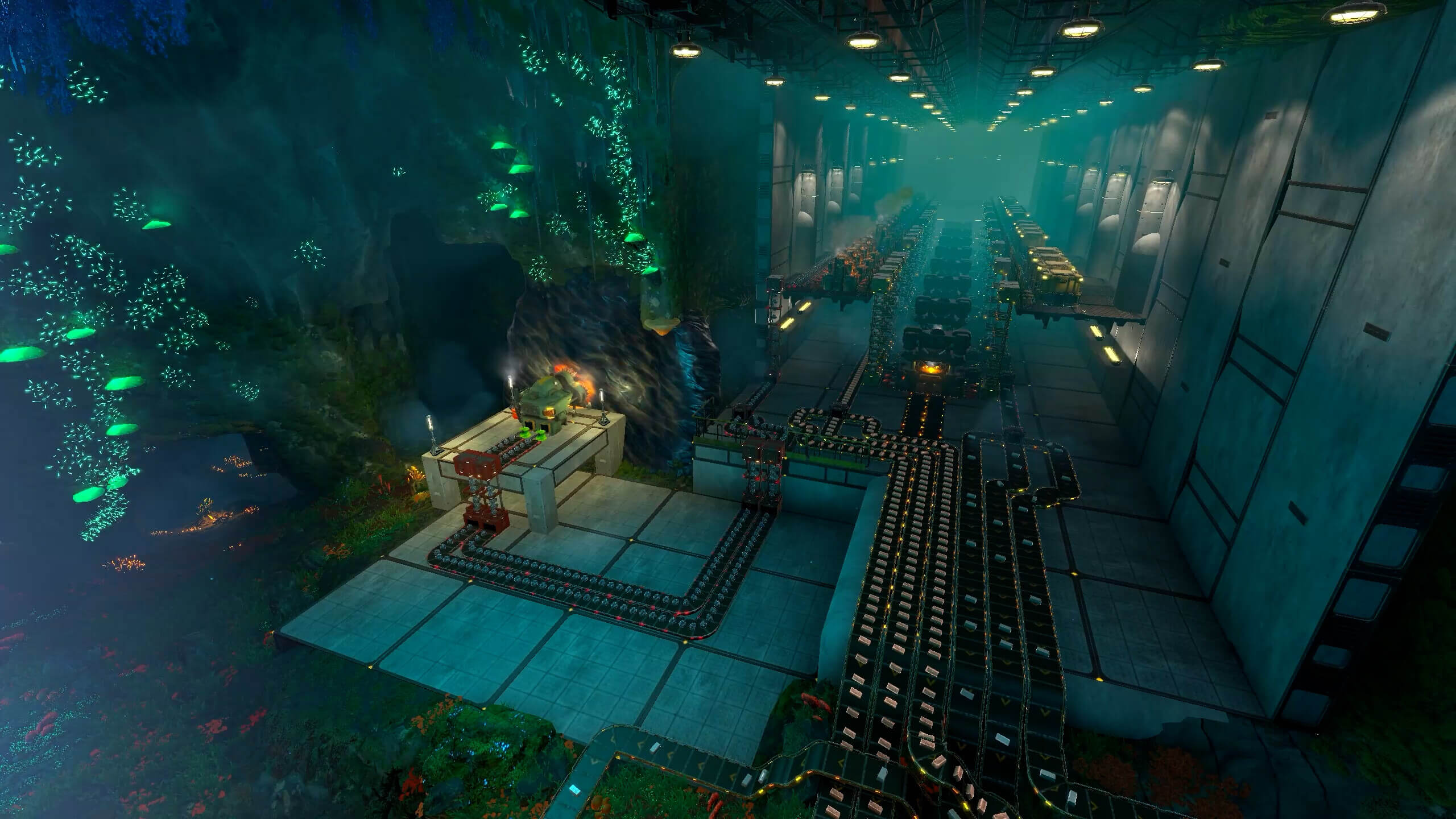
Techtonica is a partial but worthwhile fit for this list because its factory building is tied to underground exploration.
That one change gives the whole game a different texture.
Instead of open alien landscapes or top-down sprawl, Techtonica gives you cavern-scale growth. Belts, machines, and production lines matter, but the setting makes expansion feel enclosed, carved out, and directed.
It clicks most for players who want first-person automation with a stronger sense of discovery. The factory does not just expand. It digs itself deeper into a strange underground space.
That makes Techtonica adjacent to Satisfactory and Foundry, but not identical.
Satisfactory is grander and more scenic.
Foundry leans harder into modular construction.
Techtonica has a more buried, exploratory feel.
The limitation is that it is not the cleanest pick if all you care about is visible factory elegance. Exploration and environment are part of the package. If you want the automation layer to dominate every decision, Factorio, Shapez 2, or Dyson Sphere Program are more direct.
Pick Techtonica if the setting matters almost as much as the machinery.
Best cozy logistics option: Factory Town
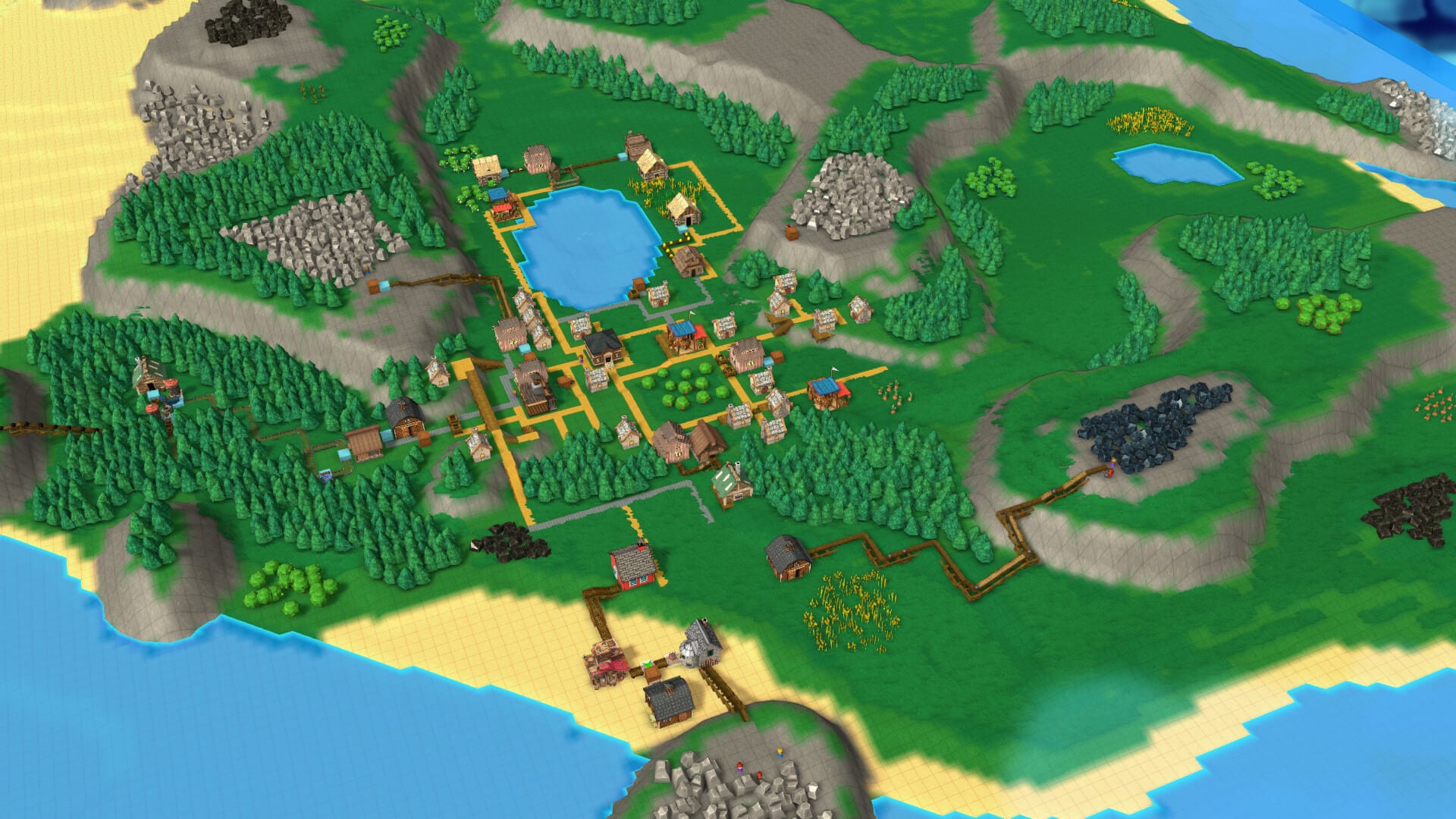
Factory Town is the softest game on this list, and that is not an insult.
Not every automation game needs to feel like an industrial anxiety attack.
Factory Town uses villagers, conveyors, magic transport, colorful production chains, and town growth to create a gentler logistics sandbox. It is still about flow, but the pressure is lower and the tone is warmer.
Goods move through a growing settlement. Production chains become more efficient. The visual payoff stays readable without demanding hardcore factory discipline.
That makes Factory Town a strong pick for players who bounce off harsher factory sims but still want the pleasure of logistics.
It is not trying to out-Factorio Factorio.
Good. It would lose.
Factory Town works because it offers a different version of the automation itch: softer, cleaner, more relaxed, and easier to enjoy without turning the whole session into a throughput audit.
The compromise is intensity.
If you want the deep pressure of Factorio or the heavy industrial dependency web of Captain of Industry, Factory Town may feel light. It is better as a relaxed logistics toy than a brutal optimization challenge.
Pick it when you want flow without punishment.
Best creature-powered automation: Oddsparks
Oddsparks is satisfying for a different kind of motion: tiny Sparks carrying, crafting, and defending while your layout decisions turn into visible creature traffic. You are still watching a system run — the helpers just happen to be characters instead of pure belts.
That makes Oddsparks the best creature-powered automation pick here. Bottlenecks show up as Sparks clustering, starving buildings, or uneven task coverage. Fixes feel immediate and readable without Factorio’s density.
It fits players who want cozy automation spectacle with light combat and co-op. The tradeoff is depth: it will not replace Factorio’s belt truth or Captain of Industry’s heavy industrial consequence. Pick it when watching helpers work is the reward.
Best bot automation pick: Desynced
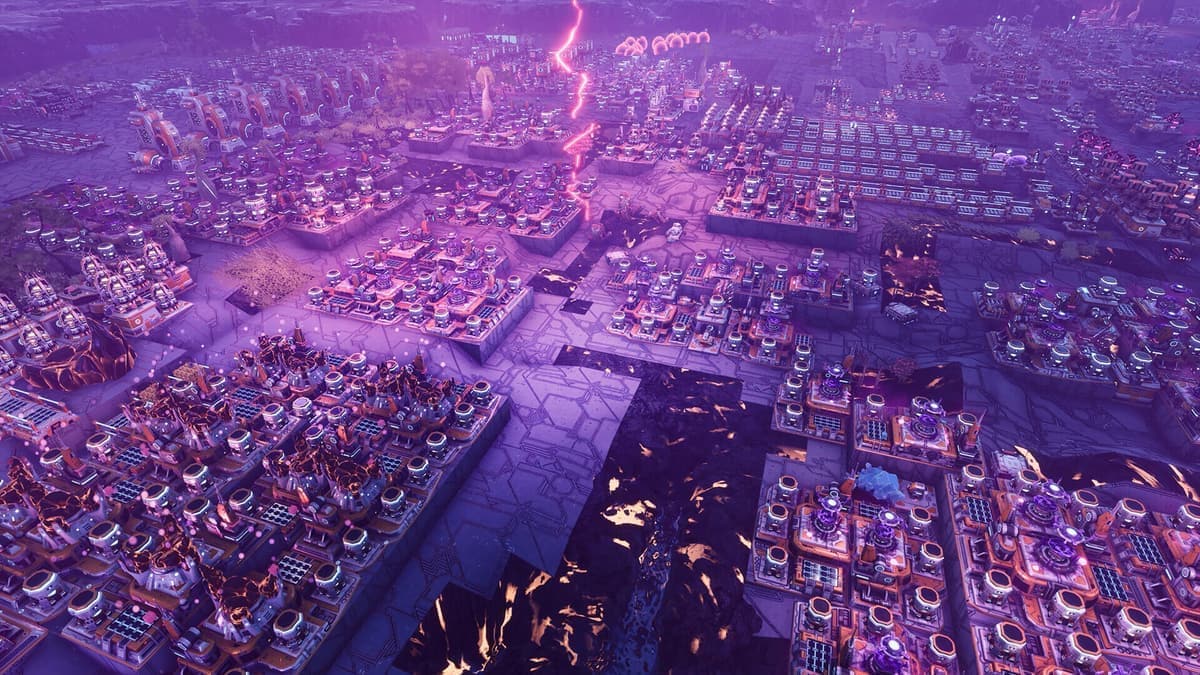
Desynced is less about perfect conveyor spectacle and more about distributed robot behavior.
That makes it one of the more interesting picks here.
Instead of building everything around classic belts, Desynced leans into programmable bots and flexible automation networks. The satisfaction comes from watching autonomous systems take over more of the work.
It is a good fit for players who like:
- automation logic
- scripting-style routines
- bots doing useful work
- adaptable systems
- networks instead of fixed belt lines
If Autonauts sounds too cozy, but Factorio sounds too belt-centric, Desynced sits in a useful middle space between factory sim and colony automation.
The tradeoff is visibility.
Bot-driven automation can be satisfying, but it is not always as instantly legible as belts and inserters. A conveyor line tells you what is happening at a glance. A bot network can be more abstract and harder to read until you understand the behavior behind it.
If your main reason for playing factory games is watching materials stream through fixed production lines, Desynced may feel less tactile.
If you like automation as behavior instead of just movement, that same difference is the appeal.
Which factory game should you start with?
Start with the motion you want to watch.
If you want the cleanest link between problem and fix, play Factorio.
If you want to walk through huge 3D factories and care about how the build feels as a space, play Satisfactory.
If you want production to grow beyond one planet, play Dyson Sphere Program.
If you want almost pure automation logic without survival pressure, play Shapez 2.
If you want heavy industry where one bad dependency can poison the whole system, play Captain of Industry.
If you want factories under pressure, play Mindustry.
If you want construction freedom, try Foundry.
If you want first-person factory building with underground exploration, try Techtonica.
If you want cozy production flow, play Factory Town.
If you want creature-powered automation you can watch run, play Oddsparks.
If you want programmable bot automation, try Desynced.
Do not start with the most famous game just because it is famous. Start with the one where you actually enjoy watching mistakes move through the system.
That is the part that teaches you.
A practical headset for long automation sessions
Factory games are long-session games.
You are not usually playing for one quick round. You are listening to machines hum, belts move, alerts fire, and production loops settle into rhythm while your brain disappears into problem-solving mode.
You do not need ridiculous gamer hardware for that. You need something comfortable, clear, and boring in the best way.
A straightforward headset makes sense if you want clean audio cues and comfort during long automation sessions without turning your desk into another overbuilt system.
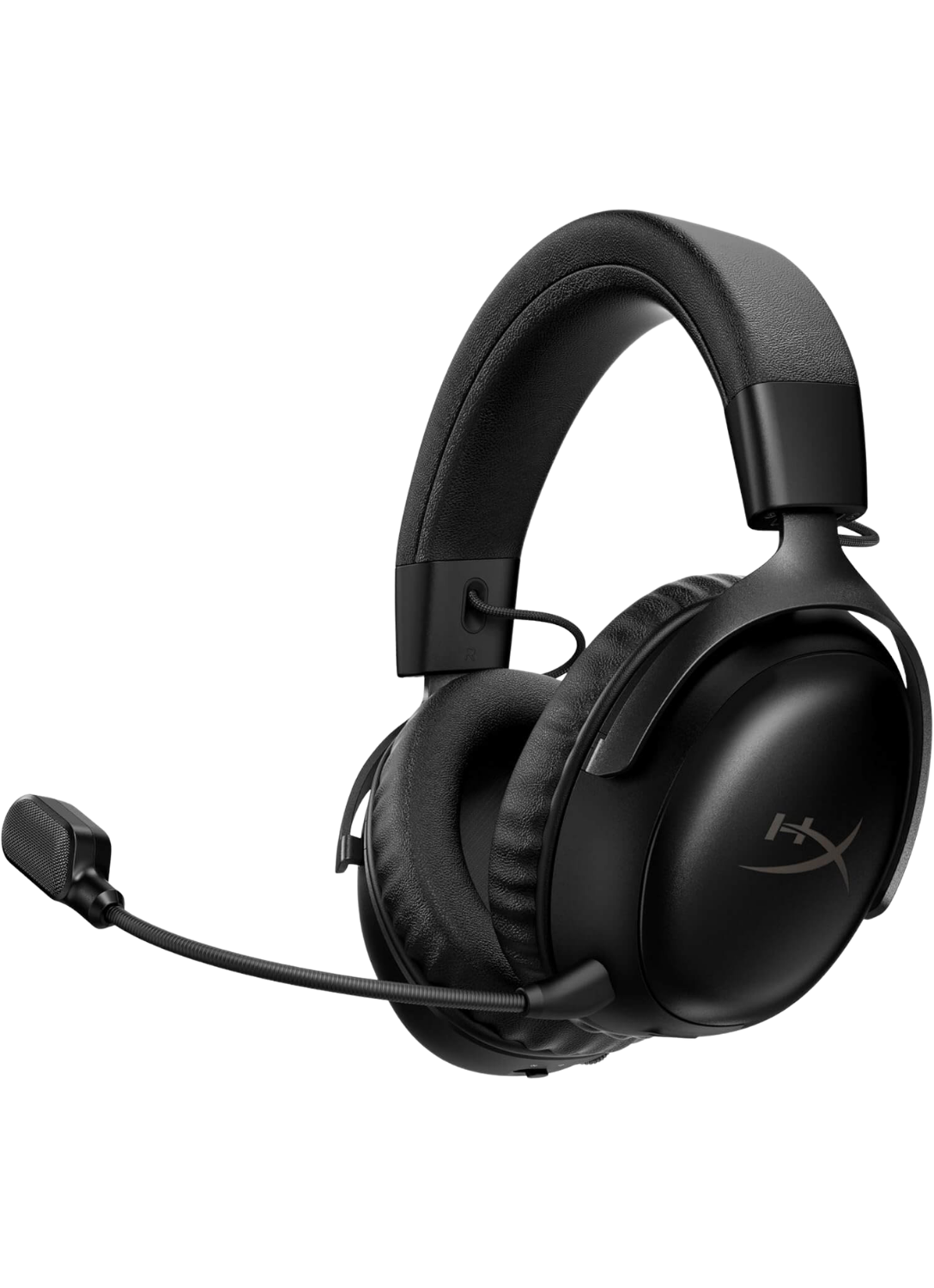
HyperX Cloud III S Wireless
Comfortable wireless headset for long sessions—clear audio, detachable mic.
FAQ
What makes a factory game satisfying to watch?
Readable cause and effect.
The best factory games let you see resources move, machines respond, bottlenecks form, and fixes work. Belts, inserters, trains, drones, bots, and production chains are satisfying when the motion is not just visual noise. It needs to explain what the system is doing.
Which factory game has the most satisfying belts and inserters?
Factorio is the strongest pick if belts and inserters are the main appeal. Its systems get dense, but the factory stays readable. You can usually see where resources are flowing, where they are stuck, and what needs to change.
What is the best relaxed factory game?
Shapez 2 is the cleanest low-pressure choice if you want pure automation puzzles. Factory Town is better if you want a cozier town-building feel. Satisfactory can also be relaxing, but large builds require more manual construction work.
Which factory game is best for huge scale?
Dyson Sphere Program is the clear choice for scale. It expands from local production to planetary and interstellar logistics, giving it a bigger visual payoff than a single factory floor.
Are colony sims included here?
Only where automation is central to the experience.
Captain of Industry and Desynced overlap with colony sim ideas, but they belong here because logistics, production systems, and automated behavior are core to the appeal.
Is Satisfactory better than Factorio?
Not exactly. They are good at different things.
Satisfactory is better if you want 3D scale, factory tours, vertical builds, and physical space. Factorio is better if you want faster readability, sharper optimization, and tighter cause and effect.
What is the best factory game for beginners?
Shapez 2 is probably the easiest entry point if you want low-pressure automation. Satisfactory is also approachable if you like first-person exploration and do not mind slower building. Factorio is the classic, but it becomes demanding faster.
Takeaway
The best factory game is not always the deepest one.
It is the one where you enjoy watching the mistake happen, because that is the moment the system starts teaching you.
Factorio is best for precision.
Satisfactory is best for physical scale.
Dyson Sphere Program is best for cosmic logistics.
Shapez 2 is best for clean puzzle flow.
Captain of Industry is best for heavy industrial consequence.
Mindustry is best when you want the factory under pressure.
The right choice depends on what kind of motion you want to watch after the design finally clicks.