Best Short Factory Games You Can Actually Finish
The best factory games under 50 hours, from pure automation puzzles to compact logistics and production games with real stopping points.
Most factory games do not want to end.
They want another mining outpost. Another production line. Another logistics fix. Another “small” redesign that somehow eats your entire evening.
That is the trap.
This list is for players who want factory games under 50 hours, or at least automation games with a real finish line, a clear milestone, or a satisfying point where you can say: done, this system works, I can leave.
The picks lean toward compact automation games, puzzle-like factory sims, logistics-heavy management games, and a few factory-adjacent city builders where production chains are central enough to matter.
Quick take
The biggest mistake when looking for short factory games is picking the biggest sandbox and pretending you will stop once things get huge.
You probably will not.
Pick a game that helps you finish.
| Pick | Best fit | Main warning |
|---|---|---|
| Shapez | Pure belt logic and compact automation puzzles | Very abstract, with little world flavor |
| Shapez 2 | Bigger modular automation without survival pressure | Easier to overbuild than the original |
| Mindustry | Factory logistics with defense pressure and campaign goals | Combat is part of the core loop |
| Production Line | Throughput, sequencing, and factory-floor efficiency | More management sim than belt sandbox |
| Autonauts | Cozy robot scripting and task delegation | Can become repetitive if scripting does not click |
| Factory Town | Relaxed production chains and town-scale logistics | Softer sense of completion |
| InfraSpace | Industrial city planning and transport flow | More city builder than machine-level factory sim |
| Factorio | The classic, if you stop at the first victory target | Extremely easy to turn into a 200-hour save |
That is why Satisfactory, Dyson Sphere Program, Captain of Industry, and Foundry are not main picks here.
They are not worse games. They are just bad answers to this specific problem. Their best parts usually come from long-form expansion, deep sandbox iteration, and huge systems that reward players who want to live inside one save file for a while.
The picks
Shapez
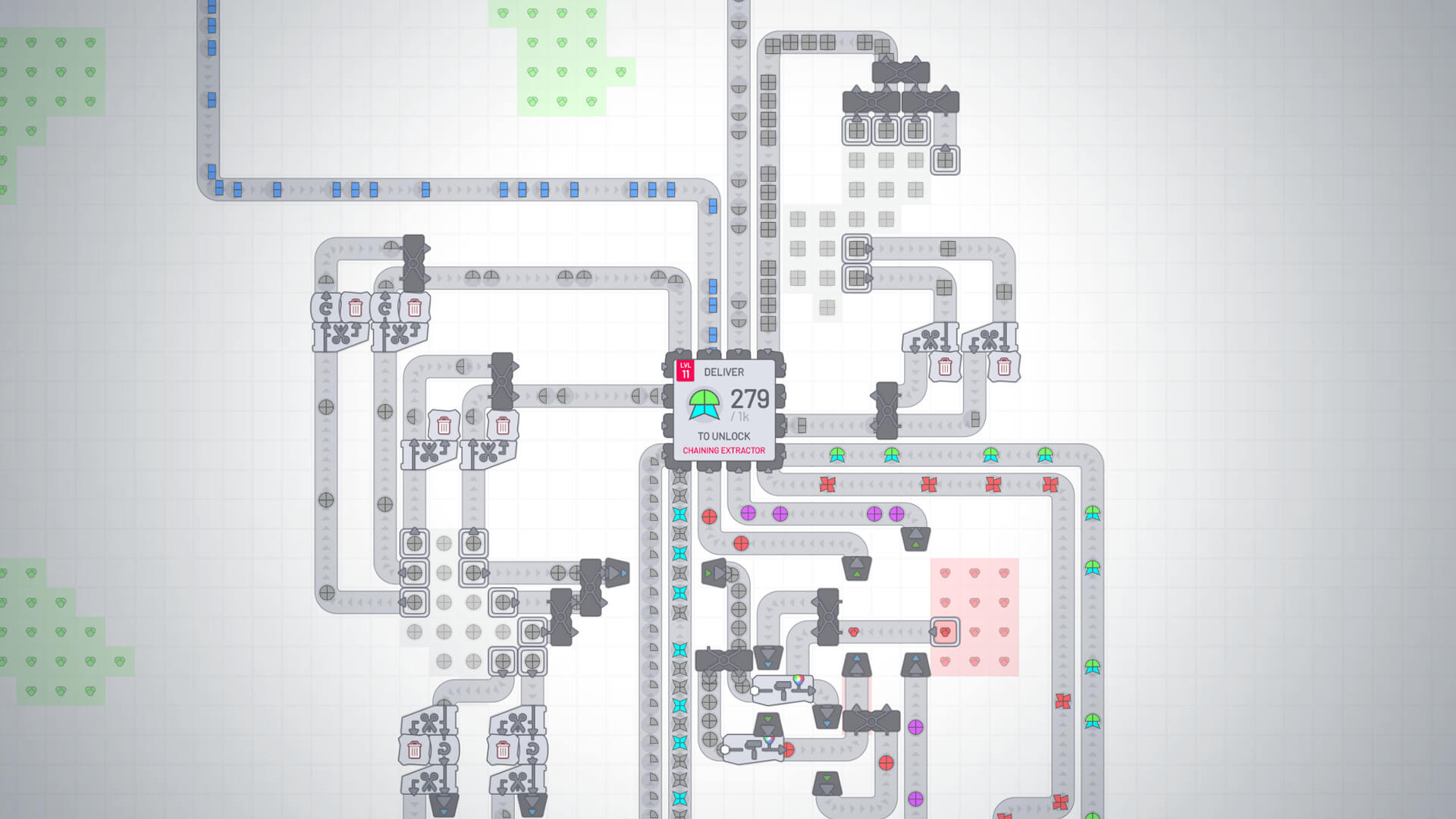
Shapez is the cleanest answer if you want a short factory game that still feels like real automation.
It strips the genre down to belts, cutters, painters, stackers, routing, and production targets. No colony to feed. No traffic system to babysit. No hostile map pulling attention away from the actual factory problem.
That focus is the whole appeal.
Shapez works because every level gives you a clear production problem. Build the system. Improve the layout. Hit the requirement. Move on.
You still get the good factory-game feeling: the moment where a messy setup suddenly works and the whole machine starts producing exactly what you wanted. You just get there faster than you would in a giant sandbox.
The tradeoff is personality. If you need exploration, terrain, workers, buildings, or a strong setting, Shapez can feel sterile. It is not a smaller Factorio. It is closer to a pure logistics puzzle, which is exactly why it belongs here.
Shapez 2
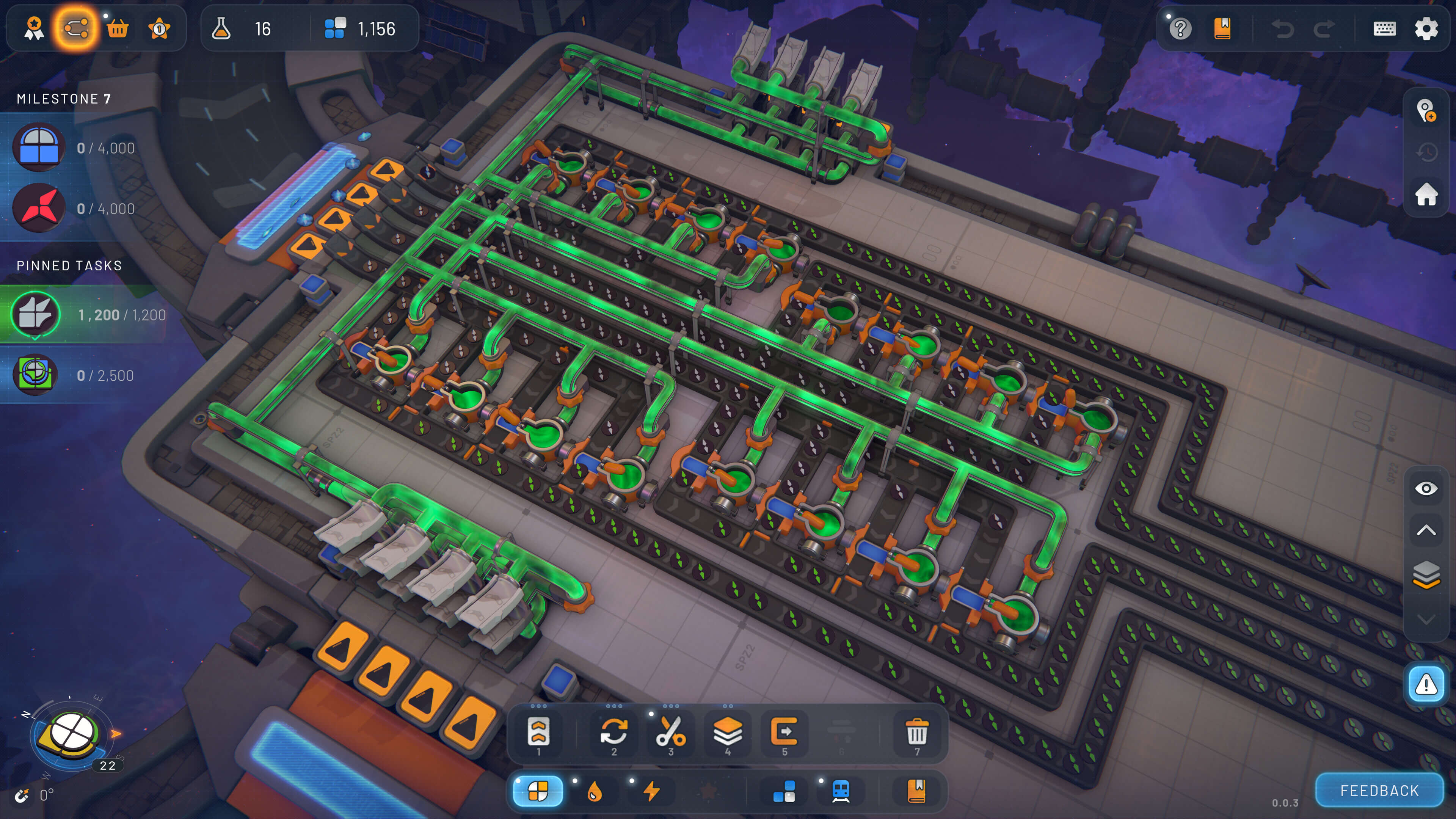
Shapez 2 is the better pick if the original sounds too flat but you still want a factory game that stays focused.
It takes the same shape-processing idea and expands it into a cleaner, larger, more modular structure. You get more space, more scale, and more room to build elegant production systems without adding survival pressure or colony management.
That makes it a strong middle ground.
You can build clean modules, improve throughput, and solve bigger production chains without signing up for a full industrial life sentence.
The risk is obvious: more space means more temptation.
If your goal is the shortest satisfying automation arc, start with Shapez. If you want the same idea with more modern structure and more room to think, Shapez 2 is the stronger pick.
Mindustry
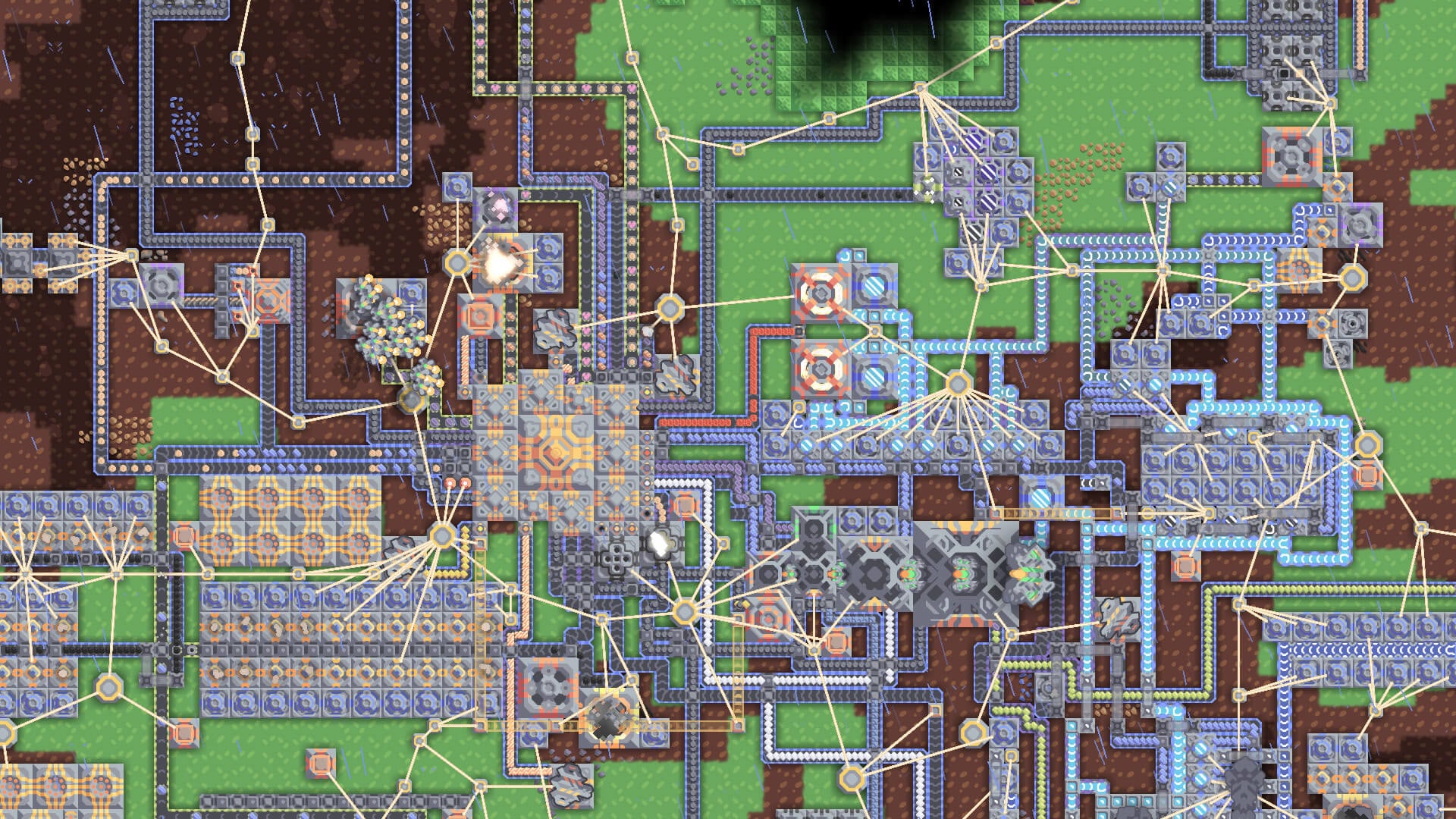
Mindustry earns its place because it gives factory building a reason to stay sharp.
You are not just building a perfect production grid for the sake of it. You are feeding defenses, managing supply lines, securing resources, and surviving pressure from the map.
That changes the rhythm completely.
Instead of endlessly polishing one giantz 2 is the better pick if the original sounds too flat but you still want base, Mindustry pushes you through objectives. Build enough. Defend enough. Solve the map. Move on.
That structure makes it easier to feel finished than most open-ended factory sandboxes.
The warning is simple: the combat is not decoration.
If you want relaxed conveyor work, Mindustry may feel too aggressive. The logistics are satisfying, but the tower-defense pressure is part of the appeal. Players who want pure building should start with Shapez or Autonauts instead.
Production Line
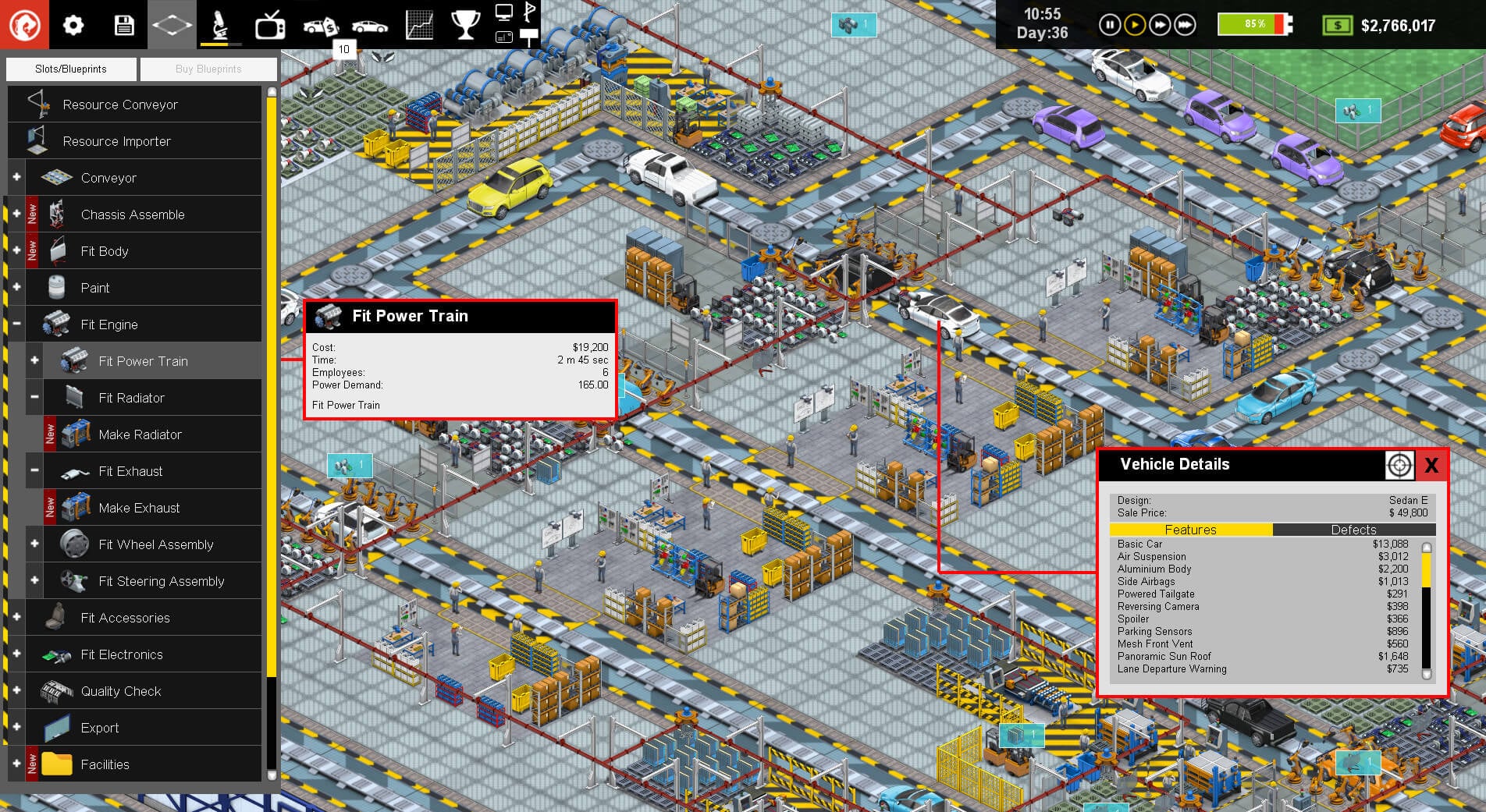
Production Line is for players who care about factory efficiency more than sci-fi sprawl.
The game is built around car assembly, sequencing, staffing, bottlenecks, upgrades, and output. The core question is not “how massive can this factory become?”
It is:
Where is this line wasting time?
That narrower scope makes Production Line one of the better factory games you can feel done with. You can set a clear goal around building a profitable, efficient plant, then stop once the system is smooth.
The satisfaction comes from removing friction. One bottleneck at a time.
The limitation is that Production Line is more management sim than classic conveyor sandbox. If your favorite part of factory games is mining patches, routing raw resources, building buses, or expanding across hostile terrain, this may feel too grounded.
It is a strong pick for throughput obsessives. It is not the pick for players who need exploration.
Autonauts
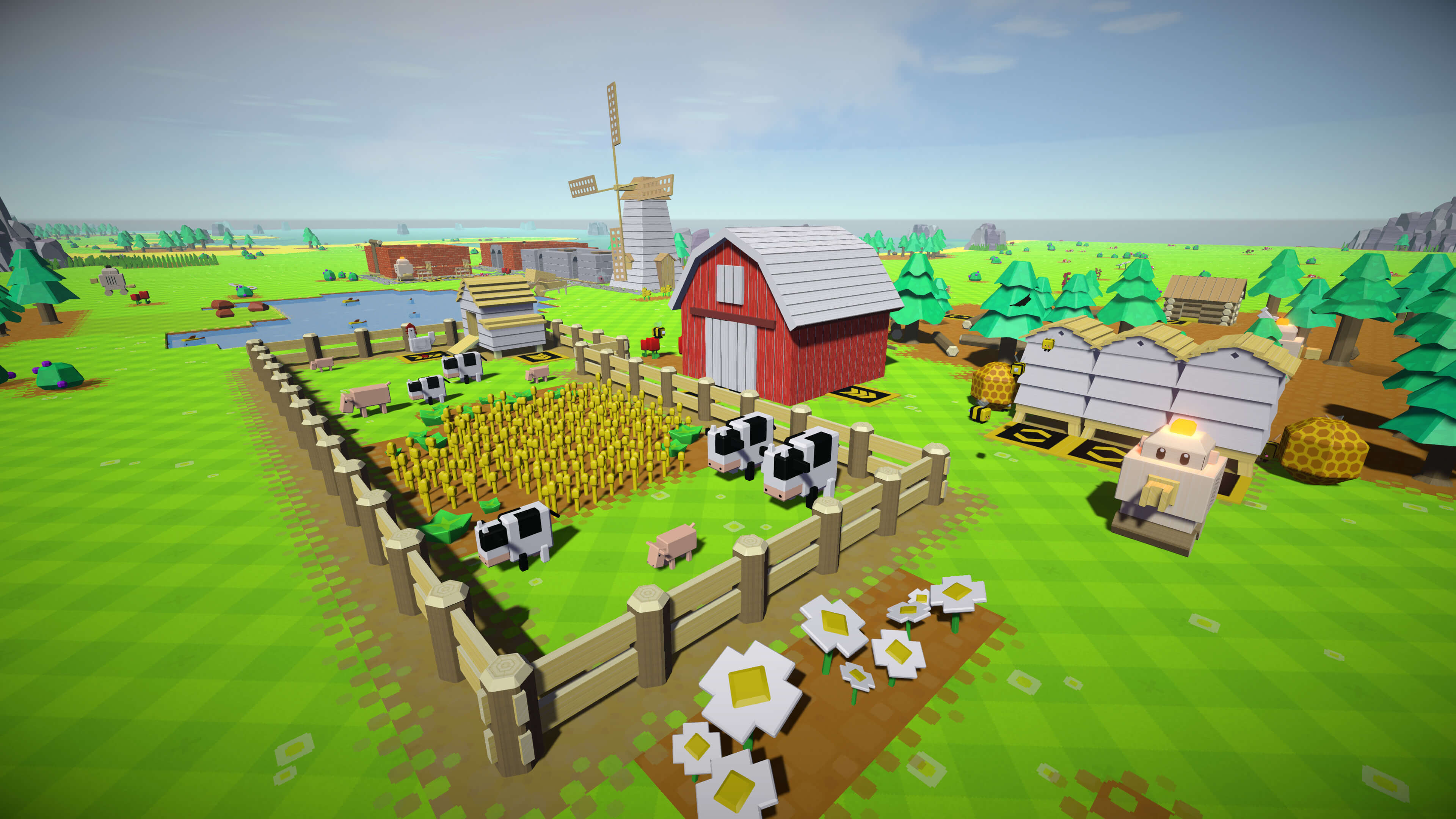
Autonauts is one of the friendliest short factory games because automation happens through robot routines.
You teach bots to farm, craft, haul, store, and repeat tasks. Small loops become bigger systems. Bigger systems become a functioning automated colony.
It works best if you like programming-lite logic without wanting a brutal industrial sim. The game is readable, cozy, and forgiving compared with harsher factory games.
Each new bot routine feels like a small completed project. That gives Autonauts a natural stop-start rhythm that makes it easier to play in shorter sessions.
The friction is repetition.
If you dislike tuning little behavior loops or rebuilding task chains, Autonauts can start to feel like busywork. It is also not the best fit for players who want heavy throughput math, severe resource pressure, or huge production architecture.
Its strength is delegation, not industrial intensity.
Factory Town
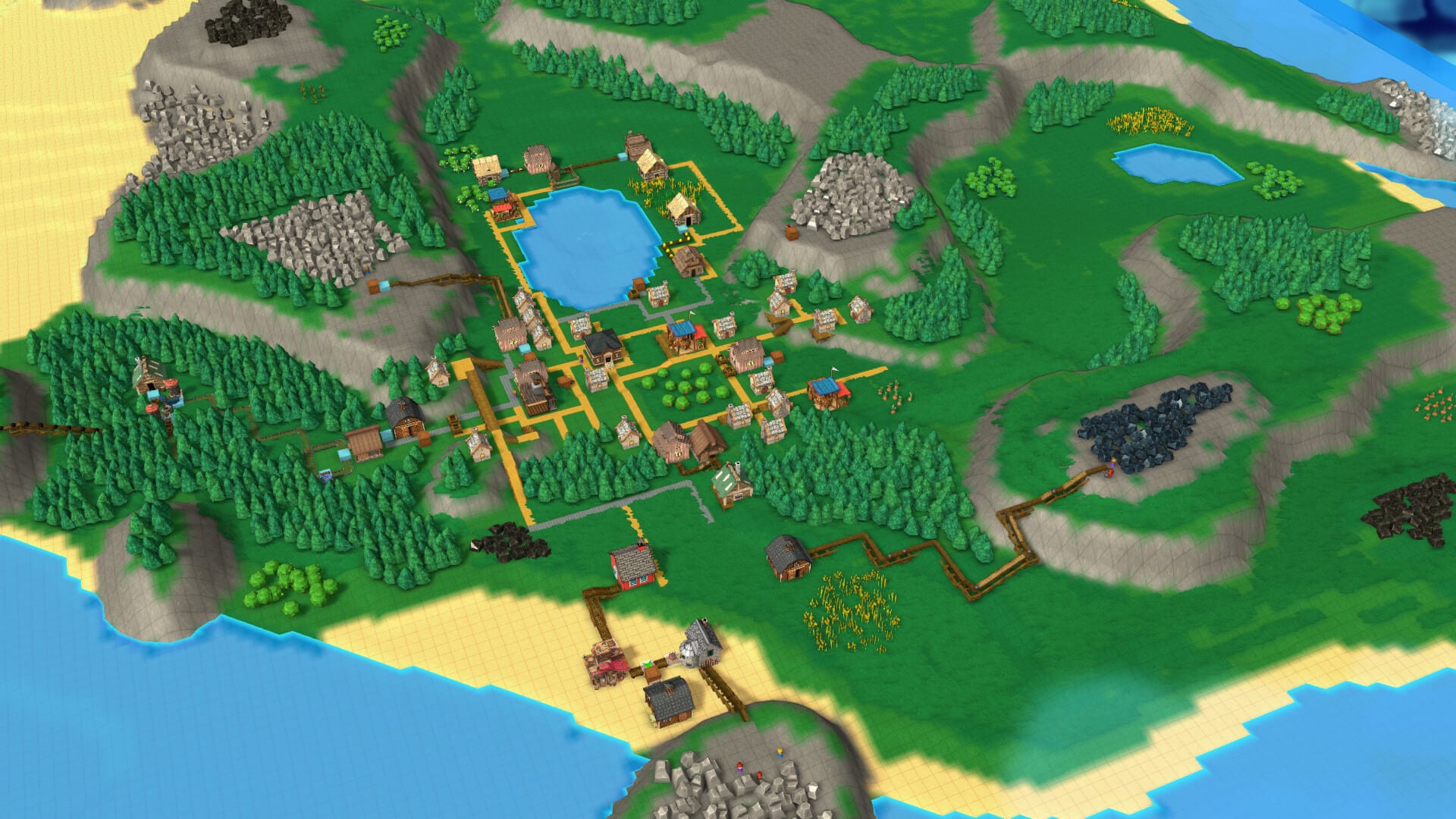
Factory Town is the softest recommendation on this list.
It mixes villagers, conveyors, magic transport, production chains, and town planning into a colorful logistics sandbox. The pressure is low, the systems are readable, and the game is more interested in flow than punishment.
It belongs here because the automation is approachable and the scale does not have to become insane.
You can build a satisfying production economy, connect chains, improve transport, and reach a point where the town simply works.
That is enough for the right player.
The caveat matters: Factory Town has a softer “finished” moment than Shapez, Mindustry, or Factorio. If you need a hard final objective, this is only a partial fit.
If you are comfortable defining completion as “the economy runs and I am happy with it,” Factory Town is one of the more pleasant ways to play factory logistics without burning a whole month.
InfraSpace
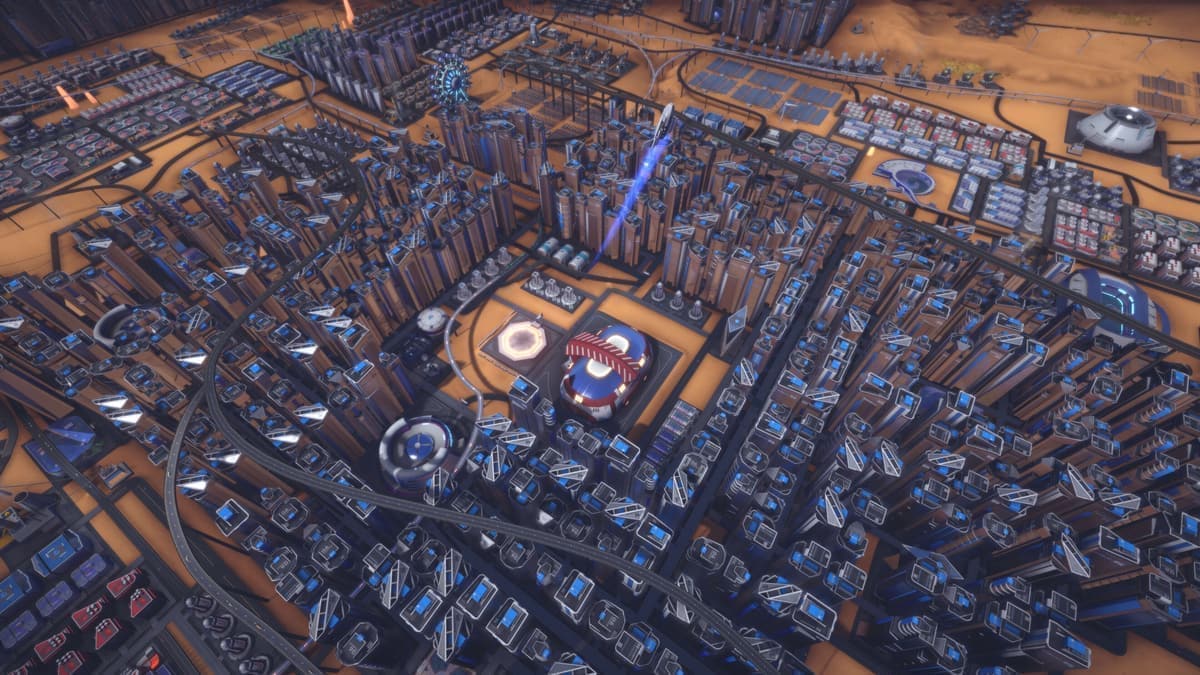
InfraSpace is included as a factory-city hybrid, not a pure factory sim.
Its appeal is the overlap between production chains, resource logistics, traffic planning, and city layout. You are building a sci-fi city, but that city only works if the industrial network underneath it works.
That makes InfraSpace useful for players who enjoy factory thinking but also want roads, bottlenecks, population needs, and transport flow to matter.
Compared with broader city builders, InfraSpace keeps production close to the center. The “done” feeling comes from stabilizing supply chains and transport networks rather than decorating a forever city.
The tradeoff is genre drift.
If you came here for machine placement and belt puzzles, InfraSpace may feel too much like city management. Traffic matters. Road layout matters. Services matter.
That is a strength for the right player and noise for the wrong one.
Factorio
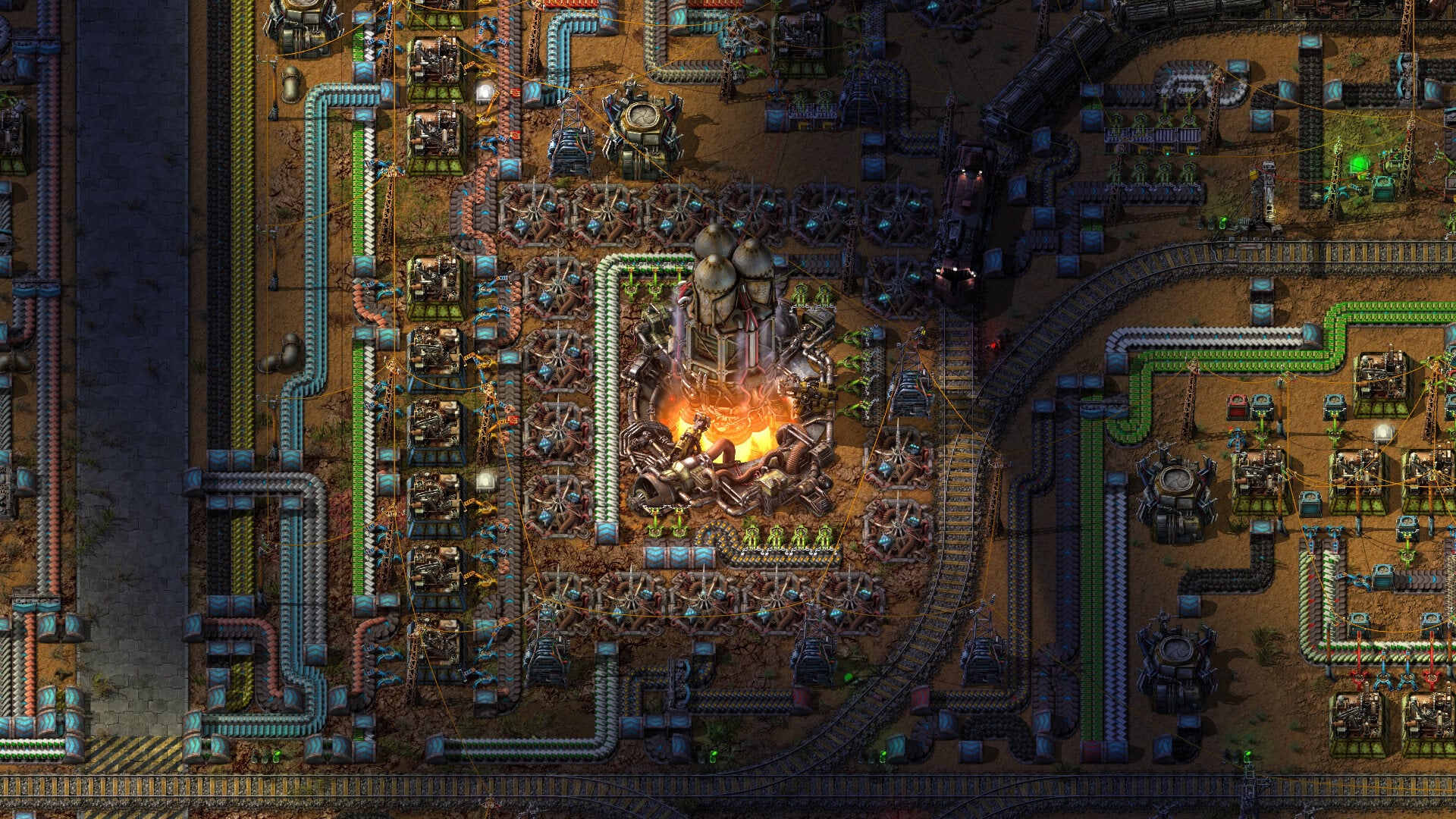
Factorio is the dangerous pick on a list about factory games under 50 hours.
It has a clear victory target, so it can be finished in a reasonable time. It is also one of the easiest games in the genre to accidentally turn into a 200-hour project.
That is not a criticism. That is the warning label.
Choose Factorio if you want the benchmark: belts, trains, blueprints, resource scaling, combat pressure, and constant throughput improvement.
The right way to play it for this list is simple:
Aim for the first major win condition. Accept ugly layouts. Do not chase perfect ratios. Do not redesign half the base because one line looks stupid.
Unless, of course, that is exactly why you are playing.
Factorio fits this article only if you have discipline. If you know you cannot leave a bus half-messy or a train network merely functional, this is not the short option.
It is the classic option with a stop sign.
You still have to obey it.
Who should pick a shorter factory game?
Shorter factory games are best for players who like completion as much as optimization.
If a save file starts feeling like maintenance work after the main problem is solved, you are the target audience.
They also make sense if you are coming back from factory-game burnout. Shapez, Autonauts, and Mindustry give you automation satisfaction without the long ramp of a giant sandbox.
Production Line and InfraSpace work better if your favorite problems are bottlenecks, transport, layout, and production flow.
They are a worse fit if your favorite part of the genre is postgame scale.
If you want endless blueprints, giant rail networks, vertical megafactories, interplanetary logistics, or brutal resource planning, play Factorio, Satisfactory, Dyson Sphere Program, Captain of Industry, or Foundry with no apology.
Just do not pretend those are short projects.
How to choose without drifting into a 100-hour save
Start with the kind of closure you actually want.
If you want pure automation logic, play Shapez.
If you want that idea with more space and cleaner modular scale, play Shapez 2.
If you want pressure, combat, and objective-driven maps, pick Mindustry.
If you want a grounded factory-floor management problem, Production Line is the better fit.
For calmer sessions, choose Autonauts or Factory Town. Autonauts is better for robot scripting and task delegation. Factory Town is better for relaxed production chains and town-scale logistics.
If you want the city builder side to matter, choose InfraSpace.
Factorio is the exception. Pick it only if you want the classic and you are willing to stop at the first real finish line.
The common mistake is treating “I can finish it” as the same thing as “I will finish it.”
With Factorio, those are very different sentences.
A small upgrade for shorter automation sessions
Shorter factory games still reward precise mouse movement, especially when you are placing belts, dragging routes, cleaning up dense layouts, or rebuilding compact production lines.
A large, steady mouse pad is a practical fit for this kind of play.
Canjoy Gaming Mouse Pad
Desk-size pad for more room and smoother mouse travel in long strategy sessions.
FAQ
Can factory games under 50 hours still feel satisfying?
Yes, if the game gives you clear production targets, campaign structure, or a natural stopping point.
The key is choosing for closure instead of maximum scale.
What is the best short factory game for beginners?
Shapez is the safest first pick for pure automation.
Autonauts is better if you want a cozy colony feel with robot scripting instead of industrial pressure.
Is Factorio really a short factory game?
Only conditionally.
Factorio has a clear victory path, but it also encourages endless optimization. It fits this list for disciplined players, not for megabase builders.
Why are Satisfactory and Dyson Sphere Program not main picks?
Satisfactory and Dyson Sphere Program are built around large-scale expansion.
They are excellent if you want long saves, but they are not the cleanest answers for players searching for factory games they can finish in a reasonable time.
Are factory-adjacent city builders fair picks here?
Yes, when the logistics overlap is strong.
InfraSpace qualifies because production chains and transport efficiency are central. A broader city builder with only light industry would not fit the same way.
Takeaway
Factory games under 50 hours work best when you pick for closure, not maximum ambition.
Shapez is the cleanest short automation pick. Mindustry is best if you want pressure. Autonauts is the cozy option. Production Line is strongest for focused throughput management.
Choose Factorio only if you can stop at the first finish line.
Otherwise, save the huge sandboxes for when you actually want the second job.