Best Factory Games for Co-Op
Automation and factory games that are better with a friend — split the work or share the chaos.
The best factory games co-op players can jump into are the ones where teamwork changes the game instead of just adding another body to the map. Good co-op automation games let one player handle logistics while the other expands production, fixes bottlenecks, or keeps power and resources stable.
This list is for players who want factory games multiplayer actually improves, not just games that technically allow it. I stuck to picks where co-op is implemented well, and where playing with a friend meaningfully changes pacing, workload, or the kind of problems you solve together.
Already played these? Here are the overlooked co-op factory and automation picks worth trying once the shortlist is done.
Quick take
- Factorio is still the top pick if you want deep logistics, strong multiplayer support, and clean role-splitting.
- Satisfactory works best for pairs who care as much about building space as throughput.
- Mindustry is the best fit if you want factory systems under real combat pressure instead of pure optimization.
- Techtonica is a good choice for a more guided co-op automation experience with less friction than the heaviest games here.
- Foundry makes sense for players who want block-based construction and a lighter, more modular session feel.
- StarRupture is the co-op-first pick if you want first-person automation mixed with survival and combat.
- Oddsparks is the easiest cozy on-ramp when you want helper-creature logistics and light combat without Factorio-level pressure.
The picks
Factorio
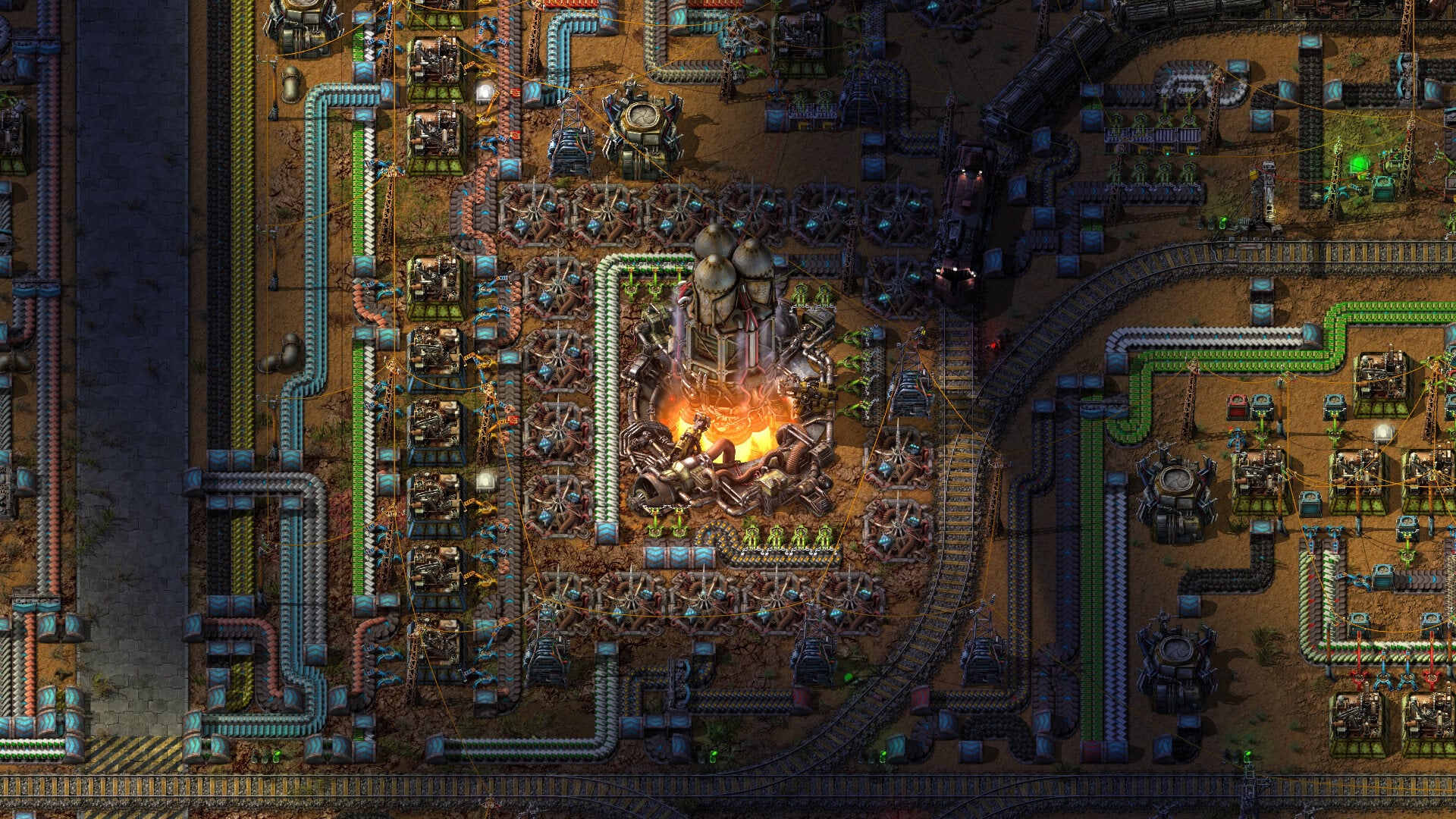
This is the benchmark for co-op factory games because almost every task can be split cleanly. One player can expand mining and rail lines while the other rebuilds smelting, sets up science, or handles defenses. That division of labor feels natural instead of forced, and the game stays readable even when multiple people are changing the same production chain.
It fits best for pairs or groups who want serious logistics depth and don't mind solving problems methodically. For many players, this is the game where co-op feels most productive rather than chaotic.
The tradeoff is obvious: it can be demanding. New players often create messy systems that work for an hour and then collapse under scale, and combat pressure can frustrate players who just want to optimize in peace.
If your group wants the cleanest answer to "what should we play first," Factorio still earns it: co-op supports parallel progress at almost every stage, and you rarely feel like an extra pair of hands with nothing meaningful to do. It tends to scale cleanly with more players instead of awkwardly spiking difficulty. Skip it if your partner dislikes rebuilds, heavy planning, or defending the factory while scaling—there are easier entry points below.
Satisfactory
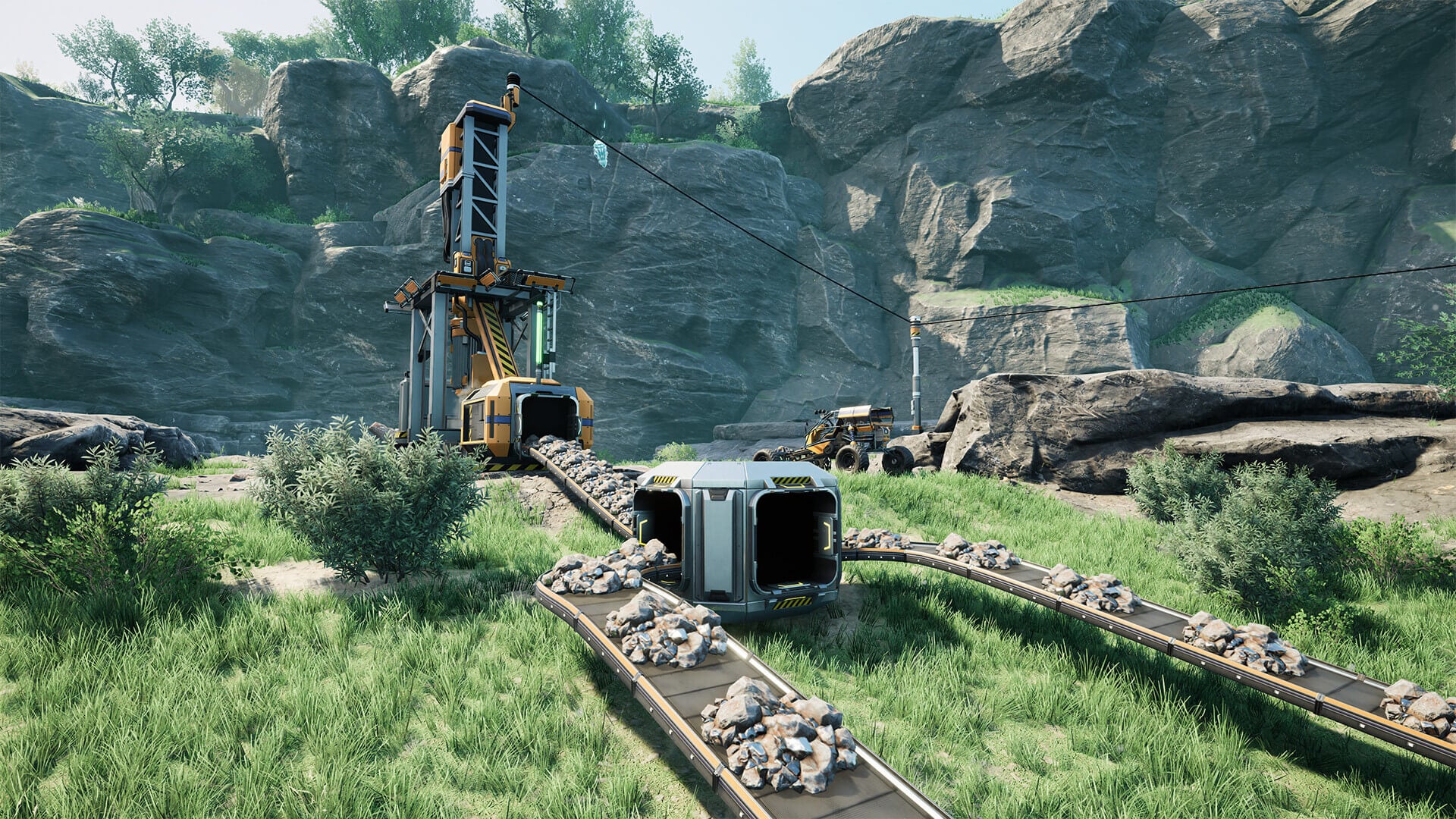
The big difference here is physical building. In co-op, Satisfactory gets much better because one player can focus on exploration, hard-drive hunting, and resource outposts while the other shapes the main factory floor. Splitting logistics vs building changes the feel in a good way, especially once belts, vertical layouts, and long transport routes start getting large.
This clicks most if you want automation with a stronger sense of place. It's great with a friend because construction takes time, and a second player turns long setup phases into actual progress instead of busywork.
The main friction is pacing. Satisfactory is slower and more hands-on than Factorio, and some players bounce off the amount of manual placement required before the factory becomes elegant.
Big construction projects, long-distance transport, and rebuild-heavy milestones are simply less tedious when two people split the workload—much of the fun is collaborative problem solving in shared 3D space rather than pure ratio optimization. Travel and hand-placing infrastructure are still part of the package; if your group wants faster top-down iteration, look elsewhere on this list.
Techtonica
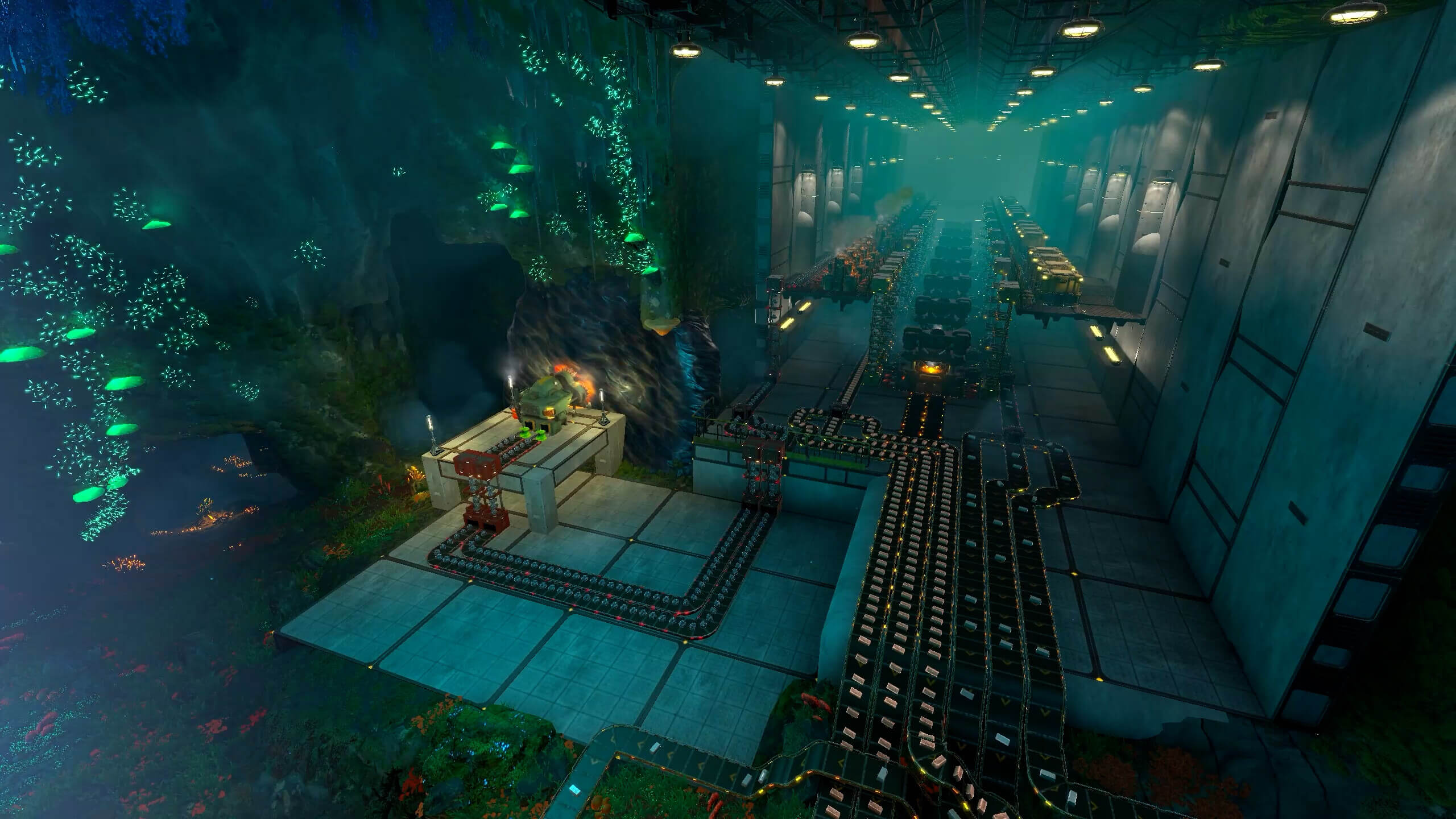
Techtonica is one of the easier co-op recommendations here because it gives you enough direction to keep two players aligned. That matters more than it sounds. In some factory games, one person can end up waiting for the other to decide the whole plan. Techtonica tends to reduce that problem with a clearer structure and a more guided progression path.
It's a strong fit for players who want co-op automation without immediately drowning in optimization depth. The cave setting also keeps the map more contained, which helps small groups stay focused on shared goals instead of scattering across a huge world.
Its limitation is scale and freedom compared to the genre's biggest names. If you want massive open-ended logistics networks or highly expressive factory architecture, this may feel narrower.
Mindustry
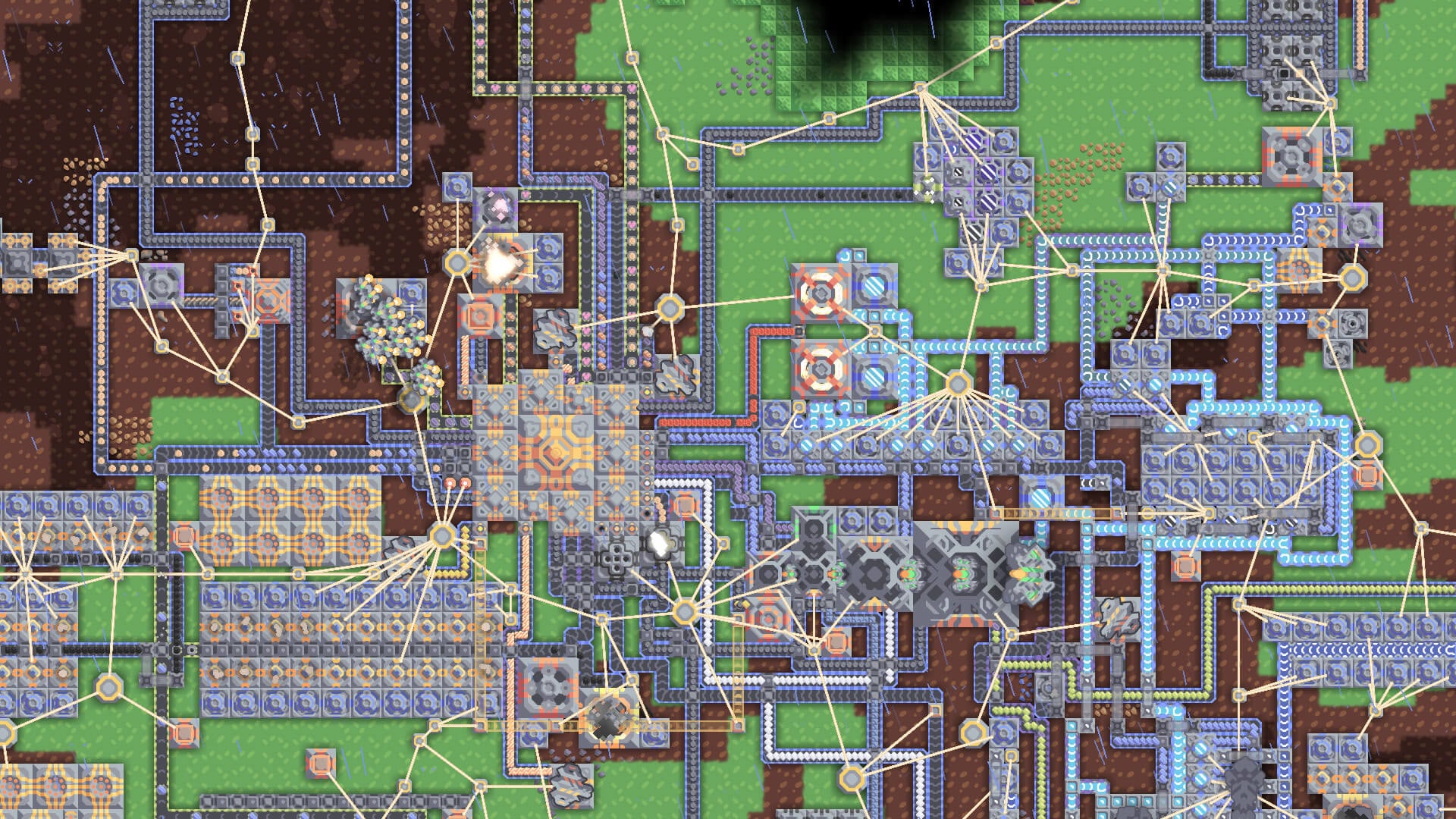
Mindustry belongs here because co-op isn't just about efficiency; it's also about handling pressure together. You are building production chains while defending them, and that makes teamwork much more active. One player can stabilize resources while another reinforces defenses or pushes expansion.
This is the best pick for players who want factory systems with constant combat stakes. It works especially well when you like short-to-medium sessions with immediate problems to solve, not just long-term production planning.
The downside is that it is not a relaxed automation game. If your group wants to zone out and perfect layouts at its own pace, Mindustry can feel too aggressive and too focused on defense.
Foundry
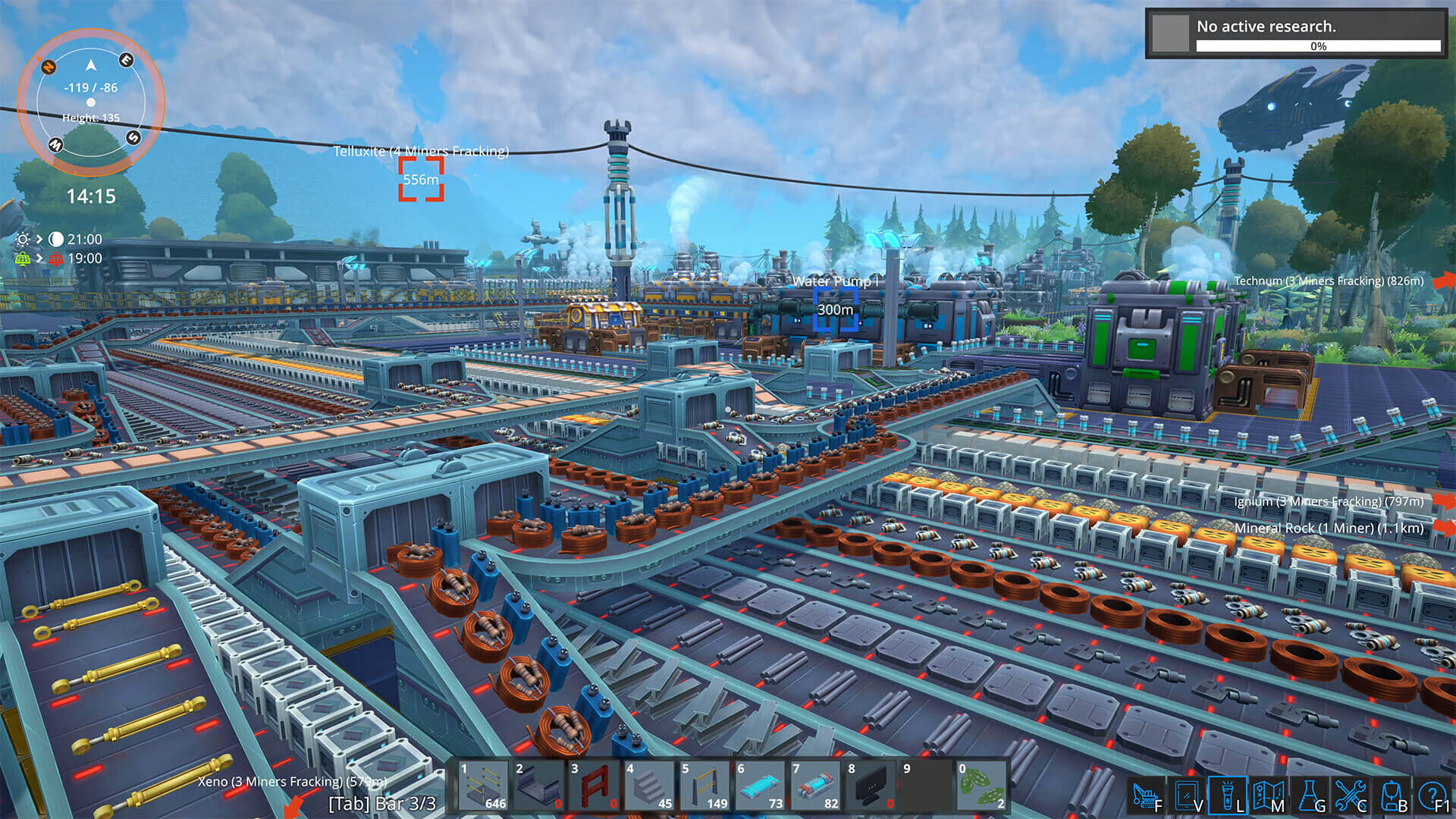
Foundry makes sense for co-op players who like modular building and a lighter session feel. Its block-based world changes the rhythm: factories are still about throughput and routing, but construction has a more direct, hands-on structure that many pairs find easier to coordinate.
It fits best for players who want something between the complexity of heavier automation games and the freedom of sandbox construction. This tends to work best when one player likes designing clean production rooms and the other likes gathering, routing, and expansion.
The tradeoff is that it does not hit the same logistics intensity as the deepest factory games. If your group wants dense late-game optimization puzzles, it may feel a bit softer.
StarRupture
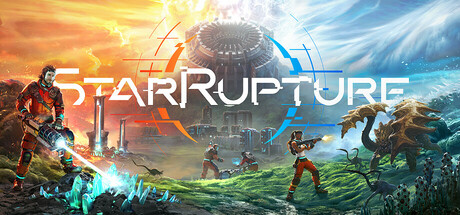
StarRupture belongs near the top of any co-op factory shortlist because multiplayer is the design, not an afterthought. Up to four players share an open alien world: gather, automate industrial lines, expand the base, and fight off local fauna together. That mix makes role-splitting feel natural—one person can stabilize production while another scouts, defends, or pushes the frontier.
It fits groups who want Satisfactory-style first-person factories with harder survival and combat pressure baked in. Co-op sessions stay active because the world pushes back instead of waiting politely while you rebuild a smelter row.
The tradeoff is early access maturity. Expect rough edges and a game still deciding how hard it leans “automation” versus “survival shooter.” If your group wants polished megabase logistics with no survival noise, stay with Factorio or Satisfactory.
Oddsparks
Oddsparks is the coziest co-op automation pick here. You direct Sparks—small helper creatures that carry, craft, and defend—while you focus on layout, logistics, and terrain. Official support covers four players, and the fantasy-adventure framing keeps sessions lighter than belt-heavy genre staples.
It fits mixed-skill groups and friends who bounce off Factorio’s density. One player can plan routes while another assigns Spark work, explores, or handles light combat. That creature-powered loop makes “what should I do?” obvious even for newcomers.
The limitation is depth ceiling. If your group wants dense late-game ratios, train signaling, or megabase math, Oddsparks will feel softer. Treat it as the friendly on-ramp, not the endgame logistics benchmark.
Space Engineers
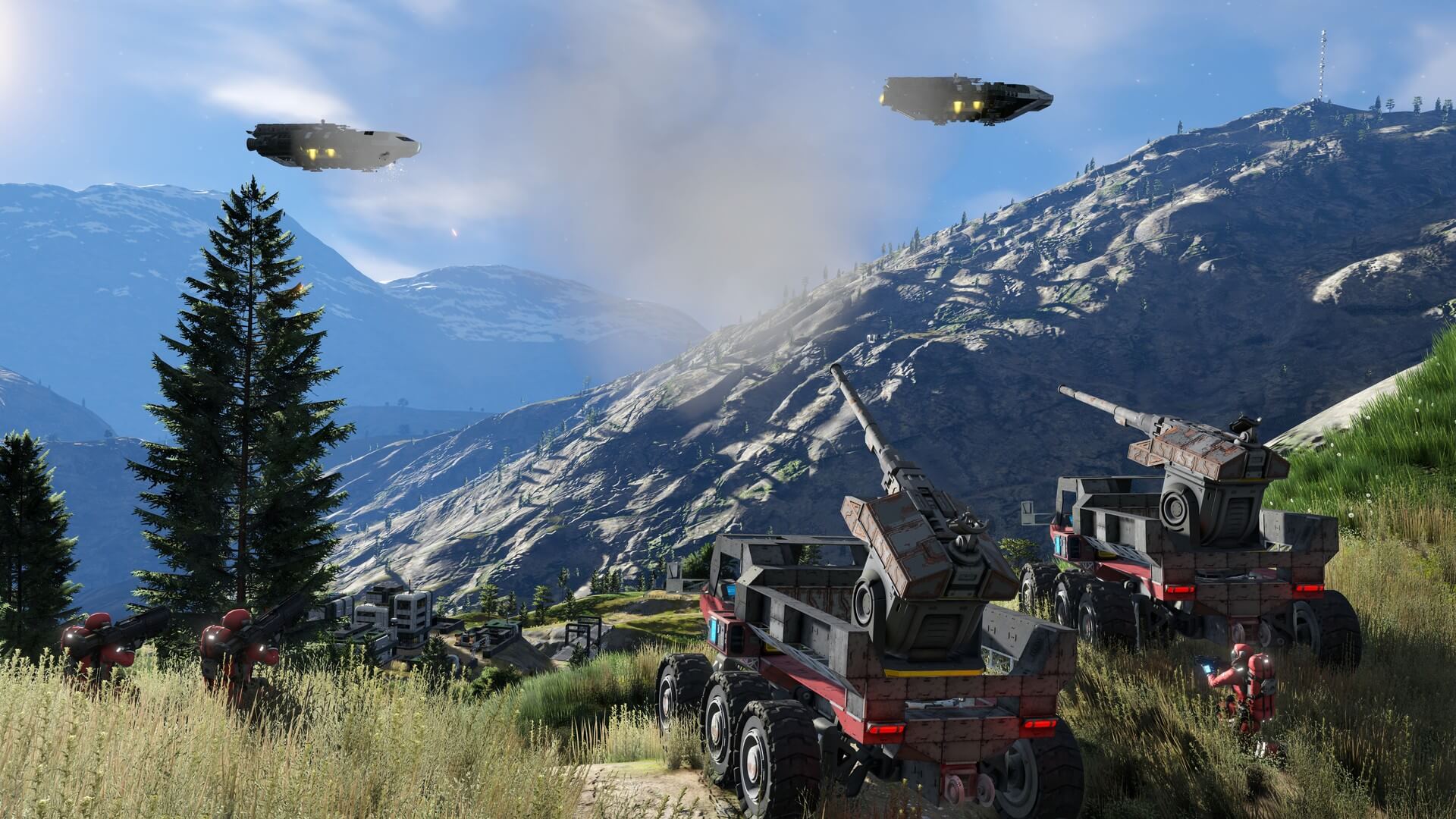
This is the partial-fit pick, but it earns the slot because co-op implementation matters more than genre purity for this topic. Space Engineers supports collaborative engineering in a way that can feel excellent with the right group. Dividing ship construction, power, mining, transport, and infrastructure gives pairs a lot to do.
It fits players who want factory-style problem solving inside a broader engineering sandbox. If your favorite part of automation games is building systems together rather than chasing perfect ratios, this can absolutely click.
The reason it may not work for everyone is focus. Space Engineers is not a pure factory game, and sessions can drift into vehicle building or survival tasks instead of tight production optimization.
Shapez 2
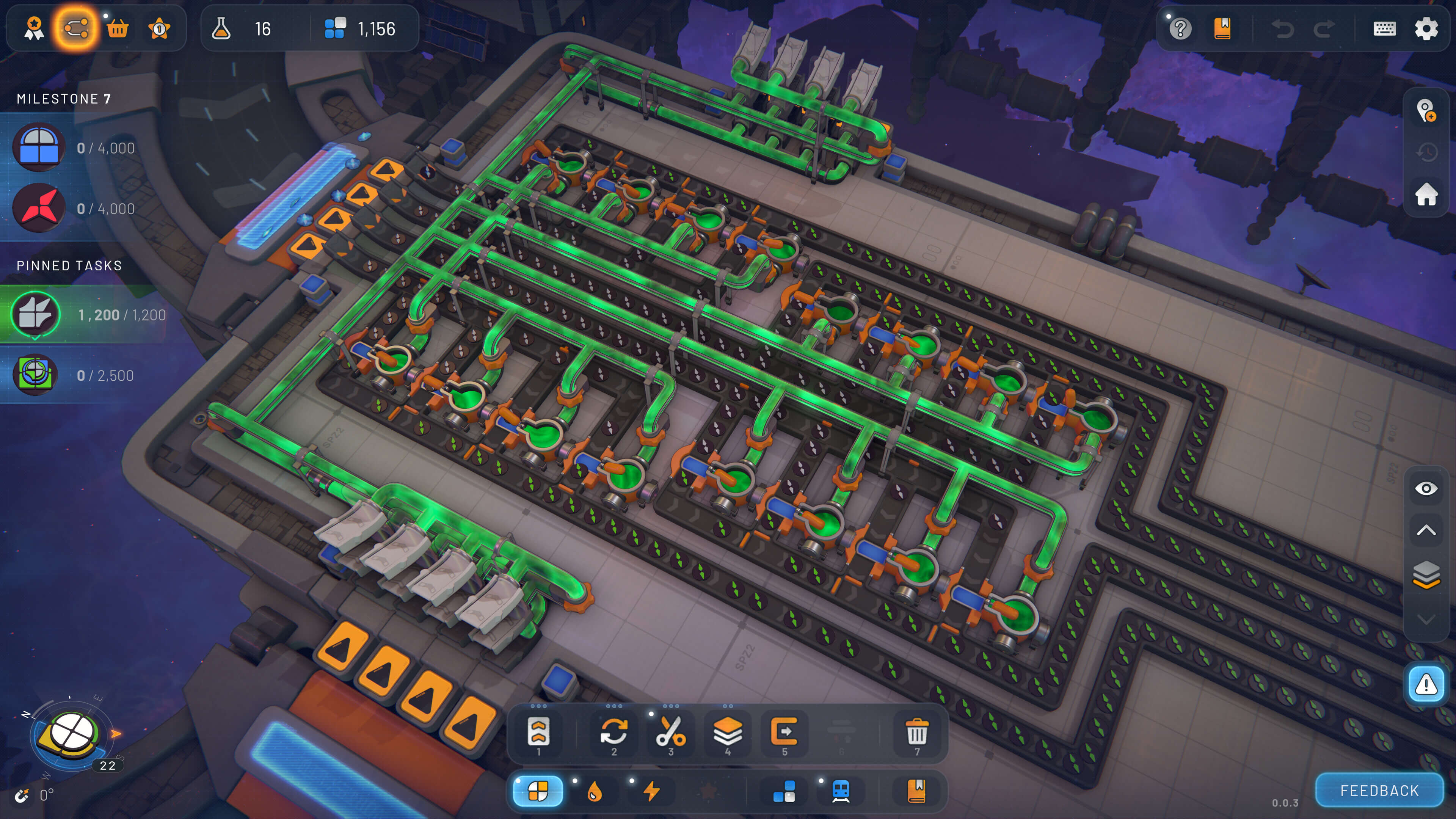
For players who care most about clean throughput and abstract logistics, Shapez 2 is a very smart co-op pick. It strips away survival friction and crafting clutter so you can focus on routing, scaling, and layout logic. In multiplayer, that makes collaboration surprisingly efficient because both players are speaking the same mechanical language almost immediately.
This suits pairs who want a pure automation puzzle and do not need world simulation or exploration. It is also one of the better choices when one person is newer to factory games but still enjoys systems thinking.
Its limitation is emotional texture. Because it is abstract by design, some players miss the sense of place, machinery, and physical factory presence they get from games like Satisfactory or Techtonica.
Desynced
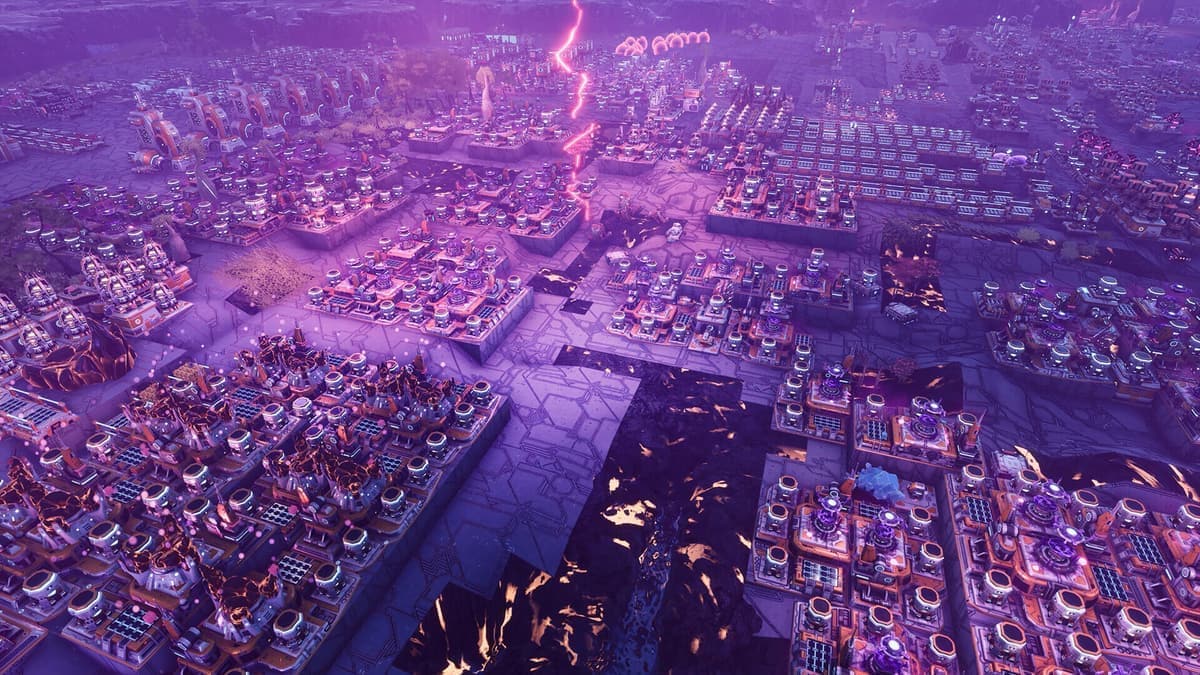
Desynced works well in co-op if your group likes automation through programmable units and flexible logistics instead of fixed conveyor-heavy layouts. The appeal is coordination: one player can refine production chains while the other manages bots, routing behavior, and expansion priorities.
This is a strong recommendation for players who enjoy systems that feel a little less rigid and a little more adaptive. It rewards experimentation, and co-op helps because one person can test odd setups without stalling overall progress.
The tradeoff is readability. Compared to more straightforward factory games, Desynced can take longer to parse, and that learning curve may be a problem if your co-op partner wants immediate clarity.
Factory Town
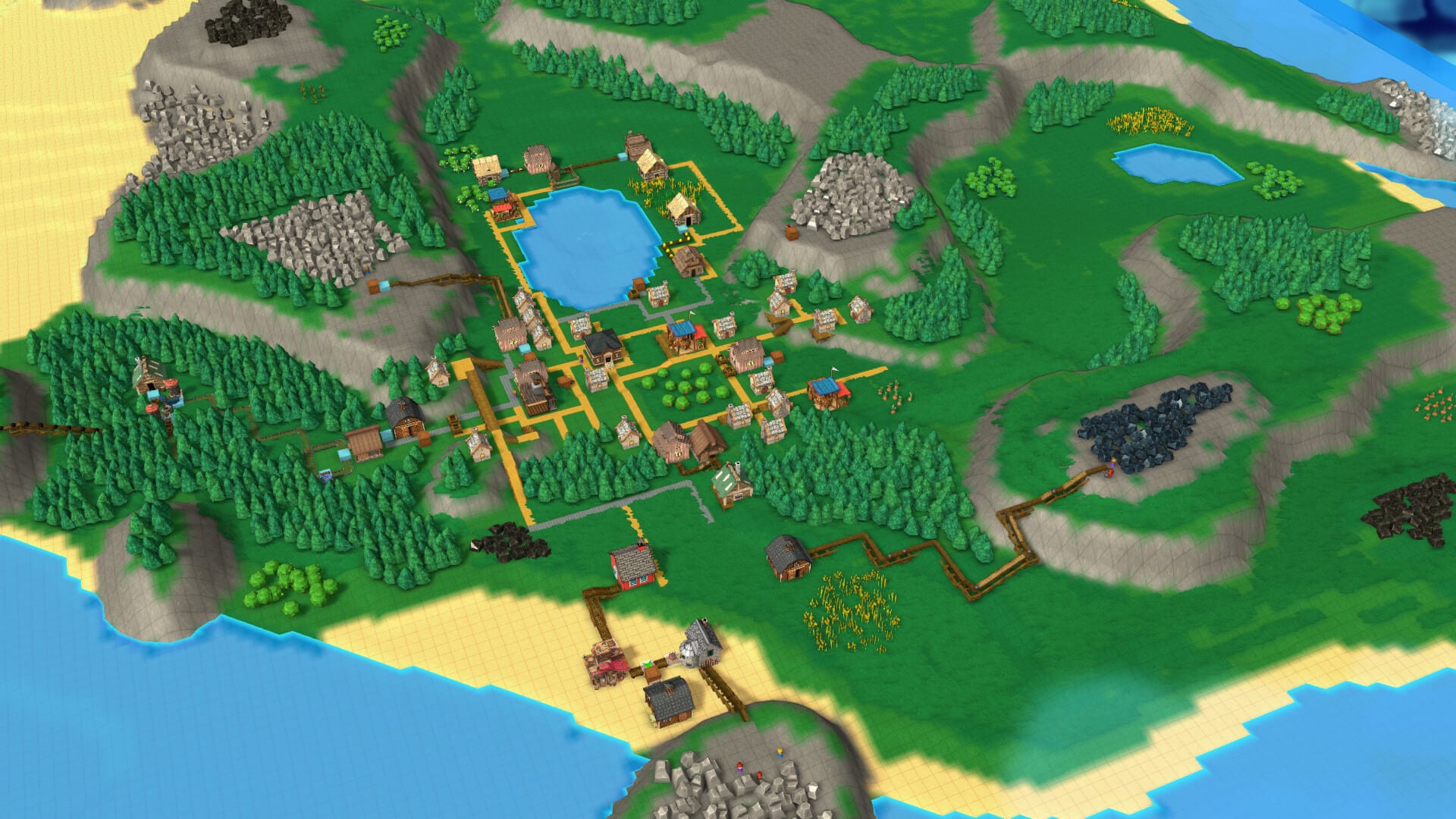
Factory Town is still one of the most relaxed games on this list, and that is exactly why it belongs. In co-op, it gives two players room to settle into different roles without intense combat, harsh survival pressure, or punishing failure states. One person can shape transport networks while the other develops production chains and town growth.
It fits best for players who want a softer, more approachable automation game with city builder energy around the edges. This is also one of the better picks for mixed-skill groups because the game is less likely to punish imperfect play. If you want that same cozy co-op energy with more creature-driven logistics, start with Oddsparks instead.
The main drawback is tension. If your idea of the best factory games co-op means high complexity and constant problem-solving pressure, Factory Town may feel too gentle.
Which type of player will enjoy these most
These games click best for players who actually want to divide responsibilities. Co-op automation is at its best when one person enjoys throughput and logistics while the other likes expansion, layout, defense, or exploration. If both players want total control over every belt and building, friction shows up fast.
They also fit different moods. Factorio and Shapez 2 are better for players chasing cleaner systems and sharper optimization. Satisfactory, Foundry, and StarRupture work better when shared construction—and in StarRupture’s case, shared survival pressure—matters as much as the output. If your group wants pressure, go with Mindustry or StarRupture. If you want a smoother on-ramp, Techtonica, Oddsparks, or Factory Town are easier recommendations.
What matters most when picking your next game
The first question is not complexity. It is role clarity. The best co-op factory games give each player meaningful work without forcing them to wait on the same task queue. That's why some games are great with a friend, tedious solo, while others feel fine alone but awkward in multiplayer.
The second question is pace. Slow, physical construction can be fun if both players like talking through builds. It is a problem if one player wants rapid iteration. Finally, check how the game handles pressure. Combat and scaling can improve teamwork when both players want urgency, but they can also turn a relaxing factory session into constant cleanup.
A headset pick for long co-op factory sessions
Factory games multiplayer sessions tend to run long, and good voice chat matters when you're coordinating layouts, transport lines, and rebuilds. A comfortable wireless headset is a practical upgrade for pairs who spend hours planning and adjusting together.
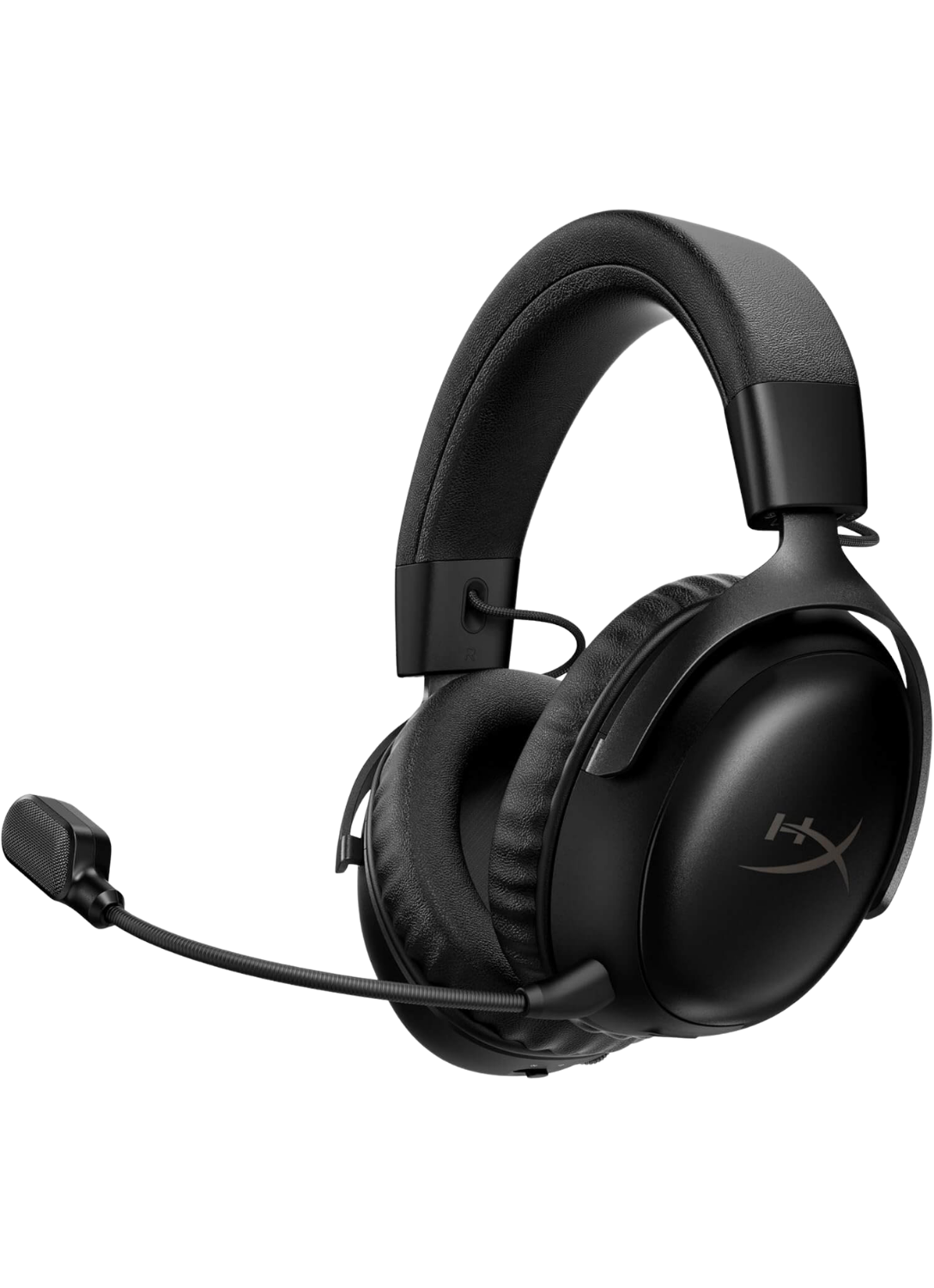
HyperX Cloud III S Wireless
Comfortable wireless headset for long sessions—clear audio, detachable mic.
FAQ
What is the best co-op factory game overall?
Factorio is the strongest overall pick for most players because co-op is deeply integrated into how the factory grows. Tasks split cleanly, progress scales well with more players, and logistics stay central.
What is the best 3D co-op factory game?
Satisfactory is the easy recommendation if you want 3D construction and shared world-building. It is especially good for pairs who enjoy designing the space of the factory, not just the math behind it.
Are all factory games better in co-op?
No. Some factory games are best when one person controls the whole plan. I only recommend games where co-op is actually implemented well and where adding another player changes the experience for the better.
Which co-op factory game is easiest to start with?
Oddsparks, Techtonica, and Factory Town are the safest starting points here. They are easier to parse than the heaviest logistics games, and they give new players useful things to do early.
What if I want automation with combat pressure?
Mindustry is still the cleanest tower-defense factory answer. StarRupture is the better pick if you want first-person co-op with open-world combat mixed into the automation loop.
Takeaway
The best factory games co-op players should start with are the ones that make teamwork feel useful, not messy. Factorio is still the strongest all-around pick, Satisfactory is excellent for shared construction, and Mindustry is the call if you want pressure on top of production. When you've worked through this list, the overlooked co-op factory games cover the next shelf — defense hybrids, terraforming automation, and production-chain city builders most lists skip.