Dyson Sphere Program Beginner Guide: How to Leave Your Starting Planet
A practical Dyson Sphere Program beginner guide for your first 10 hours: what to automate, how to unlock sail mode, how to reach titanium, and how to avoid early-game factory chaos.
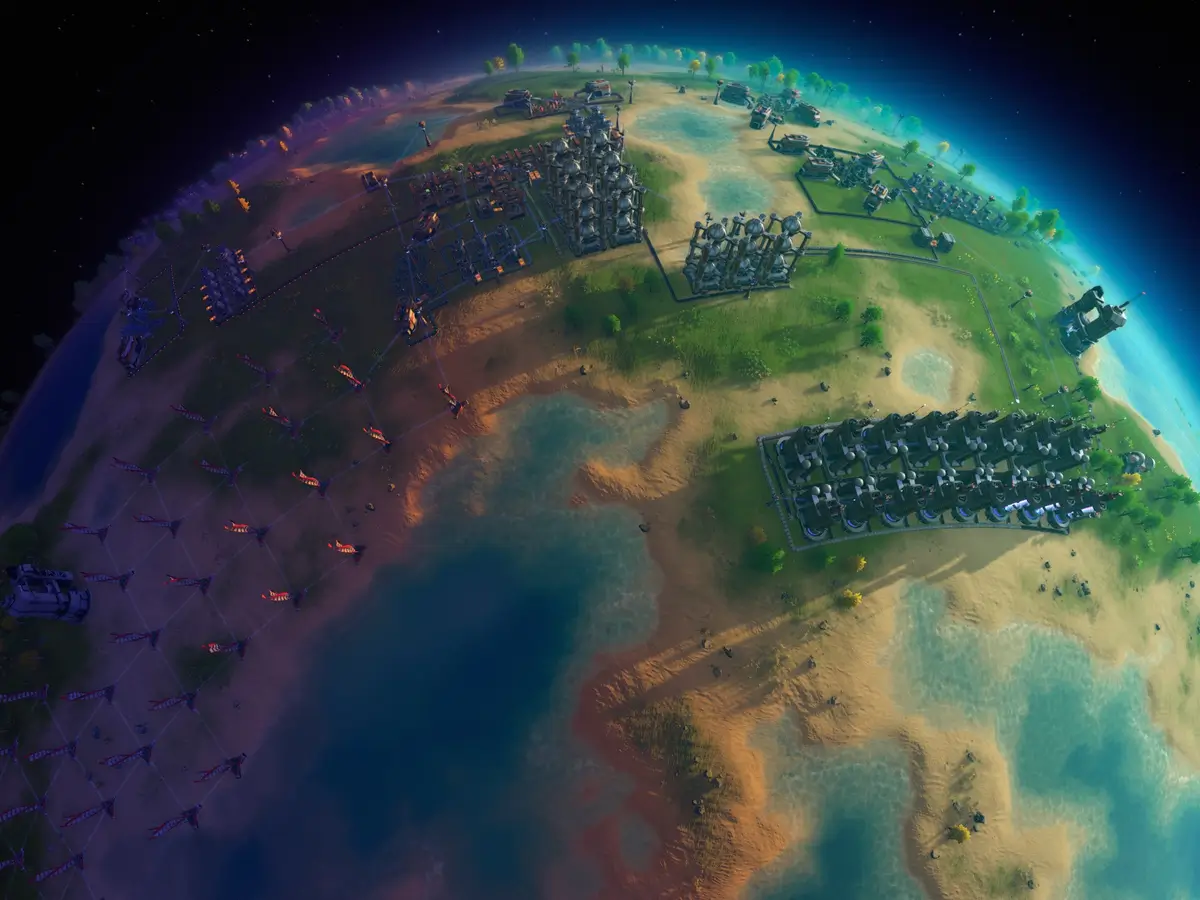
Dyson Sphere Program looks calm in the first hour. A small planet, a little mech, a few miners, some belts, a couple of smelters. Then the game quietly tells you the truth: your starting planet is not enough.
This Dyson Sphere Program beginner guide is about the first real goal that matters: leaving your starting planet. Not building a perfect starter base. Not making beautiful belt art. Not pretending your first spaghetti factory is going to survive forever. Your first 10 hours should push toward one thing: getting into space, finding titanium, and turning your messy starter setup into a real interplanetary factory.
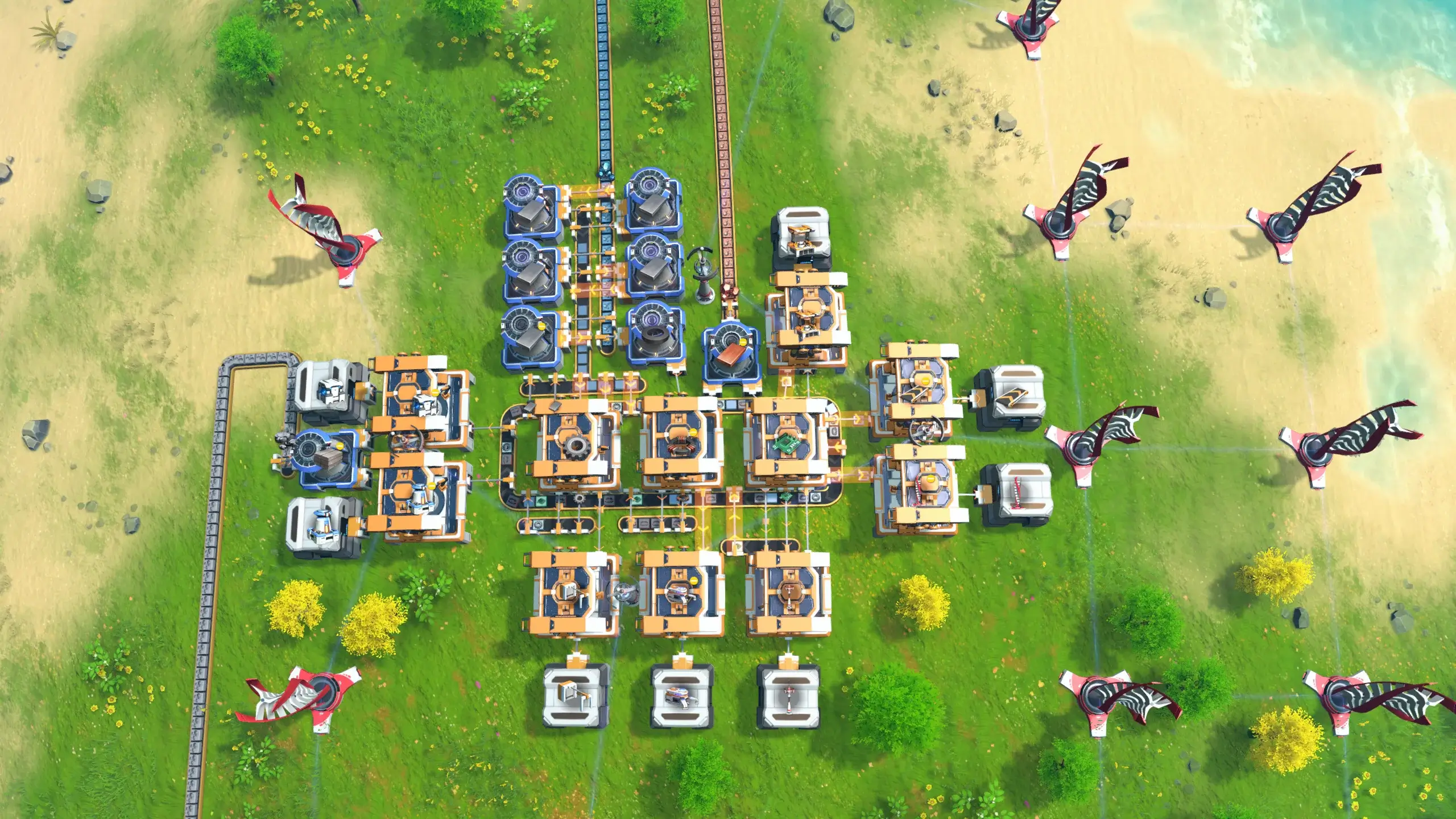
Quick take
Your first 10 hours should aim for this:
- automate iron, copper, stone, coal, magnets, magnetic coils, gears, circuit boards, and glass
- build a small but steady blue matrix setup
- unlock and automate basic research instead of hand-feeding labs forever
- get red matrices running from energetic graphite and hydrogen
- upgrade your mecha enough to enter sail mode
- bring buildings and fuel before leaving the planet
- find titanium on another planet
- set up a crude titanium mining outpost
- bring titanium home
- start moving toward logistics stations
Do that, and you are playing Dyson Sphere Program properly.
Not perfectly.
Properly.
There is a difference.
What "leaving your starting planet" actually means
Leaving the starting planet is not the end of the early game. It is the moment the game opens its mouth.
Before that, Dyson Sphere Program feels like a compact factory game. You mine local resources, build belts, unlock research, and keep patching whatever part of the factory is starving. Useful, but small.
Once you leave the planet, the real shape of the game appears:
- your starter planet becomes your home base
- nearby planets become resource colonies
- titanium stops being a random rock drop and becomes a supply chain
- logistics starts mattering more than local belt cleanup
- every bad layout decision becomes less important because scale takes over
The first trip is not about colonizing the galaxy. It is about breaking the starter planet trap.
You are not trying to build a Dyson Sphere yet.
You are trying to stop being poor.
Beginner checklist before launch
Before you fly away, make sure you have these covered:
- a stable power grid
- several stacks of fuel for Icarus
- miners
- belts
- sorters
- Tesla towers
- wind turbines or thermal power stations
- smelters
- storage boxes
- enough basic parts to build without panic
- Drive Engine upgrades needed for space travel
- a clear idea of which nearby planet has titanium
Do not leave with empty pockets.
This is not Satisfactory, where you can sprint back across a field after realizing you forgot plates. If you fly to another planet and forget miners, congratulations. You built yourself a sightseeing trip.
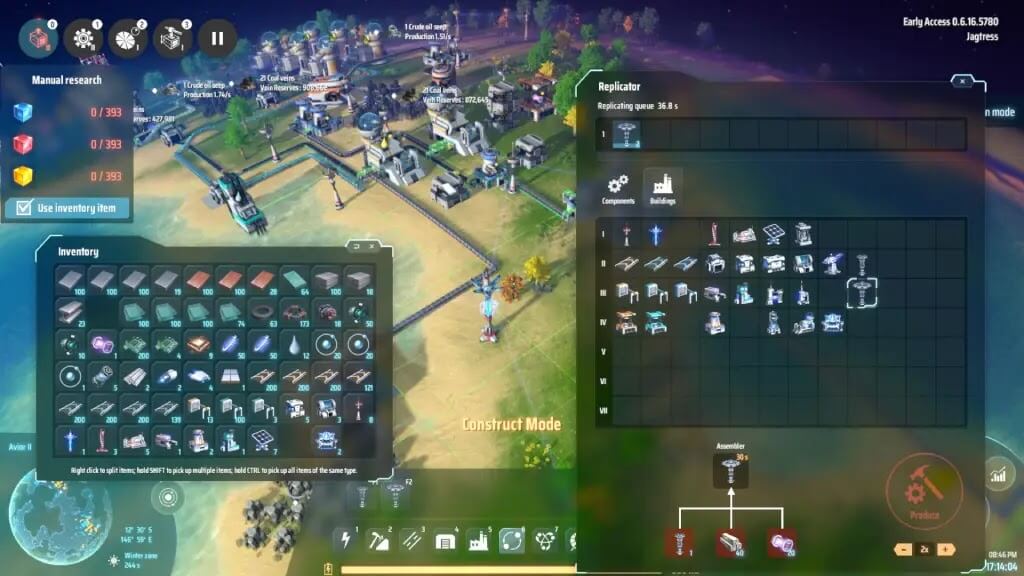
Before you build anything
The first beginner mistake in Dyson Sphere Program is treating the starter base like a forever base.
It is not.
Your first base is a bootstrapping machine. Its job is to produce the parts and research needed to escape the planet. That means you should build clean enough to understand it, but not so precious that you waste three hours rebuilding every belt.
Good early factory priorities:
- iron ingots
- copper ingots
- magnets
- magnetic coils
- gears
- circuit boards
- stone bricks
- glass
- energetic graphite
- blue matrices
- red matrices
Bad early factory priorities:
- perfect ratios everywhere
- beautiful belt symmetry
- massive storage walls
- rebuilding the same iron line five times
- hand-crafting every building like a caveman with a space mech
You can clean up later. Early on, movement matters more than elegance.
The first hour: get functional, not fancy
The first hour should feel boring in a good way.
Mine iron. Mine copper. Mine stone. Mine coal. Smelt the basics. Get belts moving. Build a few assemblers. Keep Icarus fueled. Research what unlocks more automation.
Do not try to solve the entire game from the first patch of iron.
A simple starter layout is enough:
- miners feed smelters
- smelters feed storage or assemblers
- assemblers make common parts
- Matrix Labs sit near the parts they need
- power is easy to expand
- belts have enough space to turn without becoming cursed
The goal is not to avoid spaghetti.
The goal is to make spaghetti you can still read.
Automate these parts early
Some parts are worth automating immediately because you use them constantly.
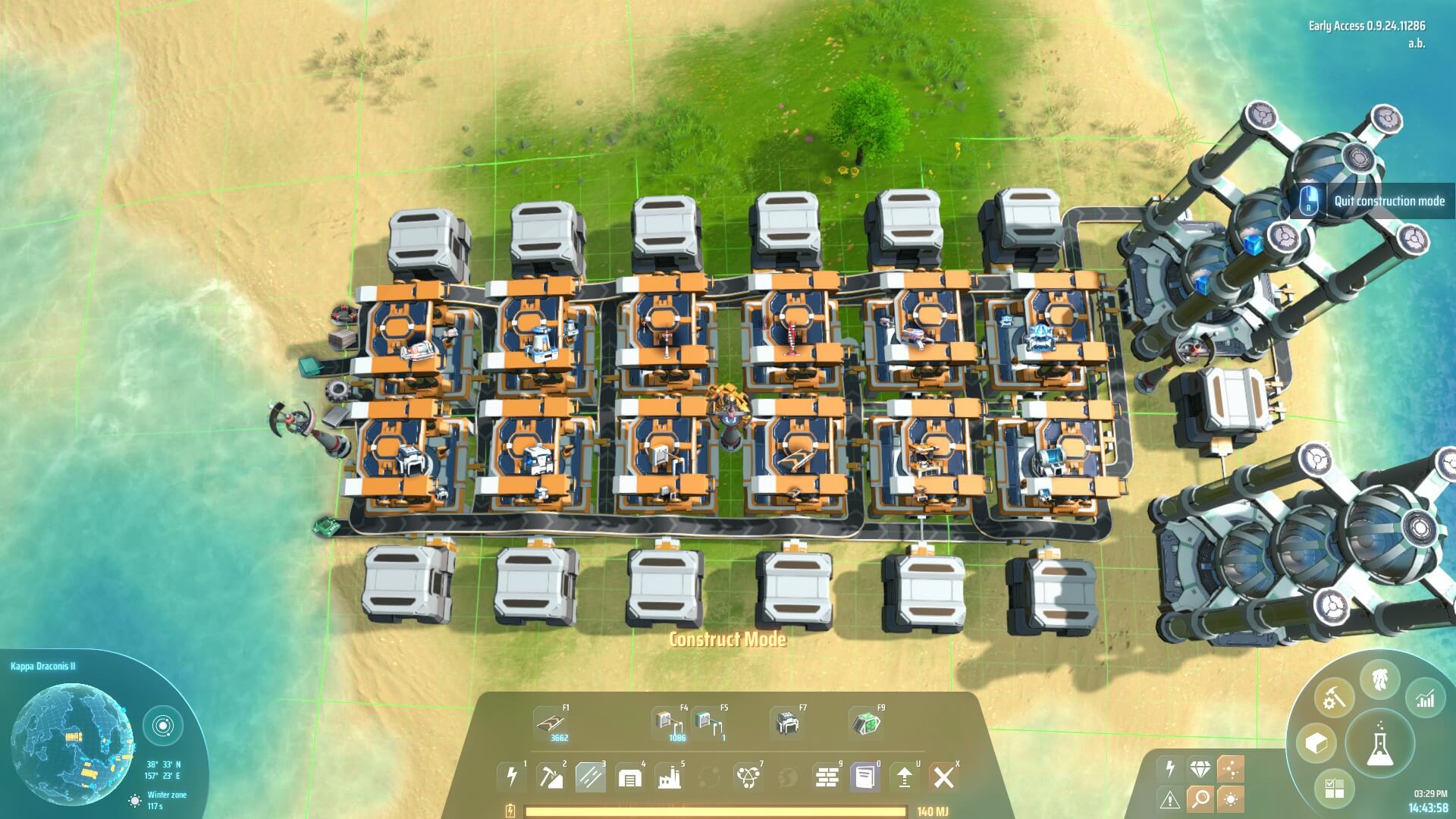
Magnetic Coils
Magnetic coils are one of the first parts that should get their own line. They feed early research, power poles, motors, and several early tech steps.
A tiny line is fine:
- magnets
- copper ingots
- assembler
- storage box
You do not need a huge setup at the start. You just need it running while you do other work.
Circuit Boards
Circuit boards are the other early pain point.
Do not hand-craft these for long. You need them for research and buildings, and the demand keeps coming back.
A basic circuit board line needs:
- iron ingots
- copper ingots
- assembler
- output storage
Once coils and circuit boards are automated, blue matrices become much less annoying.
Gears
Gears are easy to underestimate because they look basic.
Then suddenly every useful building wants them.
Put gears on a small line early. Feed them into storage. You will thank yourself when you need miners, assemblers, and sorters in bulk.
Glass and Stone Bricks
Stone is boring until it is not.
Glass matters for Matrix Labs, and stone bricks show up in early buildings. Set up stone processing instead of manually crafting glass whenever research asks for it.
Do not overbuild it. Just stop ignoring it.
Blue matrices: your first real research setup
Blue matrices are your first proper science product.
You need:
- magnetic coils
- circuit boards
- Matrix Labs
The clean beginner setup is simple:
- one line making magnetic coils
- one line making circuit boards
- both feeding Matrix Labs
- some labs producing blue matrices
- some labs consuming matrices for research
Matrix Labs can produce cubes or consume cubes for research. Do not mix that up. If your research is not moving, check the lab mode before blaming the belts.
You also do not need a giant blue matrix factory. A slow, steady line beats hand-feeding labs every few minutes.
A good early setup is enough when:
- blue cubes keep appearing without manual help
- research continues while you build elsewhere
- the line does not collapse every time you craft belts
That is the point where you move on.
Red matrices: where beginners start making a mess
Red matrices are where Dyson Sphere Program starts testing whether your factory is actually a system.
They require:
- energetic graphite
- hydrogen
Energetic graphite is easy. Smelt coal into graphite and belt it where it needs to go.
Hydrogen is where things get weird.
You need oil processing, which means crude oil, oil refineries, and outputs that can clog if you do not manage them. The beginner trap is treating hydrogen like a simple part. It is not. It comes from a process, and that process creates more than one output.
Keep the setup basic:
- extract crude oil
- refine it
- route hydrogen to red matrix production
- store or consume excess refined oil products
- leave room to expand
Do not build a monster oil plant before you understand the flow.
Build a small one that works.
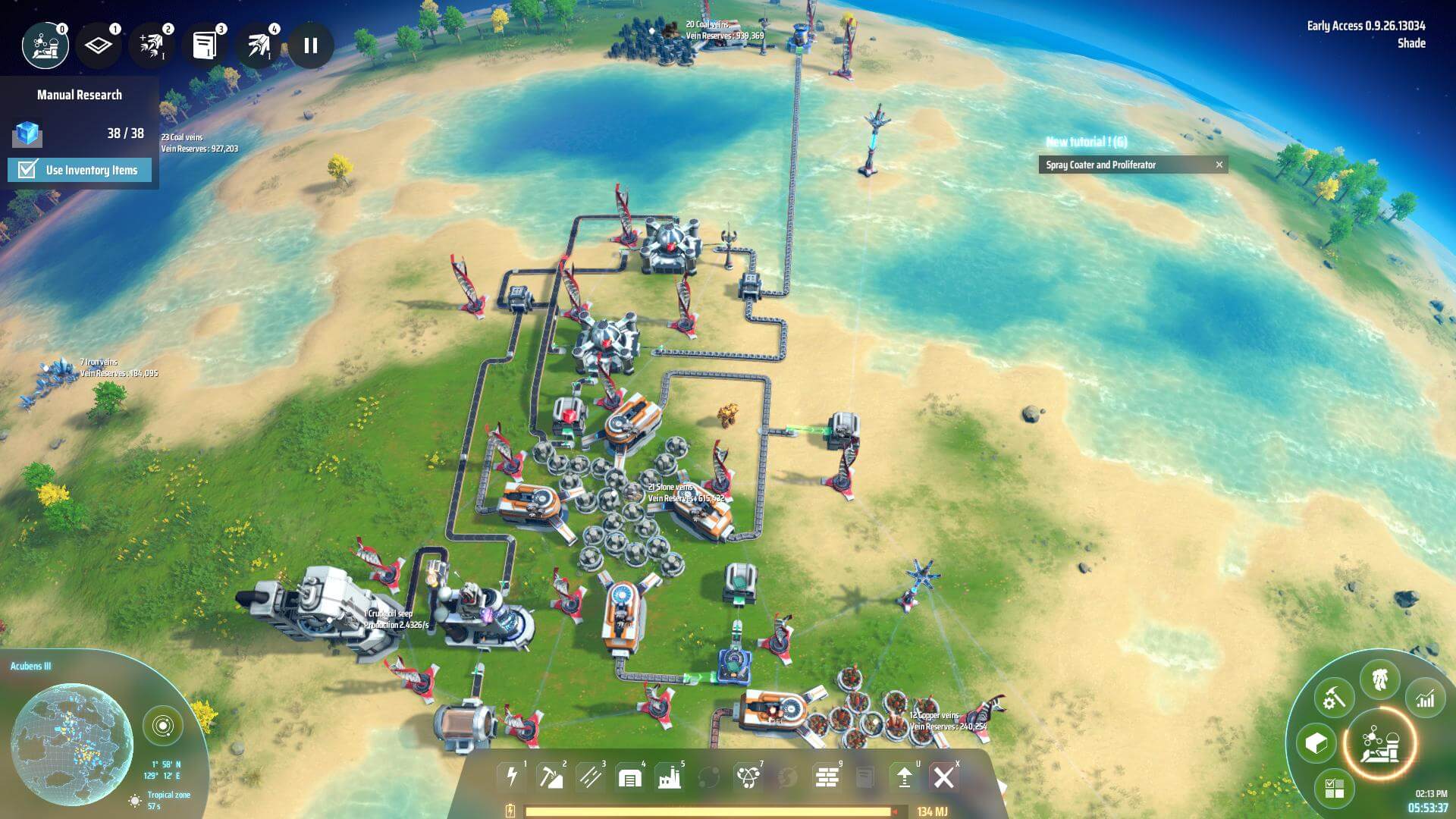
Power: do not let the grid become the boss fight
Power problems in Dyson Sphere Program are silent at first.
A miner slows down. Then a smelter starves. Then research crawls. Then half your base feels broken, but no single machine looks guilty.
Check your power grid often.
Early options are simple:
- wind turbines for easy starter coverage
- thermal power stations when demand climbs
- energetic graphite as a stronger fuel option
- Tesla towers to keep the grid connected
Do not run your whole early factory on optimism.
If your satisfaction drops, production drops with it. That means research slows down, which means your route to space slows down. Power is not a side task. It is part of the launch plan.
A good habit: every time you add a new production block, glance at power.
Not later.
Now.
The launch tech path
To leave the starting planet, you need mecha upgrades that let Icarus travel beyond local movement.
The important path is:
- automate blue matrices
- unlock the early mecha movement upgrades
- automate red matrices
- unlock the Drive Engine upgrade that gives access to sail mode
- stock fuel before flying
The exact order can vary depending on what you unlock first, but the practical goal is the same: get from walking around your base to flying into space.
Do not waste time researching every shiny side branch before your first trip.
Good early research priorities:
- basic logistics and belts
- improved inventory and construction convenience
- Matrix Lab progression
- Drive Engine upgrades
- energy upgrades
- technologies needed for red matrices
- technologies needed for titanium use after you bring it home
Lower priority before your first trip:
- giant production scaling
- cosmetic cleanup
- late-game Dyson Swarm obsession
- overbuilt logistics you cannot support yet
You are not behind because your base is ugly.
You are behind if you still cannot leave the planet after building 400 belts to nowhere.
What to bring on your first trip
Your first off-world trip should be boring because you prepared properly.
Bring:
- miners
- belts
- sorters
- Tesla towers
- wind turbines
- smelters
- storage boxes
- enough fuel
- enough foundations if you like cleaner building
- spare coils, circuit boards, gears, iron, copper, and stone products
The target is simple: land, mine titanium, smelt it on-site, store the ingots, and bring a load back.
Do not bring raw titanium ore home unless you absolutely have to. Titanium ingots stack to the same amount as ore, but each ingot takes 2 ore to make. That means smelting before the return trip effectively doubles the amount of titanium you carry per inventory slot.
You are not building a beautiful colony yet. You are building a titanium theft operation.
Get in.
Extract.
Smelt.
Get out.
Later, you can automate the route with interstellar logistics. For now, you are the logistics vessel.
Finding titanium
Your starting planet is intentionally limited. That is the shove. Dyson Sphere Program wants you to look outward.
Open the starmap and inspect nearby planets in your starting system. You are looking for titanium veins. Ideally, pick the nearest planet with a decent amount of titanium and enough buildable land to place miners and power.
When you land, do not wander around admiring the sky for 20 minutes.
Find the titanium. Place miners. Power them. Belt ore into smelters. Store the ingots. Fill your inventory. Leave.
That first titanium run unlocks the next chunk of the game.
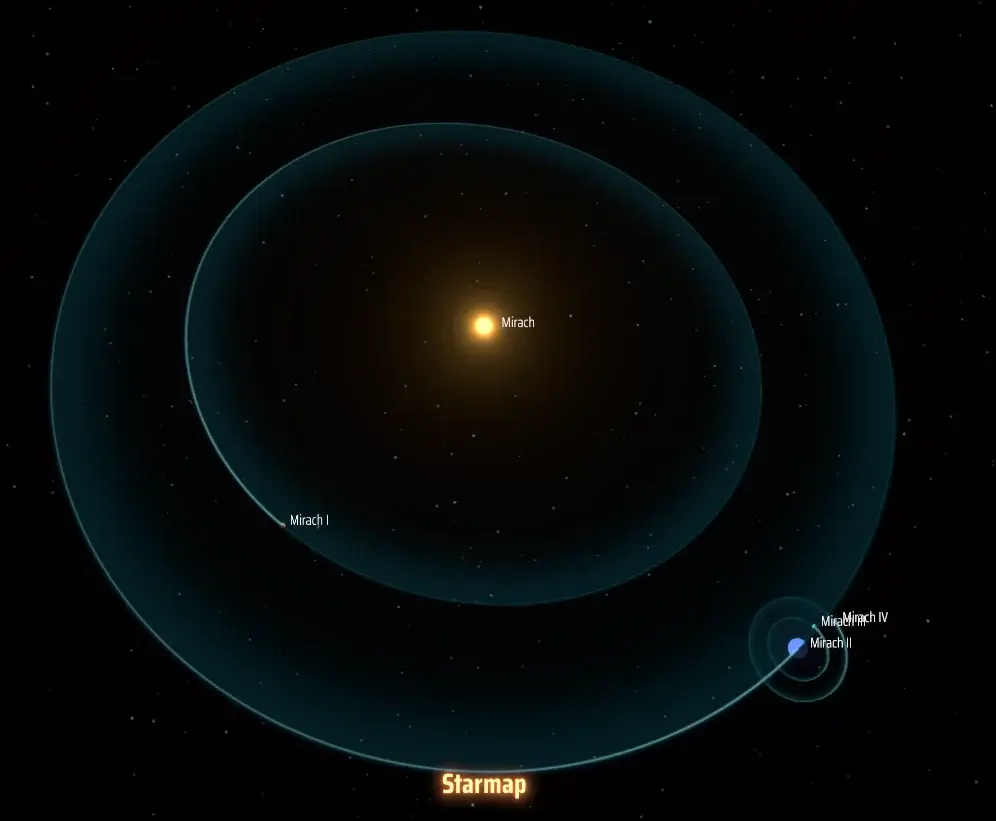
Do not overthink the perfect second planet. For the first trip, nearby titanium beats ideal conditions.
Your first titanium outpost
A beginner titanium outpost does not need to be clever.
Build this:
- miners on titanium veins
- belts into smelters
- smelters making titanium ingots
- storage boxes for ingots
- enough power to keep it running
That is it.
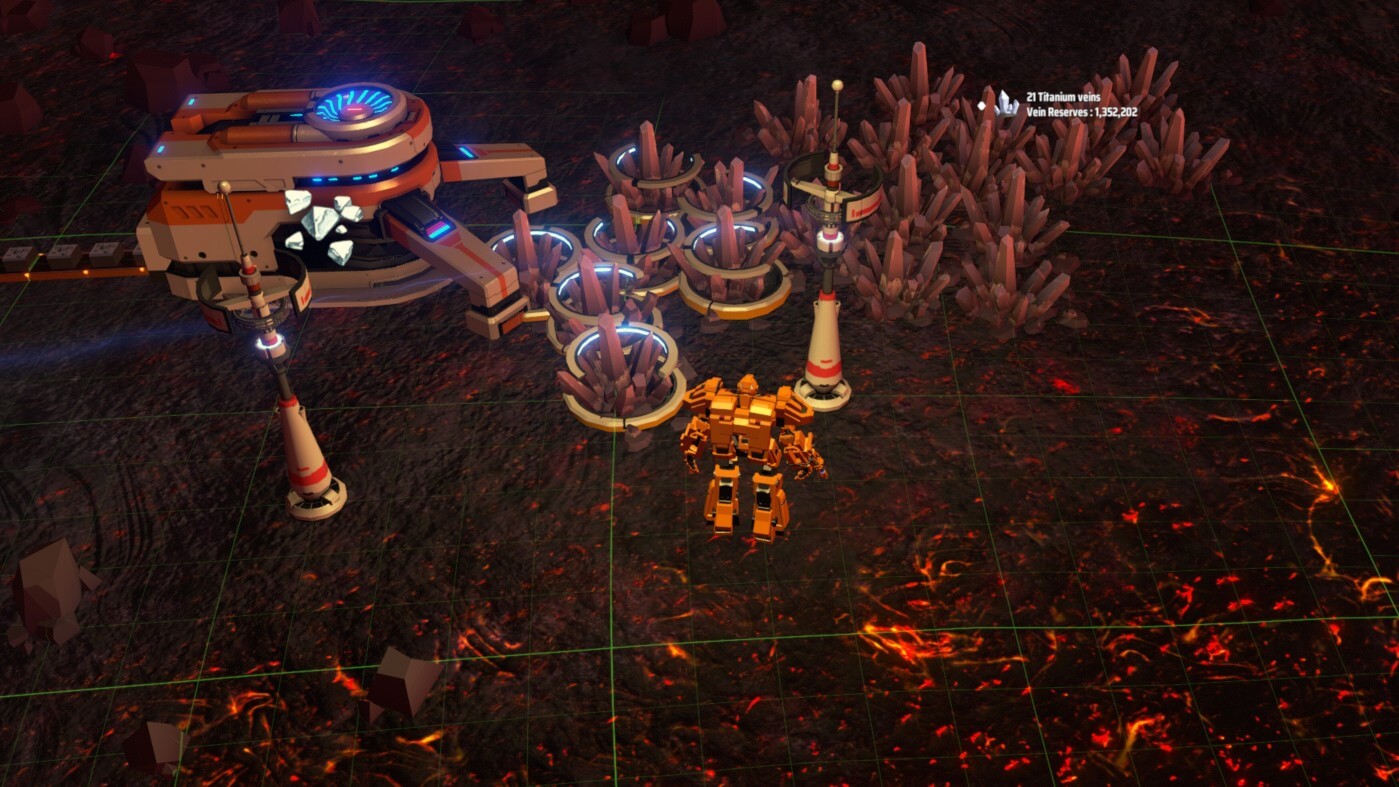
Smelting on-site is the move. Raw titanium ore wastes inventory space on the return trip. Ingots are the thing you actually want back at home.
Do not build a full manufacturing base on the second planet yet unless you know why you are doing it. Early titanium is valuable because it lets your home base unlock and build better systems.
Bring the ingots home and use them to push into the next phase.
A good first titanium outpost is ugly, obvious, and functional.
Perfect.
What to do after bringing titanium home
Once you bring titanium back, the game starts shifting from local factory to planetary network.
Your next goals should be:
- unlock titanium-related techs
- improve research flow
- start preparing for Planetary Logistics Stations
- build processors and particle containers when needed
- move toward Interstellar Logistics Stations
- reduce manual hauling between planets
This is the turning point.
Before titanium, your factory is mostly belts and local production.
After titanium, you start preparing for logistics stations. Planetary Logistics Stations move goods around the same planet with drones. Interstellar Logistics Stations are the bigger step because they let you move goods between planets with vessels.
That is when Dyson Sphere Program stops being "my base is messy" and becomes "my solar system is a machine."
A realistic first 10-hour plan
Do not treat these hour ranges like law. Seeds differ. Player speed differs. Some people rebuild constantly. Some people play like they are being chased.
Use this as a sane path.
Hours 0-2
Focus on basic production.
You want:
- iron mining
- copper mining
- stone mining
- coal mining
- smelting
- coils automated
- circuit boards automated
- gears automated
- belts and sorters easy to craft
- stable starter power
This phase is about escaping hand-crafting hell.
Hours 2-4
Get blue matrices working.
You want:
- Matrix Labs built
- blue cubes produced automatically
- research labs consuming cubes
- basic tech progression moving without constant manual feeding
- enough power headroom to avoid slowdowns
If research pauses every five minutes because you forgot one part, fix the line.
Hours 4-7
Push into red matrices.
You want:
- coal to energetic graphite
- crude oil extraction
- oil refining
- hydrogen routed to red matrix production
- red cubes produced steadily
- Drive Engine progress moving
This is where beginners usually overbuild or panic.
Do neither.
Make a small working oil setup and keep going.
Hours 7-10
Prepare for space and get titanium.
You want:
- sail mode unlocked
- fuel stocked
- titanium planet identified
- mining outpost materials packed
- first titanium run completed
- titanium brought home
The first launch is the milestone.
Not because space travel is hard, but because it changes how you think about the game.
Common beginner mistakes
Building too tightly
Dyson Sphere Program gets bigger fast.
If your starter base is packed into a tiny knot, every new belt becomes surgery. Leave space between production blocks. You do not need city planning. You need breathing room.
Hand-crafting too much
Hand-crafting feels harmless.
It is not.
Every minute spent hand-crafting basic parts is a minute your factory should have been doing its job. Automate the parts you use repeatedly.
Ignoring fuel
Icarus needs energy.
Do not wait until you are crawling across another planet with no fuel and no dignity. Keep fuel in your inventory, especially before space travel.
Researching everything before launch
You do not need every early tech before leaving the planet.
The main path is clear: automate science, unlock better movement, reach titanium, bring it home. Side tech is useful, but do not let it become procrastination with a prettier icon.
Building a massive starter base
Your starter base will not be your final base.
Build it to get you out of the early game. Make it understandable. Make it productive. Do not make it sacred.
Flying without supplies
This is the dumb one.
Do not fly to a titanium planet without miners, belts, power, and fuel. The game will let you make bad decisions. That does not mean you should.
What "good enough" looks like
Your early base is good enough when:
- blue and red matrices are automated
- power is stable
- basic parts are stocked
- you can build miners, belts, sorters, smelters, and power without hand-crafting every piece
- Icarus has the upgrade needed for space travel
- you know where titanium is
- you can set up a basic off-world mining outpost
That is the win condition for the first 10 hours.
Not beauty.
Not perfect ratios.
Not a clean planet-spanning bus.
Just enough production to escape the starting planet and start scaling.
Final takeaway
Dyson Sphere Program works because the scale keeps changing.
Your first factory is not the game. It is the launchpad.
The first 10 hours are about building enough automation to stop babysitting every part, unlocking the movement needed to reach another planet, and getting titanium into your economy. Once you do that, the game becomes much larger: planetary logistics, interstellar routes, better production chains, and eventually the kind of ridiculous megastructure that made you install the game in the first place.
Do not try to make the early game perfect.
Make it work.
Then leave.
One comfort upgrade for early factory sessions
The first 10 hours of Dyson Sphere Program are keyboard-heavy: placing belts, sorters, labs, and miners in tight loops while you chase the next research milestone. A wrist rest is a simple quality-of-life upgrade when you are repeating those build patterns for hours at a time.
Razer Ergonomic Wrist Rest
An easy comfort upgrade for long keyboard-heavy factory sessions.
Further reading
New to the genre? See best factory games for beginners. Want more automation games with big scaling? Read games like Factorio and games like Satisfactory. For more DSP picks, see games like Dyson Sphere Program.
If this guide helped you escape the starter planet without wasting another three hours in belt spaghetti, you can support Game Foundry through Buy Me a Coffee.
It helps fund more practical guides like this.
Chip in for more guidesFrequently Asked Questions
What should I do first in Dyson Sphere Program?
Automate basic materials and parts first: iron ingots, copper ingots, magnets, magnetic coils, gears, circuit boards, stone bricks, glass, belts, and sorters. Then build Matrix Labs and start producing blue matrices.
How do you leave the starting planet in Dyson Sphere Program?
You need the right Drive Engine upgrade to access space travel, enough fuel for Icarus, and a target planet selected from the starmap. Before launching, bring miners, belts, sorters, power buildings, smelters, and spare parts.
Why do I need to leave the starting planet?
You need proper titanium access. The starting planet is not meant to supply everything forever. Leaving the planet pushes you into the real Dyson Sphere Program loop: using multiple planets as one growing factory system.
What should I bring to another planet first?
Bring miners, belts, sorters, Tesla towers, wind turbines or other power options, smelters, storage boxes, and fuel. Your first off-world outpost should focus on mining and storing titanium.
Should I build a perfect starter base?
No. Build a starter base that produces what you need and keeps research moving. You can rebuild later. Early perfection is usually just wasted time with cleaner belts.
When do logistics stations matter?
Planetary Logistics Stations matter once your home planet becomes too annoying to manage with long belts. Interstellar Logistics Stations matter when you are ready to automate movement between planets instead of carrying titanium yourself.