Best Short-Session Factory Games
Factory and automation games you can play in bite-sized sessions without losing your place.
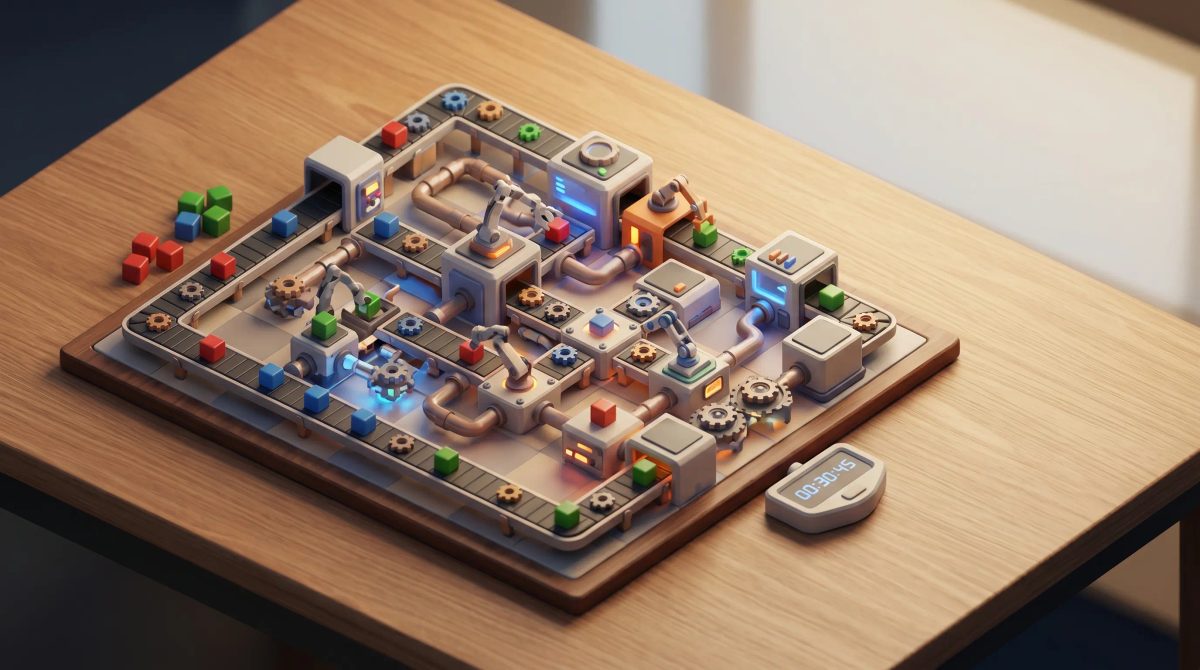
The best short-session factory games make 30 to 45 minutes feel useful. You should be able to fix a bottleneck, unlock a production step, clean up a route, or finish a compact objective without spending half the session remembering what everything does.
This list focuses on factory games, automation games, and factory-adjacent management games where the state is easy to read and stopping points feel natural. Pick-up-and-play automation games are not always shallow. The best ones just make it easier to remember what you were doing.
Quick take
For short factory sessions, prioritize clear production goals over huge open-ended expansion.
- Best pure short-session automation: Shapez
- Best bigger version of that idea: Shapez 2
- Best low-pressure check-in game: Factory Town Idle
- Best cozy bot automation: Autonauts
- Best relaxed factory sandbox: Factory Town
- Best short-session factory combat: Mindustry
- Best puzzle-like machine design: Opus Magnum
- Best management-first factory sim: Production Line
- Best programmable logistics pick: Desynced
- Best action-heavy partial fit: The Riftbreaker
The common mistake is choosing a huge factory game because it is famous, then spending most of a short session trying to remember what broke. Factorio, Satisfactory, Dyson Sphere Program, Foundry, and Techtonica can all work in limited time, but they usually reward longer planning sessions more than quick, readable progress.
The picks
Shapez
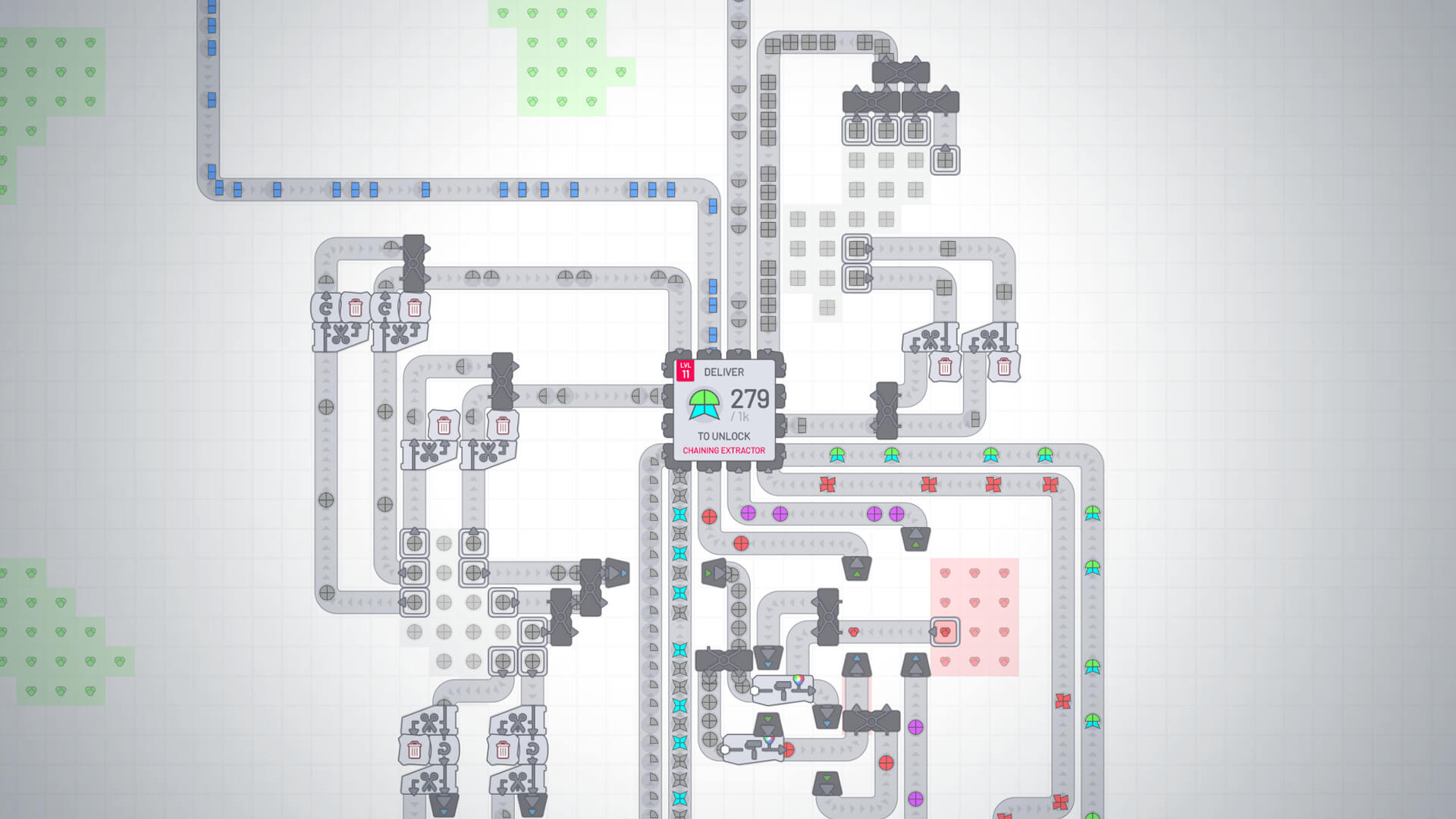
Shapez is the cleanest answer if you want factory automation in short sessions. It strips the genre down to belts, cutters, colors, routing, and output targets, so you can usually understand the current problem quickly after loading back in.
It fits players who want pure logistics without survival pressure, exploration, combat, or colony management. A short session can be as simple as producing one required shape, cleaning up one messy line, or improving throughput on a single chain.
The tradeoff is that Shapez is intentionally abstract. If you need a world, workers, weather, scarcity, or a strong sense of place, it can feel sterile. That minimalism is exactly why it works so well in small chunks, but it will not scratch the same itch as a sprawling industrial sandbox.
Shapez 2
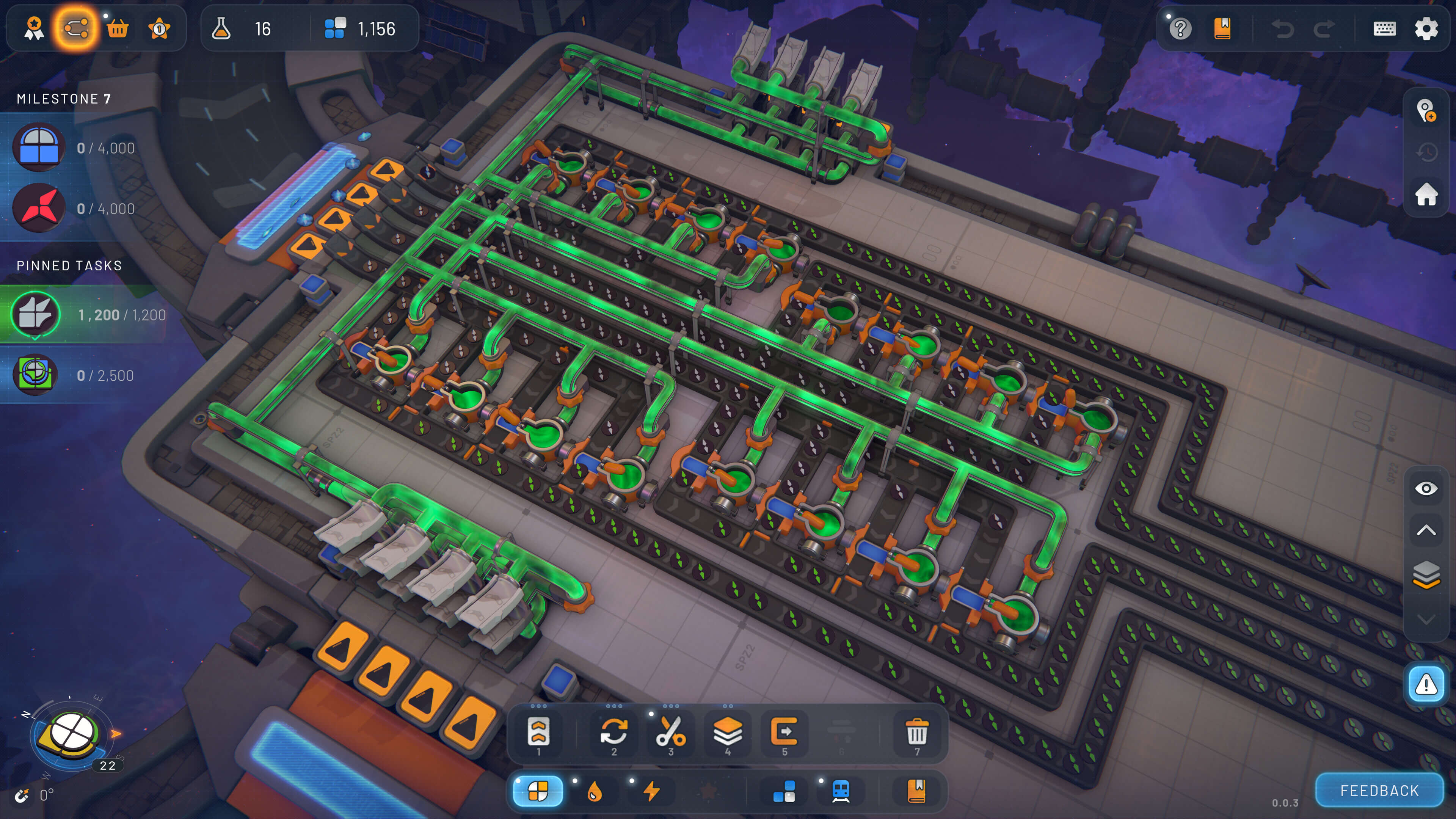
Shapez 2 keeps the readable production-puzzle appeal of Shapez, then expands it into larger and more layered factory planning. The core loop is still easy to understand: identify the shape, build the process, route the output, then improve the layout.
This is the better pick if you like the idea of Shapez but want more room to build elegant systems. The 3D space, bigger layouts, and larger-scale automation give you more to optimize without adding survival pressure or colony drama.
The main friction is scope. Shapez 2 can tempt you into bigger redesigns, and those are harder to finish in 30 minutes. If you want the most bite-sized version of this formula, start with Shapez. If you want the same clean idea with more headroom, go here.
Factory Town Idle
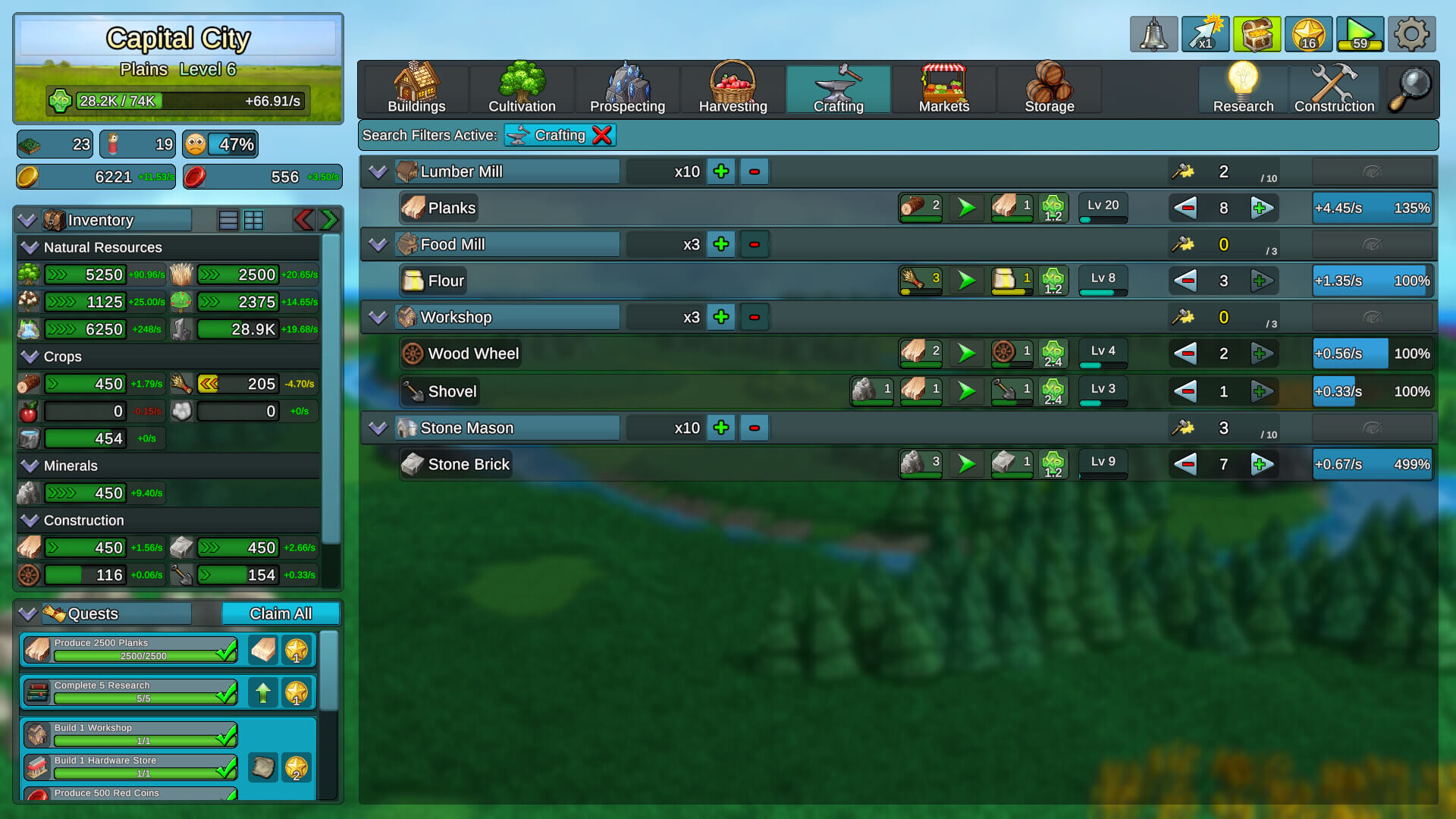
Factory Town Idle is built around lighter, more incremental production growth. That makes it one of the easiest casual factory games to fit into a short break, especially if you like checking in, improving a chain, and letting long-term scaling do its work.
It fits players who enjoy production chains but do not always want to manually place every conveyor, road, or worker route. The idle structure shifts the focus toward pacing, upgrades, and compounding efficiency rather than constant layout surgery.
The limitation is obvious: it is less tactile than a traditional factory sim. If your favorite part of automation is physically solving belt spaghetti, Factory Town Idle may feel too hands-off. It is best for players who want factory thinking with a lighter session footprint.
Autonauts
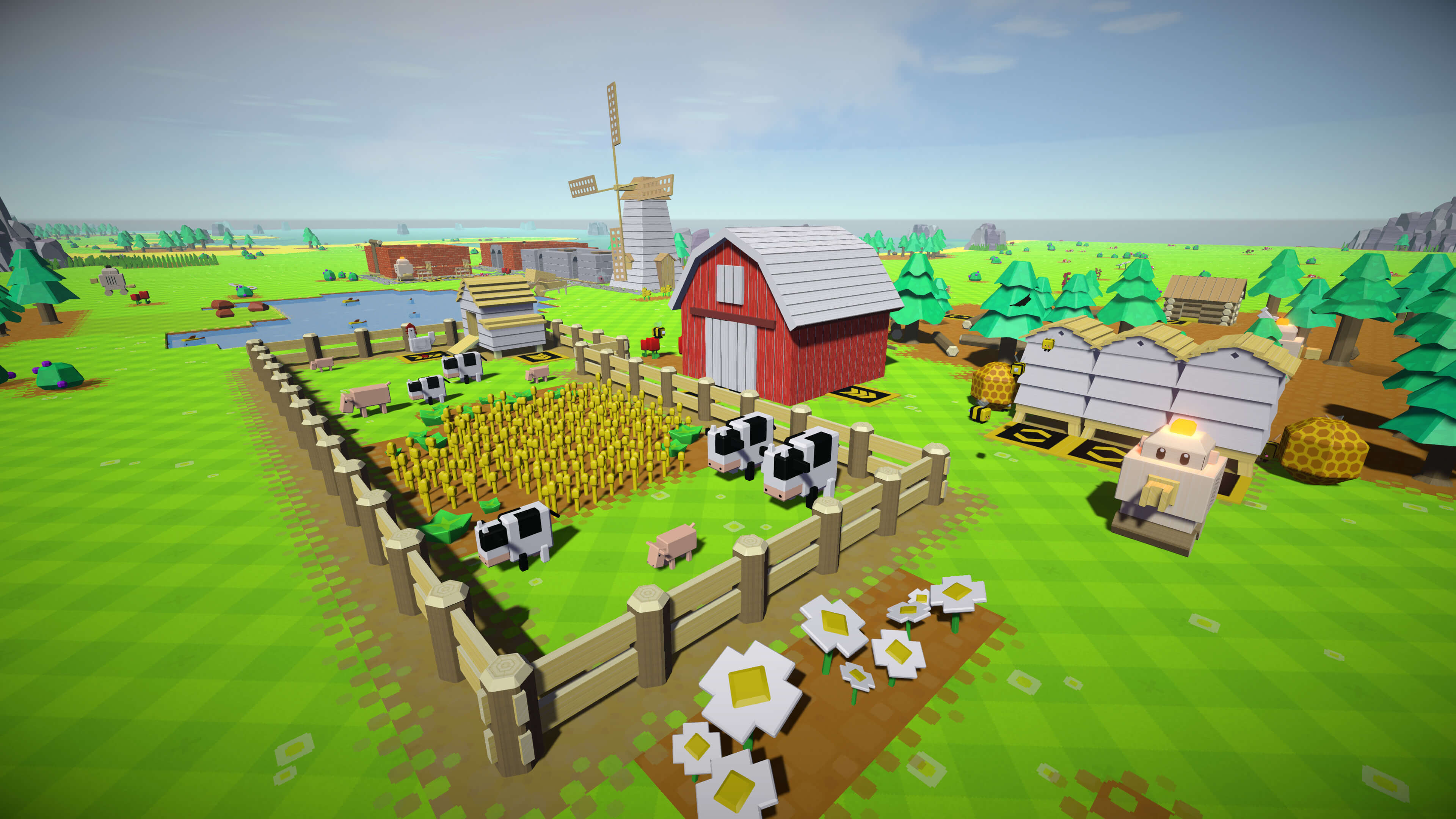
Autonauts turns short sessions into practical bot-training projects. Teach a robot to farm, craft, haul, or support colony growth, then move to the next routine. That structure gives each session a clear job instead of asking you to expand a whole industrial empire every time.
It fits players who like automation logic but prefer a cozy tone over heavy throughput pressure. The colony layer gives your work context, while robot scripting makes progress feel personal and mechanical at the same time.
Where this gets tricky is returning after a longer break. Bot routines can become hard to read if you left the colony mid-rework. Autonauts is forgiving in tone, but not completely frictionless mentally. It clicks most if you enjoy organizing small systems and can tolerate a bit of script untangling.
Factory Town
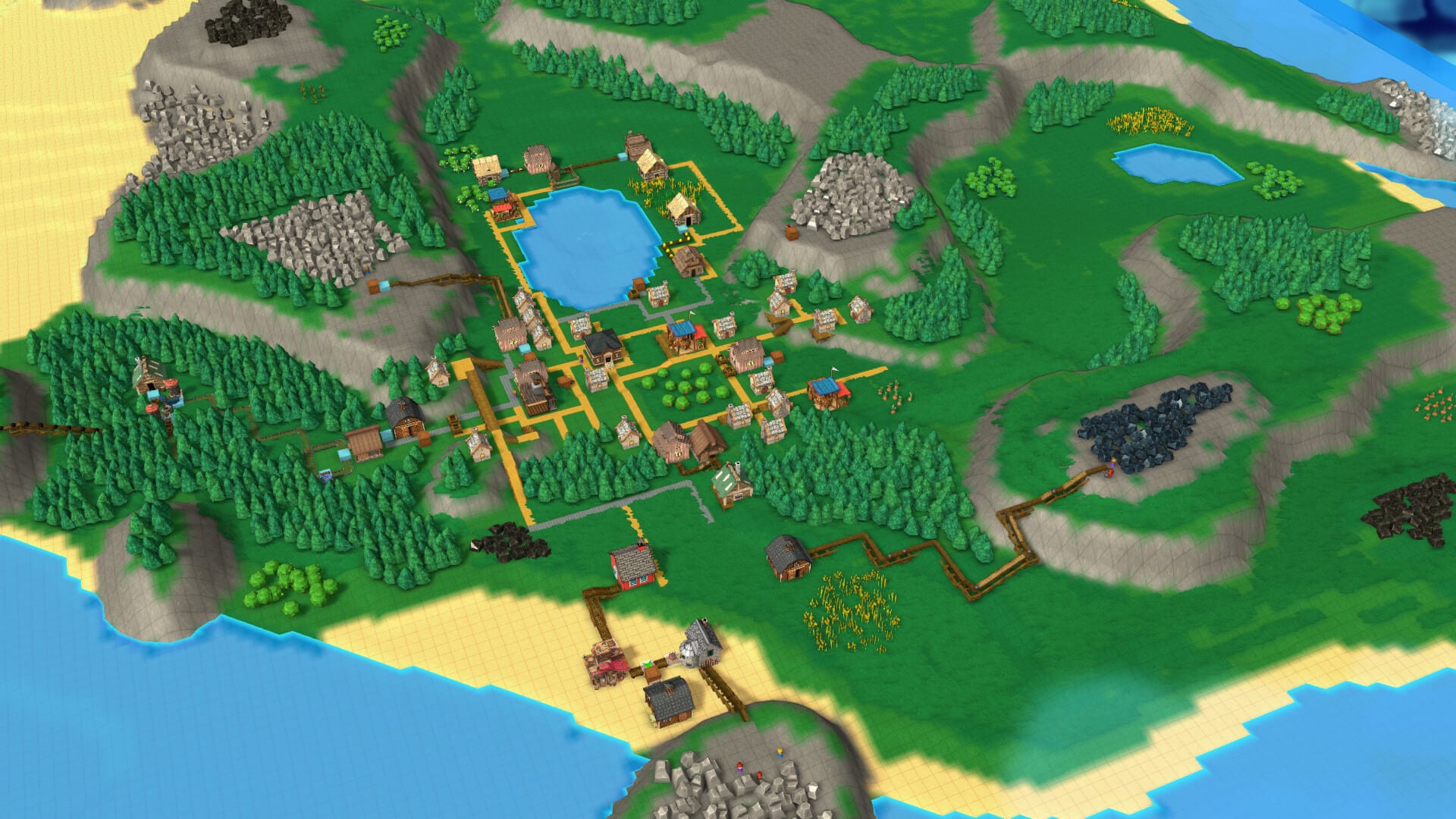
Factory Town works because its pressure is soft and its production chains are easy to follow visually. Villagers, conveyors, chutes, trains, and magic transport tools make it more relaxed than most industrial factory sims, while still giving you meaningful logistics problems to solve.
This is a good fit for players who want a cozy automation sandbox rather than a minimalist puzzle board. You can spend a short session improving one resource route, expanding a single chain, or smoothing out a delivery bottleneck without feeling like the whole settlement is falling apart.
The tradeoff is sprawl. Because Factory Town is open and friendly, it is easy to build casually until the layout becomes harder to parse. It is still one of the better short-session picks, but it rewards players who keep their production areas readable.
Mindustry
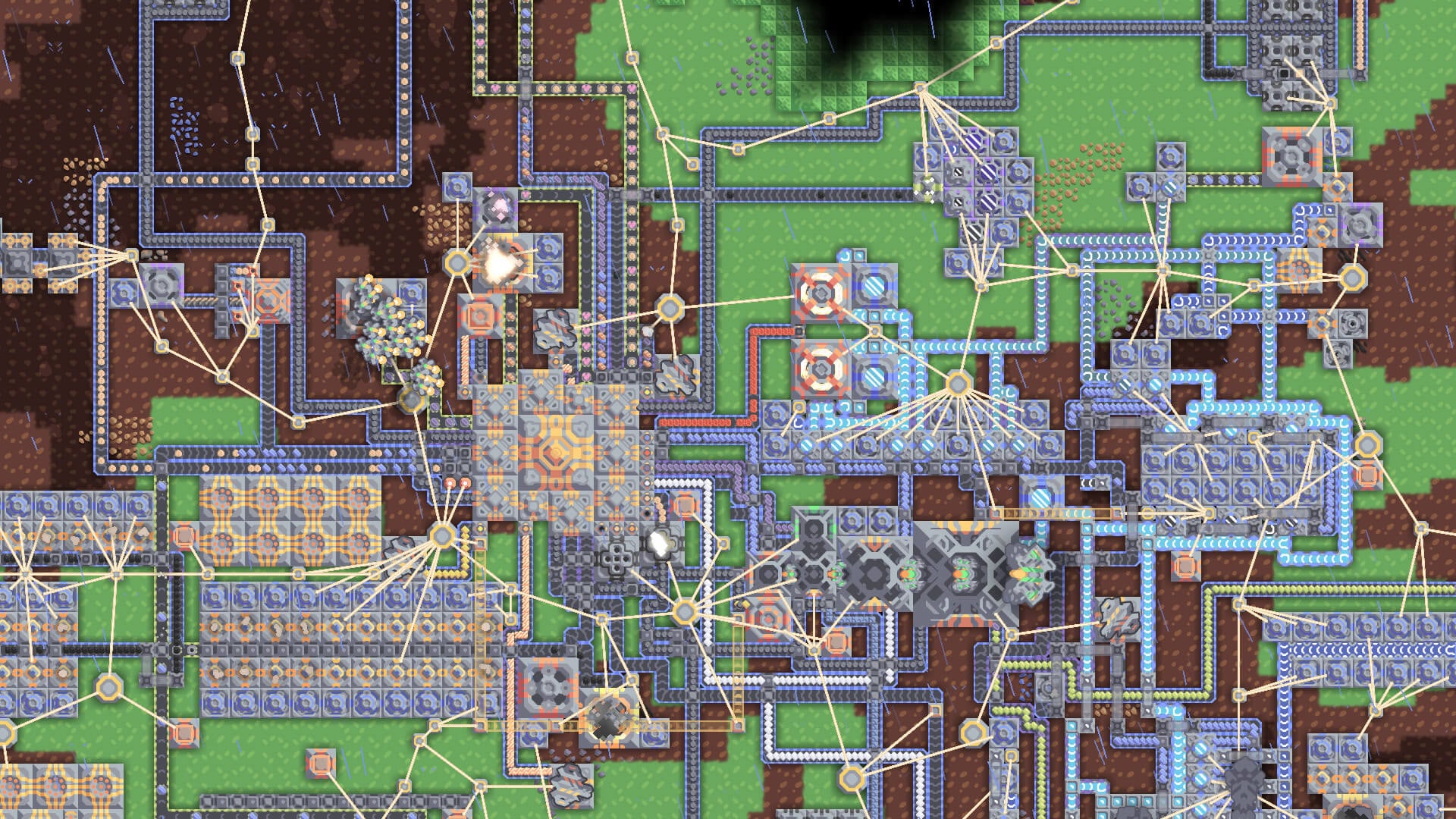
Mindustry is the pick for players who want factory design with immediate stakes. Supply lines feed defenses, defenses protect production, and every bad conveyor decision can matter when pressure arrives.
It works in short bursts because the factory-defense structure gives you direct priorities. Get resources moving. Feed turrets. Patch weak points. Improve supply. You are rarely wondering what the session is supposed to be about.
The catch is that Mindustry is not the relaxing option. Combat pressure changes the feel of automation, and some players who want calm optimization will bounce off the urgency. If a short session feels better with a clear threat, Mindustry makes sense. If you want to unwind, pick Shapez, Factory Town Idle, or Factory Town instead.
Opus Magnum
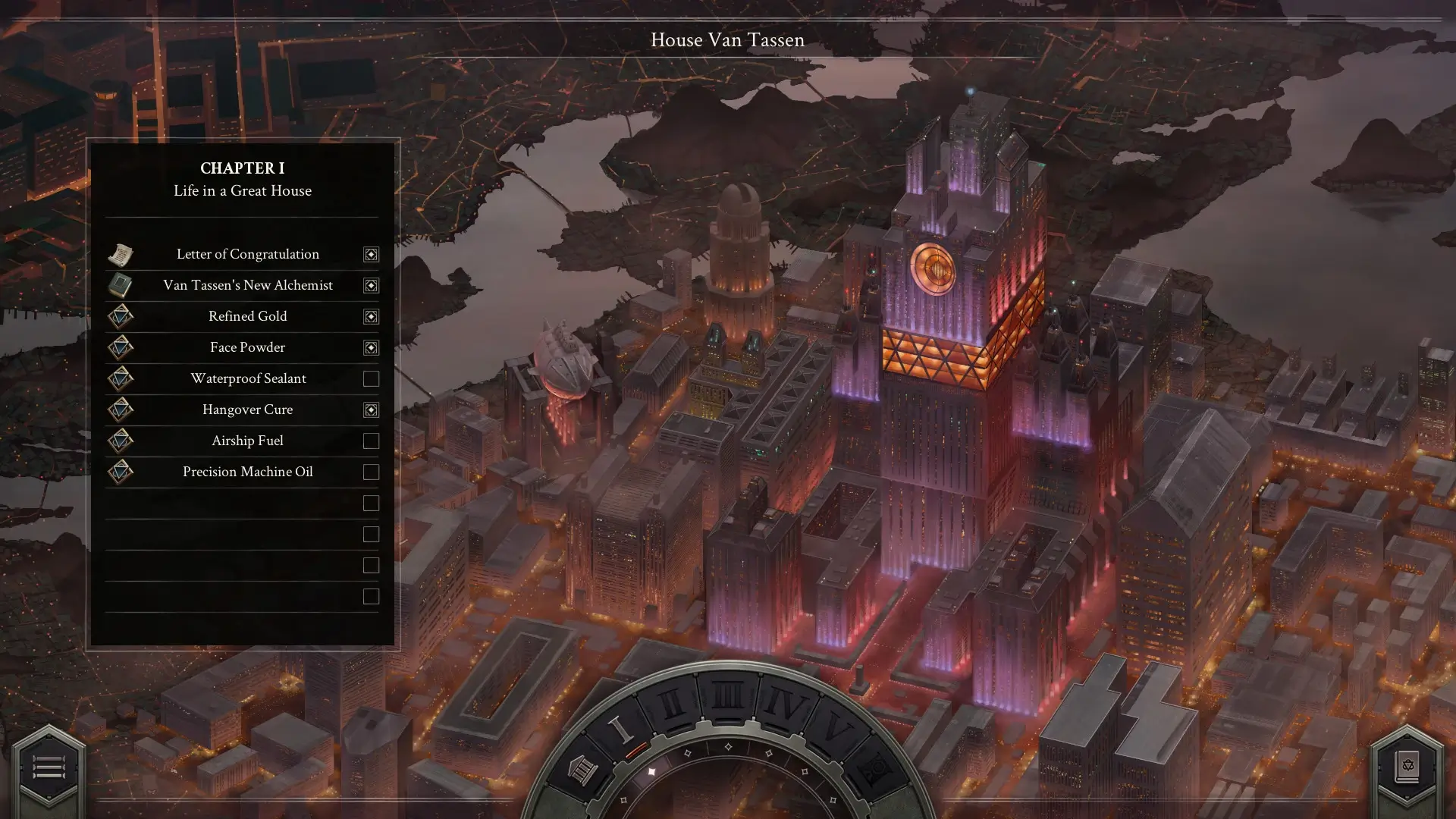
Opus Magnum is only a partial factory game, but it belongs here because it may be the best short-session machine-design option on the list. Each puzzle is a self-contained automation problem built around arms, tracks, components, and optimization scoring.
It fits players who like designing clever mechanisms more than managing resource economies. You can build a working solution in one session, then return later to make it cheaper, faster, or more elegant. That makes progress easy to measure even when time is limited.
The tradeoff is that Opus Magnum does not give you a growing factory, a colony, or a logistics network that expands across a map. It is precise, puzzle-shaped, and focused. For some factory players, that is perfect. For others, it will feel too contained.
Production Line
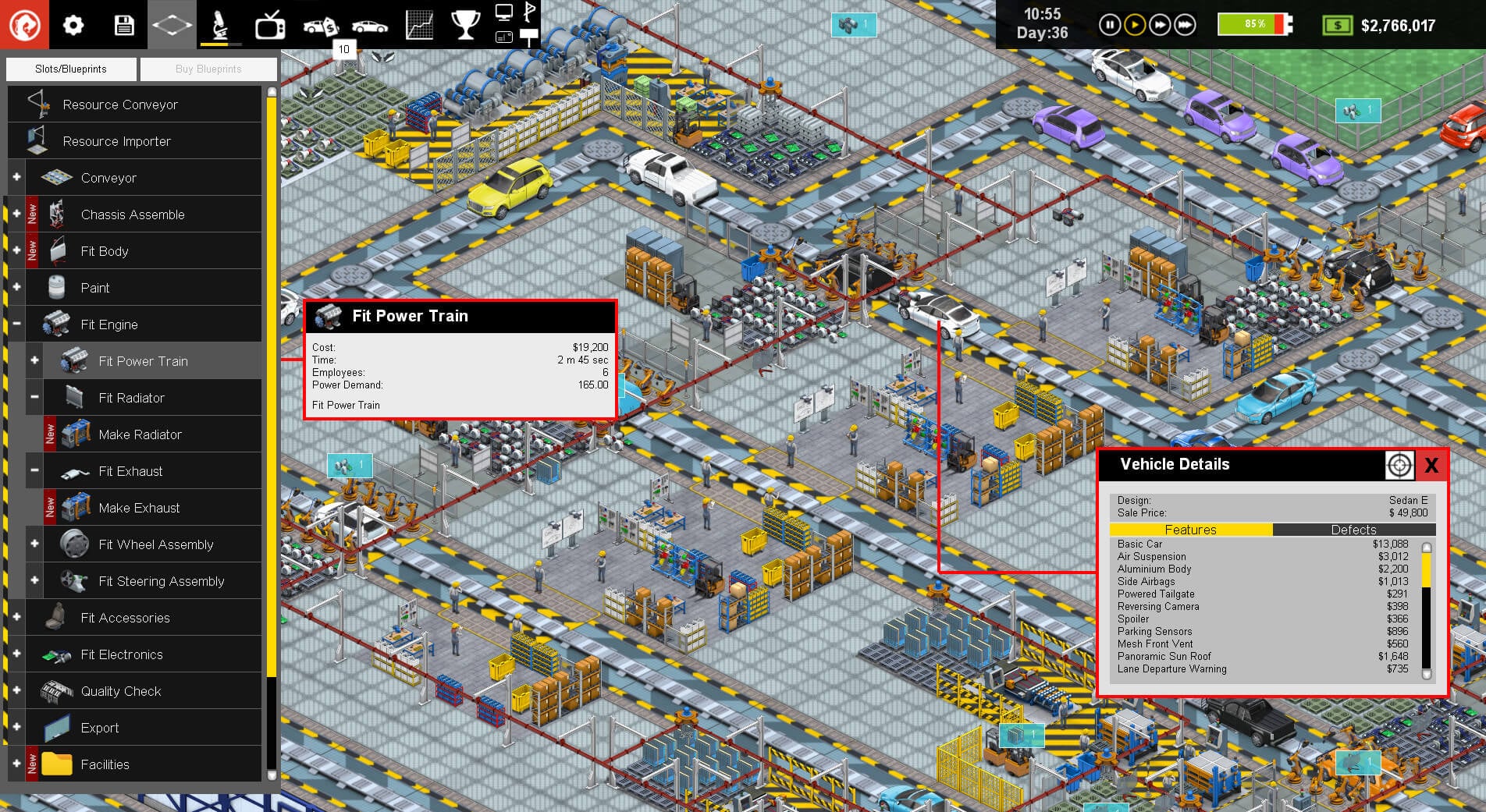
Production Line is a short-session factory game in a management sense. Instead of sprawling belts across alien terrain, you are tuning an automotive assembly line: stations, sequencing, throughput, and efficiency.
It fits players who enjoy diagnosing bottlenecks. A good session can focus on one practical question: why is this part of the line waiting, overproducing, or underperforming? That makes it easier to stop after a concrete improvement.
The downside is tone. Production Line is drier than most automation sandboxes, and it has less of the playful discovery you get from sci-fi or cozy factory games. It is a strong fit for players who like factory-floor optimization, not players looking for atmosphere or exploration.
Desynced
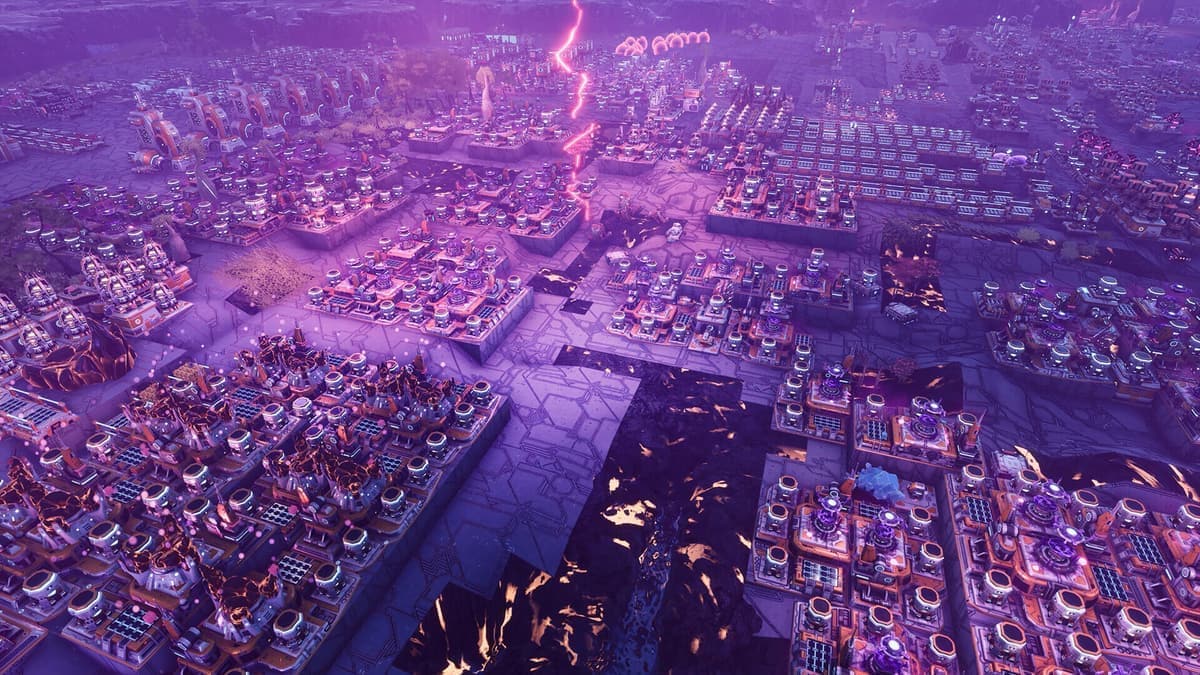
Desynced is for players who want short sessions built around programmable bots and adaptable logistics. Instead of thinking only in belts, you are working with behavior logic, networks, and automation routines across a sci-fi colony setup.
It fits players who enjoy systems that can be revised piece by piece. A 30-minute session can focus on one bot behavior, one logistics gap, or one production network instead of a full-base rebuild. Co-op also helps if you like dividing automation problems with another player.
The main friction is abstraction. Programmable systems can be satisfying, but they can also become mentally expensive when you return mid-problem. Desynced is not the easiest casual pick here. It is better for players who like logic-heavy automation and do not mind debugging their own plans.
The Riftbreaker
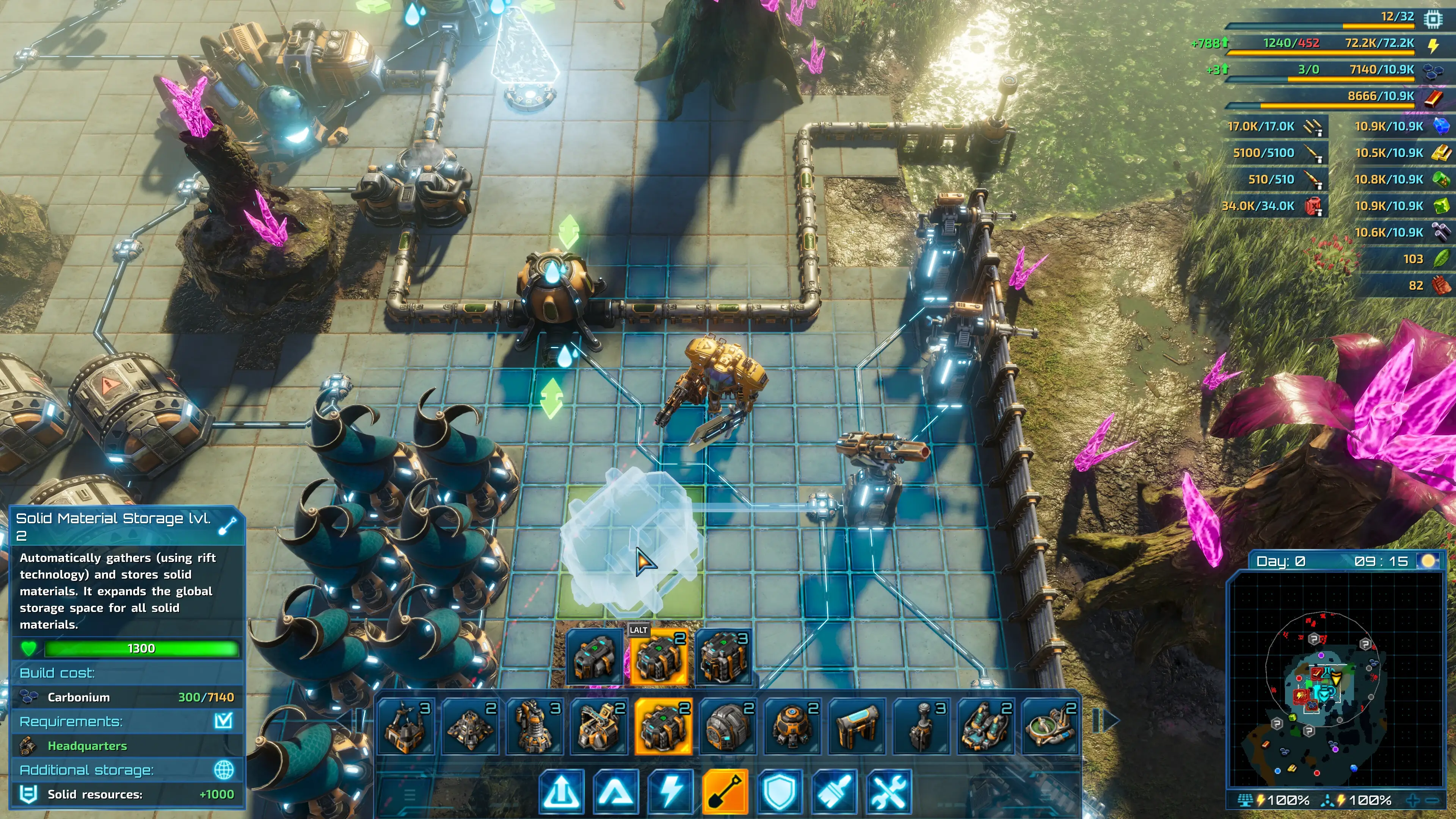
The Riftbreaker is the most action-heavy and the most partial fit on this list. It blends production chains, base building, wave defense, and mech combat, so it does not behave like a pure factory sim.
It earns a spot because short sessions can still feel productive. You can expand power, automate mining, reinforce defenses, or push through a combat-focused objective without needing the slow burn of a giant logistics sandbox. For players who get bored by peaceful optimization, that matters.
The tradeoff is interruption. Fighting hostile fauna changes the rhythm, and combat can pull attention away from factory planning. If you want calm, readable automation, this is not the first recommendation. If you want your factory work tied to immediate action, it is a useful alternative.
Who these games fit best
Choose Shapez or Shapez 2 if you want the cleanest short-session automation. They are the easiest to understand after time away because the problem space is visual and direct.
Choose Factory Town Idle, Autonauts, or Factory Town if you want softer pacing. These are the better casual factory games for players who like automation but do not want every session to become a high-pressure throughput audit.
Choose Mindustry or The Riftbreaker if short sessions feel better with conflict. They are less relaxing, but the stakes make each session more focused.
Choose Opus Magnum if you want compact machine puzzles rather than a persistent factory. Choose Production Line if you care more about assembly efficiency than belts, robots, or sci-fi scale.
Choose Desynced if programmable automation is the appeal. It is less instantly readable than Shapez, but it gives logic-minded players more room to build smart systems.
How to choose when you only have 30 to 45 minutes
Start with state readability. If you can look at the screen and understand the current bottleneck in under two minutes, the game is probably short-session friendly.
Then look at session goals. Good short-session factory games give you small wins: complete one output target, fix one route, add one production step, automate one worker task, or improve one bottleneck.
Be more cautious with huge first-person factory games and interplanetary factory sims. Satisfactory, Foundry, Techtonica, and Dyson Sphere Program are not bad short-session games, but they often invite longer stretches because navigation, exploration, and large-scale planning take time.
Also be honest about pressure. Combat can sharpen a short session, as in Mindustry or The Riftbreaker, but it can also make a “quick” session feel noisy. If the goal is to relax and resume easily, minimalist or cozy automation is usually the safer call.
A small upgrade for short factory sessions
Short sessions work better when your setup makes repeated panning, dragging, and menu work feel consistent. A simple large mouse pad is a sensible fit for factory games that rely on precise layout work.
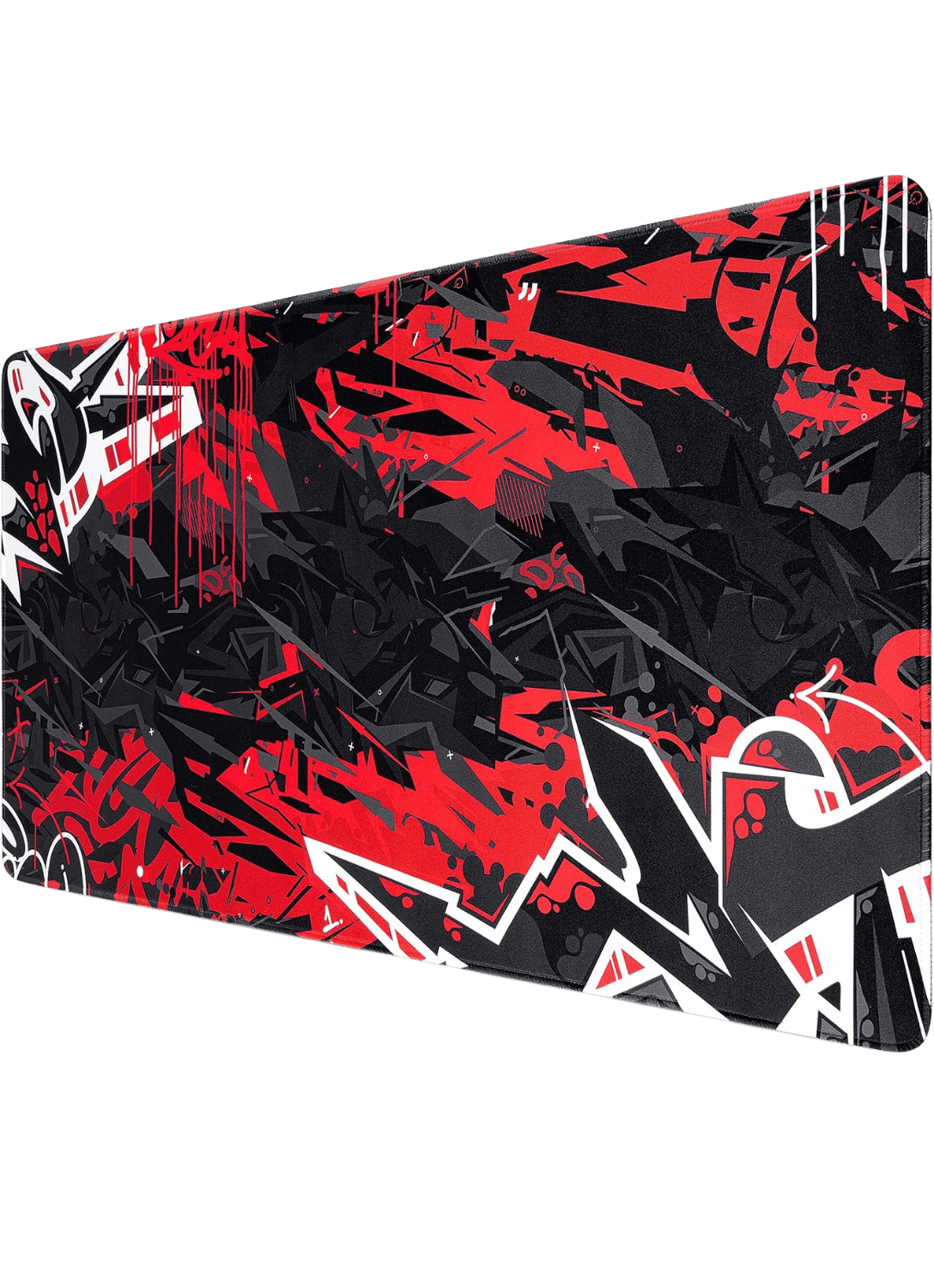
Canjoy Gaming Mouse Pad
Desk-size pad for more room and smoother mouse travel in long strategy sessions.
FAQ
What makes a factory game good for short sessions?
Readable state matters most. You want clear production goals, visible bottlenecks, and systems that do not require 20 minutes of reorientation before you can make progress.
Are pick-up-and-play automation games too shallow?
Not necessarily. Shapez, Shapez 2, Autonauts, and Desynced all have real automation depth. They are easier to resume because their problems are modular, not because they lack complexity.
Should I avoid Factorio if I only play in short bursts?
Not automatically. Factorio is excellent, but it is also dense, and larger factories can take time to re-read. If you only have short sessions, start with Shapez or Factory Town Idle unless you already know you enjoy deep factory planning.
What is the most relaxing short-session pick?
Factory Town Idle is the lightest. Factory Town and Autonauts are also good choices if you want cozy automation with more hands-on structure.
What is the best choice if I want combat too?
Mindustry is the cleaner factory-defense option. The Riftbreaker is better if you want more action and mech combat alongside production chains.
Takeaway
The best short-session factory games are not just smaller factory games. They are games where the current problem is easy to see, the next improvement is clear enough to start, and 30 to 45 minutes still produces real progress.
Start with Shapez for pure automation, Factory Town Idle for low-friction check-ins, Autonauts for cozy bot scripting, or Mindustry if you want pressure. Pick the game that matches your session length, not just the one with the biggest factory.