Captain of Industry vs Workers & Resources: Which Is Better?
Compare Captain of Industry and Workers & Resources across logistics, production, difficulty, scale, and city management to find your better fit.
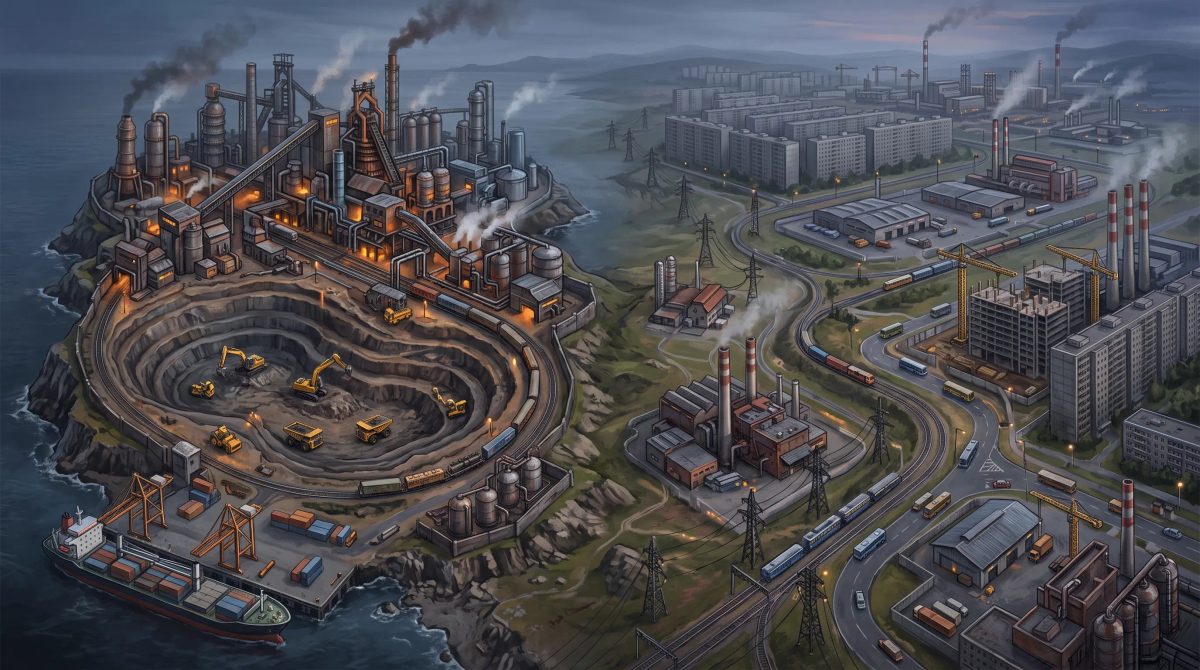
Captain of Industry is the better choice if you mainly want to build, diagnose, and rebuild dense production chains. Workers & Resources: Soviet Republic is better if you want those industries inside a much larger simulation of labor, construction, transportation, utilities, and city growth.
Both are demanding logistics games, but they punish different kinds of bad planning. Captain of Industry turns your island into one tightly connected industrial machine. Workers & Resources asks whether an entire planned republic can actually build, staff, power, heat, and supply the machine.
Quick verdict
Choose Captain of Industry if you want:
- Mining and terrain excavation
- Dense factory chains and byproduct management
- A more focused island economy
- Problems you can usually trace back through a production line
- A strong build, diagnose, and redesign loop
Choose Workers & Resources: Soviet Republic if you want:
- A full city builder around your industries
- Worker transport, education, utilities, and public services
- Construction that requires real materials, vehicles, and access
- Large road and rail networks
- Long-term decisions with delayed consequences
| Category | Captain of Industry | Workers & Resources: Soviet Republic |
|---|---|---|
| Core fantasy | Build an industrial empire on an island | Build and operate a planned republic |
| Main challenge | Production flow and resource dependencies | Infrastructure, labor, construction, and transport |
| Map-level focus | Compact and factory-centered | Broad and region-centered |
| Typical failure | A shortage or blocked output stalls connected chains | Workers, materials, power, or transport cannot reach where they are needed |
| Easier to diagnose | Usually | Less often |
| City-building depth | Moderate | Very high |
| Best for | Factory optimizers | Infrastructure planners |
The short version is simple: Captain of Industry is about perfecting the industrial machine. Workers & Resources is about making the whole state around that machine function.
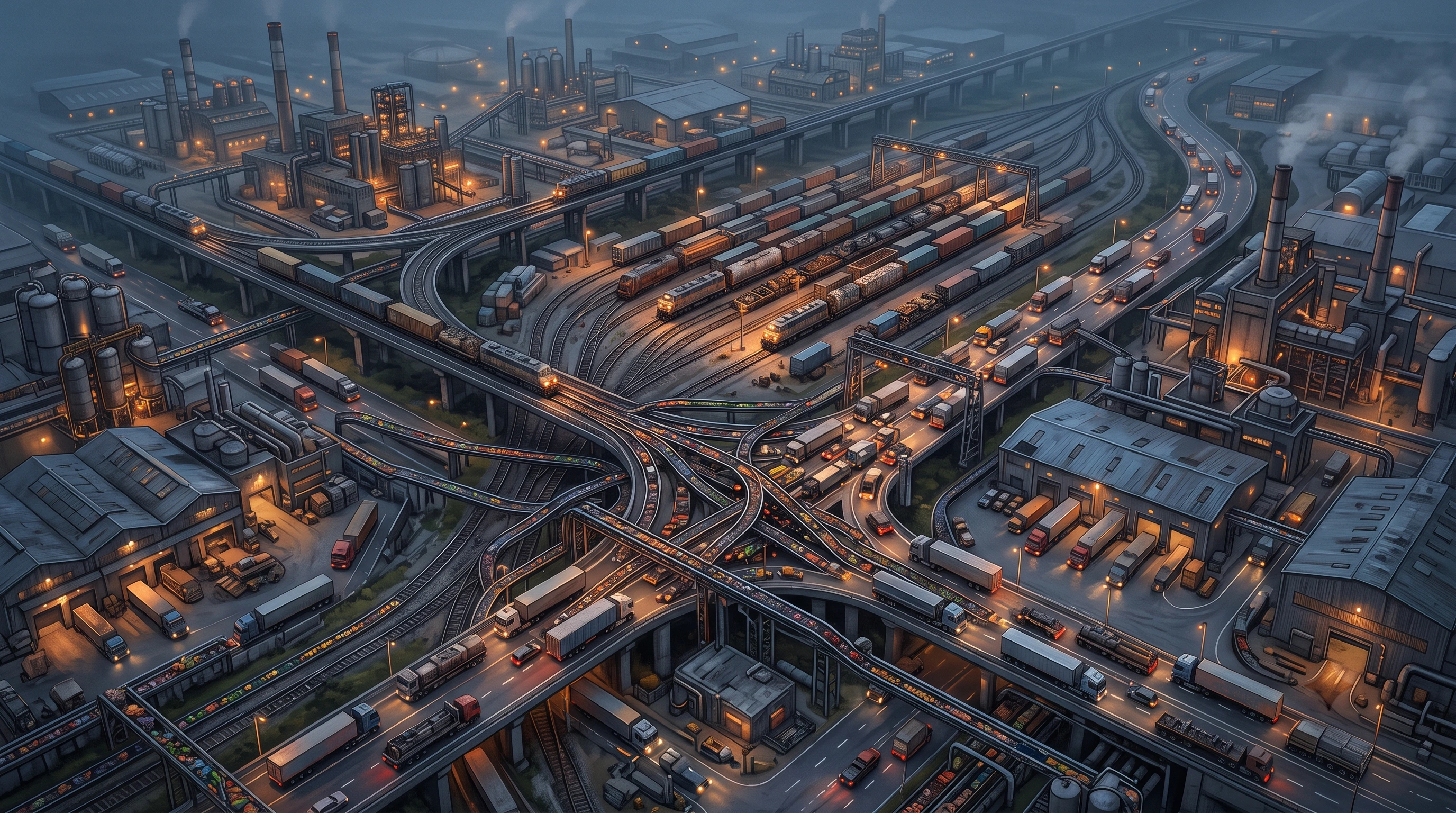
The biggest difference: production chain vs regional network
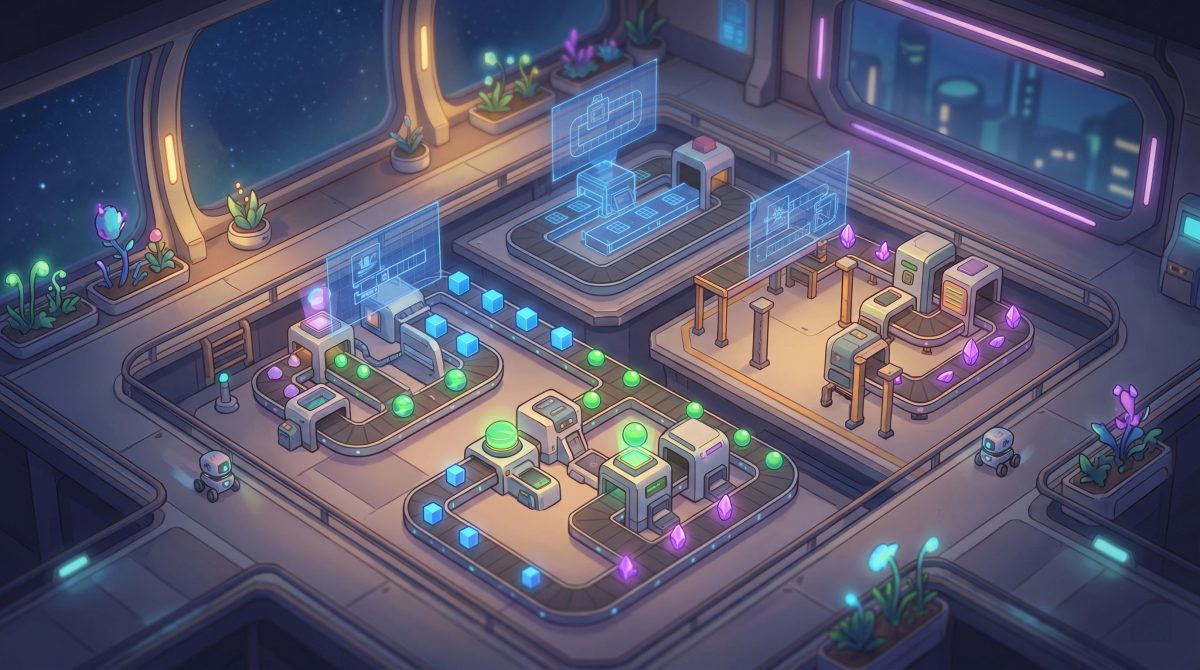
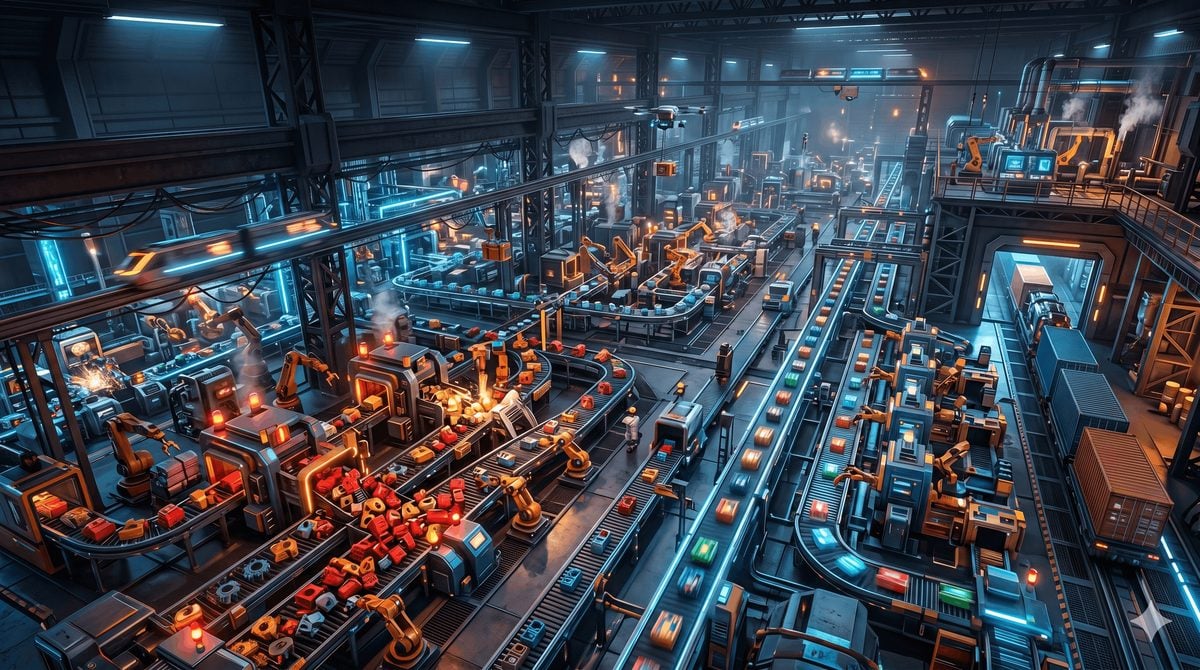
Captain of Industry concentrates most of its complexity inside production. You mine raw materials, reshape terrain, refine resources, manage unwanted byproducts, move goods, grow food, and keep your population supplied. Trucks, conveyors, pipes, trains, storage, and cargo ships all support the same industrial organism.
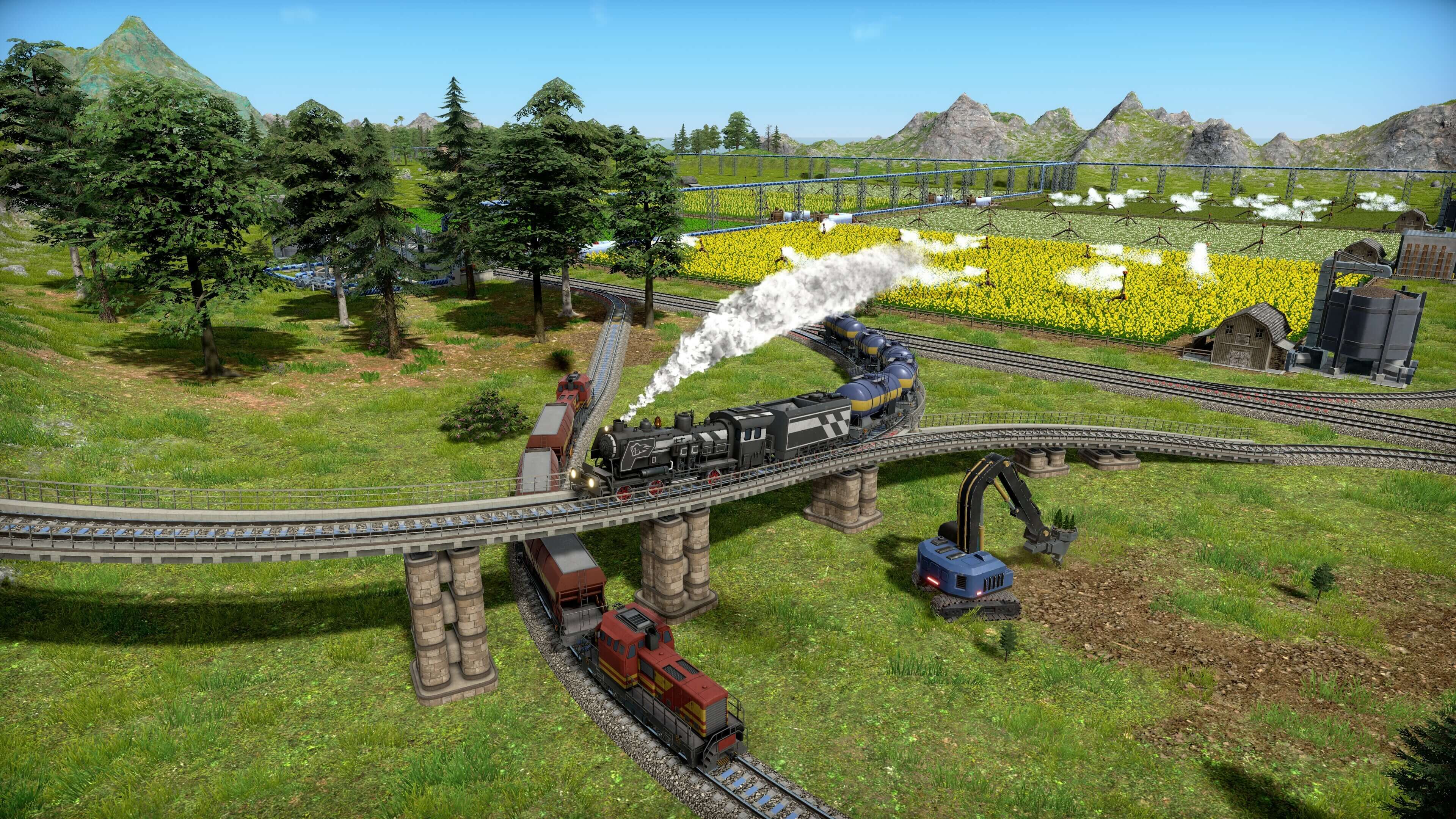
When something stops, the answer is often somewhere inside the chain. A mine may be producing too slowly. Trucks may be overloaded. Storage may be full. A refinery may be blocked because one byproduct has nowhere to go. The challenge is finding the first real bottleneck instead of adding more machines and making the problem worse.
Workers & Resources: Soviet Republic zooms out. The factory still matters, but so do the road leading to it, the construction office assigned to build it, the materials needed for construction, the power grid serving it, and the workers trying to reach it.
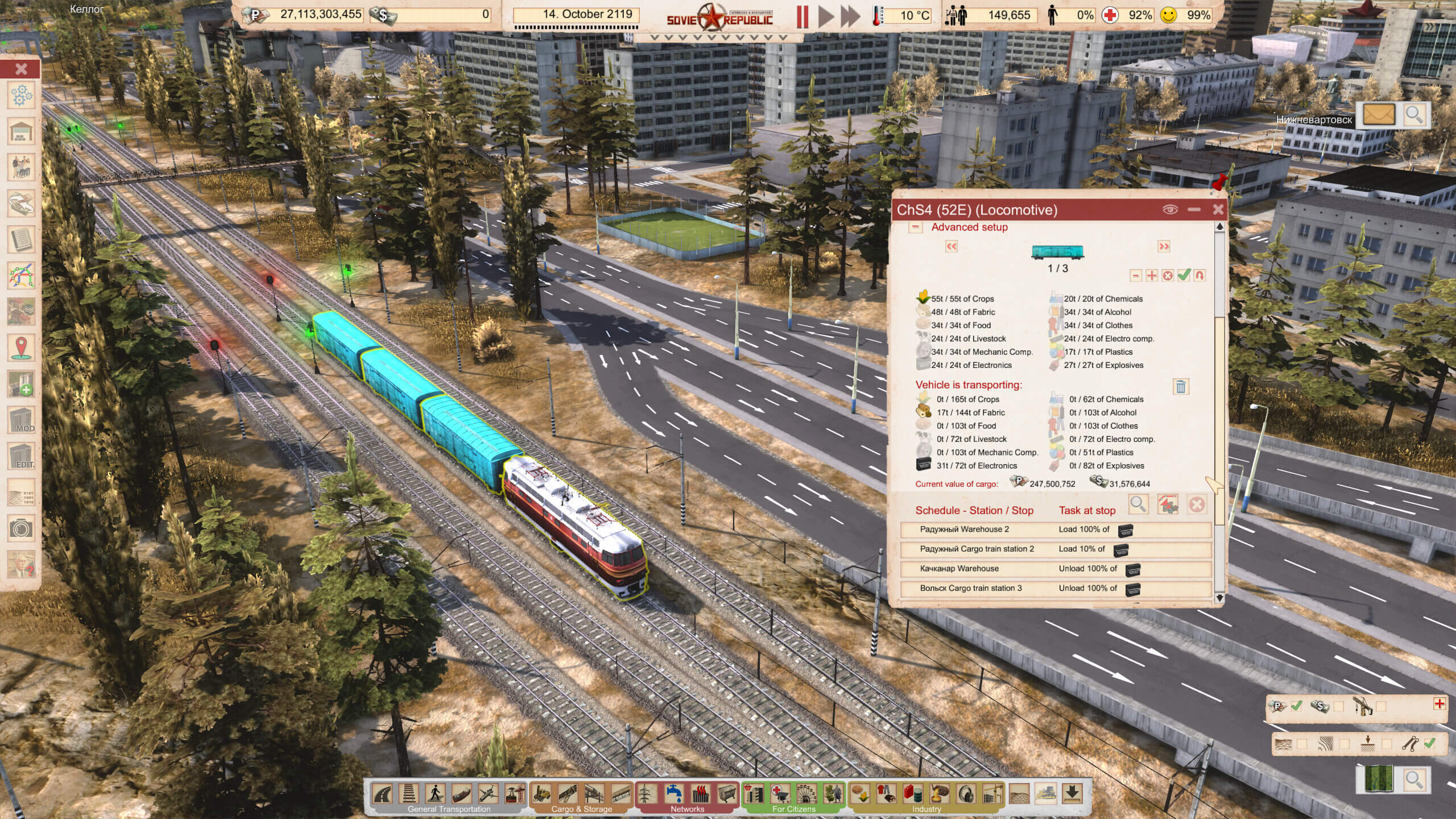
This creates a wider type of logistics problem. A refinery can fail even when its production ratios are correct because the surrounding republic cannot support it. The weakness may sit several systems—and many kilometers—away.
Production and resource management
Captain of Industry gives production chains the starring role. Mining is physical: excavators remove material while trucks carry it away, and your decisions gradually reshape the island. That terrain work is not just visual. It affects access, dumping, expansion, and the future layout of the colony.
The production chains become increasingly connected as you move from basic materials into oil, electronics, advanced machinery, power, and other late-game systems. Outputs that look useless can become important later, while blocked byproducts can stop a facility entirely. Good design means planning for storage, overflow, transport capacity, and future expansion—not only matching input and output ratios.
Workers & Resources also has intricate production chains, but they share the stage with the rest of the republic. Raw materials become construction goods, consumer products, fuel, and exports. Those industries then depend on citizens, vehicles, utilities, and a functioning distribution network.
If your favorite part of a management game is watching a complicated factory finally run at stable throughput, Captain of Industry keeps you closer to that feeling. Workers & Resources makes you earn it by solving more of the surrounding economy first.
Construction, labor, and city management
This is where Workers & Resources separates itself most clearly.
In its more demanding settings, buildings do not simply appear when you place them. Construction offices need vehicles, workers, access, and materials such as gravel, concrete, steel, and prefabricated panels. Importing can cover early gaps, but customs traffic and foreign currency can become bottlenecks of their own.
Completed industries still need a living republic around them. Workers require homes, transport, education, shops, healthcare, heating, and other services. A bus route is not decoration; it may determine whether a power plant receives enough staff to keep the electrical network alive.
Captain of Industry has population, food, health, housing, and survival pressures, but its workers are not simulated with the same city-level detail. The settlement exists mainly to support the industrial system. In Workers & Resources, the citizens and the systems serving them are a major part of the simulation.
Choose Workers & Resources if the idea of designing a bus network, heating system, and construction industry sounds as interesting as designing the factory itself. Choose Captain of Industry if those systems sound like distance between you and the production puzzle.
Transportation and scale
Captain of Industry uses a smaller space, but that space can become extremely busy. Vehicles share routes, mines need access, loose storage needs room, and factory districts compete for land. Conveyors and pipes can remove truck traffic from mature production lines, while trains and cargo shipping expand your logistical options.
Its transport problems are usually about throughput: can enough material move between each step without congestion or delay?
Workers & Resources treats transportation as a foundation of the republic. Roads and railways connect cities, industries, borders, resources, and construction hubs. Buses move workers. Trucks distribute goods. Trains can carry large volumes over long distances. One badly designed junction or overloaded customs house can restrict an entire region.
Its transport problems are therefore about both throughput and geography: is the route fast enough, reliable enough, and close enough for the people or materials using it?
Captain of Industry feels like managing a dense circuit board. Workers & Resources feels like managing the territory that circuit board has to cross.
Difficulty and learning curve
Neither game is naturally gentle, although both provide settings that can soften parts of the experience.
Captain of Industry is usually easier to read because its problems are more concentrated. You can inspect production statistics, follow material flow, and work backward from a stalled facility. The chains become complex, but the possible causes remain mostly inside the island's industrial system.
Workers & Resources has a broader learning curve. A failure may involve construction, workforce supply, vehicle routing, utilities, customs throughput, or city services. Realistic Mode makes the logistical fantasy especially strong, but it is better treated as a goal than an obligation for a first save.
For a newcomer to hardcore logistics games, Captain of Industry is the cleaner starting point. For someone already comfortable with transport games and detailed city builders, Workers & Resources offers the bigger systems challenge.
Pacing and replayability
Captain of Industry follows a satisfying rhythm: expand, discover a bottleneck, stabilize the chain, then rebuild it properly. Progress often comes from improving the same industrial space rather than abandoning it. Different maps, resource pressure, difficulty settings, and layout choices give you reasons to approach the island differently.
Workers & Resources moves more slowly when played with its deeper systems enabled. A major expansion may need new housing, transport capacity, utility coverage, construction supply, and road or rail access before it produces anything useful. The payoff takes longer, but a successful republic feels unusually earned.
Its larger maps and wider system set create more ways for one save to differ from another. You can build around different industries, transport methods, starting conditions, and levels of self-sufficiency. The cost is that restarting after a structural mistake can feel more intimidating.
Which one should you play?
Play Captain of Industry if:
- Factorio-style production debugging is your favorite kind of problem
- You want mining and terrain deformation to shape the factory
- You enjoy balancing inputs, outputs, storage, and byproducts
- You prefer a focused industrial colony over a detailed city simulation
- You want the more approachable entry point of these two games
Play Workers & Resources: Soviet Republic if:
- You want industries to depend on real cities and transport networks
- You enjoy planning roads, railways, buses, utilities, and construction access
- You like slow projects whose success depends on preparation
- You want labor and public services to matter
- You are comfortable learning several connected systems at once
Play both if:
You enjoy seeing logistics at two different scales. Captain of Industry lets you obsess over what happens inside and between production chains. Workers & Resources lets you build the regional economy that makes those chains possible.
The best first commitment
For most players deciding between the two, Captain of Industry is the safer first purchase. It is still deep and unforgiving, but the island gives its complexity a clearer boundary. You can learn to read shortages, transport capacity, and production dependencies before taking responsibility for a whole republic.
That does not make it the better game for everyone. If worker movement, construction logistics, utilities, and national infrastructure are the main attraction, go directly to Workers & Resources: Soviet Republic.
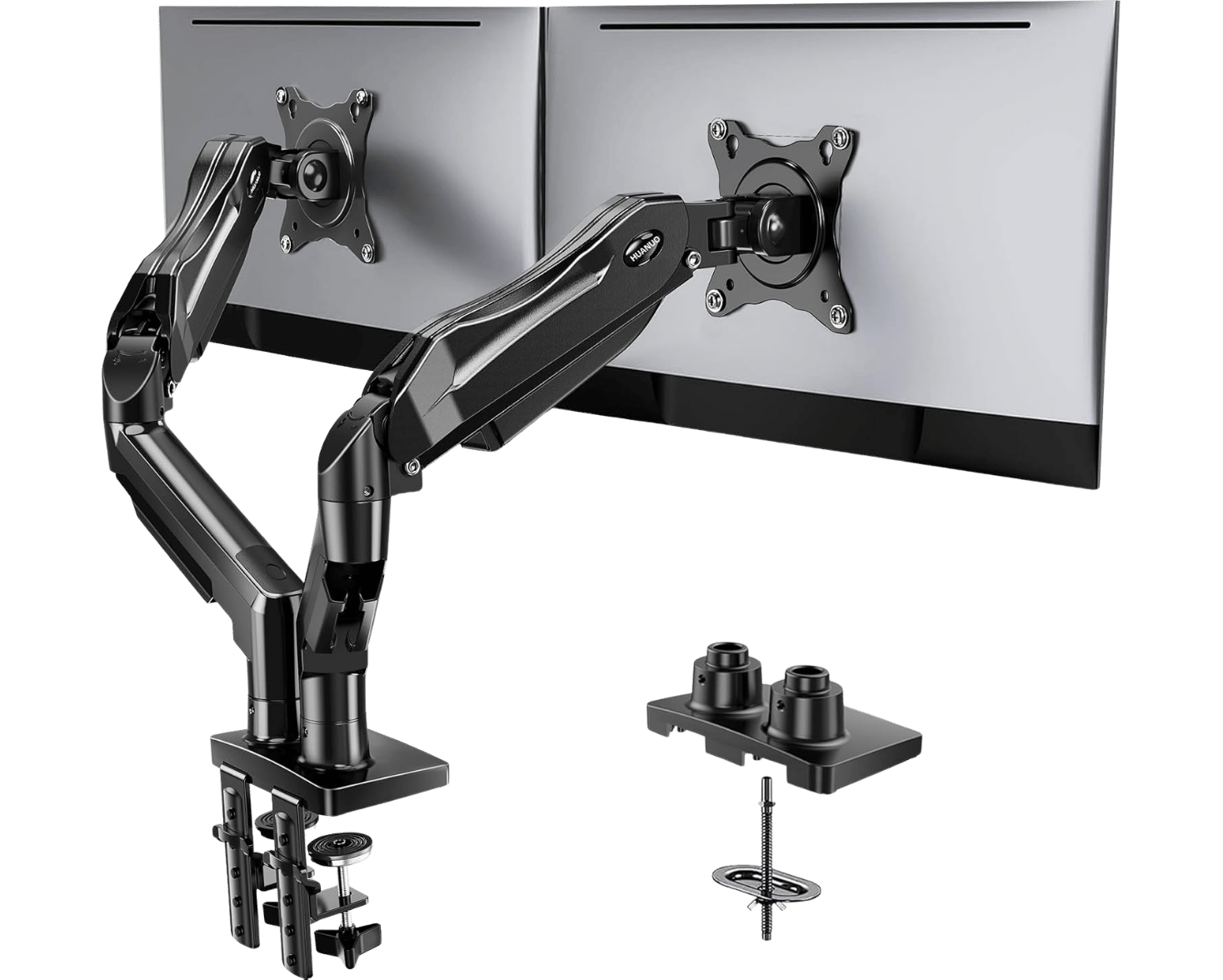
HUANUO FlowLift Dual Monitor Stand
Frees desk space and improves viewing angle for long factory and strategy sessions.
FAQ
Is Captain of Industry harder than Workers & Resources: Soviet Republic?
Captain of Industry can be punishing, but Workers & Resources is generally harder to master with all of its major systems enabled. It spreads the challenge across production, labor, transportation, utilities, construction, and city services. Difficulty settings matter in both games, so the experience can change considerably between saves.
Which game has deeper production chains?
Captain of Industry gives production chains more attention and makes mining, refining, throughput, and byproduct handling its central puzzle. Workers & Resources combines complex industry with a deeper simulation of the republic surrounding it.
Which game is better for factory building?
Captain of Industry. Its strongest loop is finding a weak industrial process and rebuilding it into a stable, expandable system. Workers & Resources has substantial industry, but city planning and regional infrastructure claim more of your time.
Which game is the better city builder?
Workers & Resources: Soviet Republic. Housing, labor, transportation, education, utilities, construction, public services, and industrial growth are connected parts of the same planned economy.
Does Captain of Industry have trains?
Yes. Trains are part of the base game and provide another way to move large quantities of material. A separate Trains Expanded DLC adds more advanced railway content, but it is not required to use trains.
Is Realistic Mode required in Workers & Resources?
No. Realistic Mode is optional. It prevents instant construction and makes buildings depend on actual workers, vehicles, materials, and access. New players can learn the main systems with easier settings before enabling it.
Which game is better for beginners?
Captain of Industry is the more approachable of the two for players who already understand basic production chains. Workers & Resources is the better first choice only if detailed city infrastructure and transport planning are exactly what you want to learn.
Takeaway
The choice comes down to where you want the complexity to live.
Choose Captain of Industry for a dense industrial island where mining, transport, production ratios, and blocked outputs can destabilize the whole colony. Choose Workers & Resources: Soviet Republic for a planned economy where labor, construction, utilities, transportation, and distance can undermine decisions made hours earlier.
Both reward patient logistics planning. Captain of Industry asks you to perfect the machine. Workers & Resources asks you to build the republic capable of running it.