Automation Games vs City Builders: What's the Difference?
Automation games and city builders look similar, but they focus on completely different things. Learn what makes each genre unique, where they overlap, and which one is right for you.
You're browsing Steam, looking for your next management game. You see Factorio and Cities: Skylines 2 in the same category. Both involve building, planning, and managing resources. Both can consume hundreds of hours. Both reward careful thinking and optimization.
So what's the difference?
At first glance, automation games and city builders seem like they're doing the same thing. You build structures, manage resources, and watch your creation grow. But once you dig deeper, you'll find they're solving completely different problems and appealing to different parts of your brain.
This confusion is common—and understandable. Both genres involve building, planning, and systems thinking. But understanding the difference will help you find the game that matches what you're actually looking for.
Why People Confuse Them
Before diving into the differences, it helps to acknowledge why these genres get mixed up:
They share surface-level similarities:
- Both involve building structures and managing resources
- Both reward planning and optimization
- Both can be played for hundreds of hours
- Both appeal to players who enjoy systems thinking
- Both often appear in the same "simulation" or "management" categories on Steam
They sometimes overlap:
- Some games blend both genres (like Anno 1800 or Captain of Industry)
- Both genres have similar visual elements (conveyor belts, buildings, resource flows)
- Both can feel "satisfying" in similar ways (watching things work smoothly)
But these similarities are misleading. The core gameplay loops, the problems you're solving, and the satisfaction you get are fundamentally different.
What Automation Games Focus On
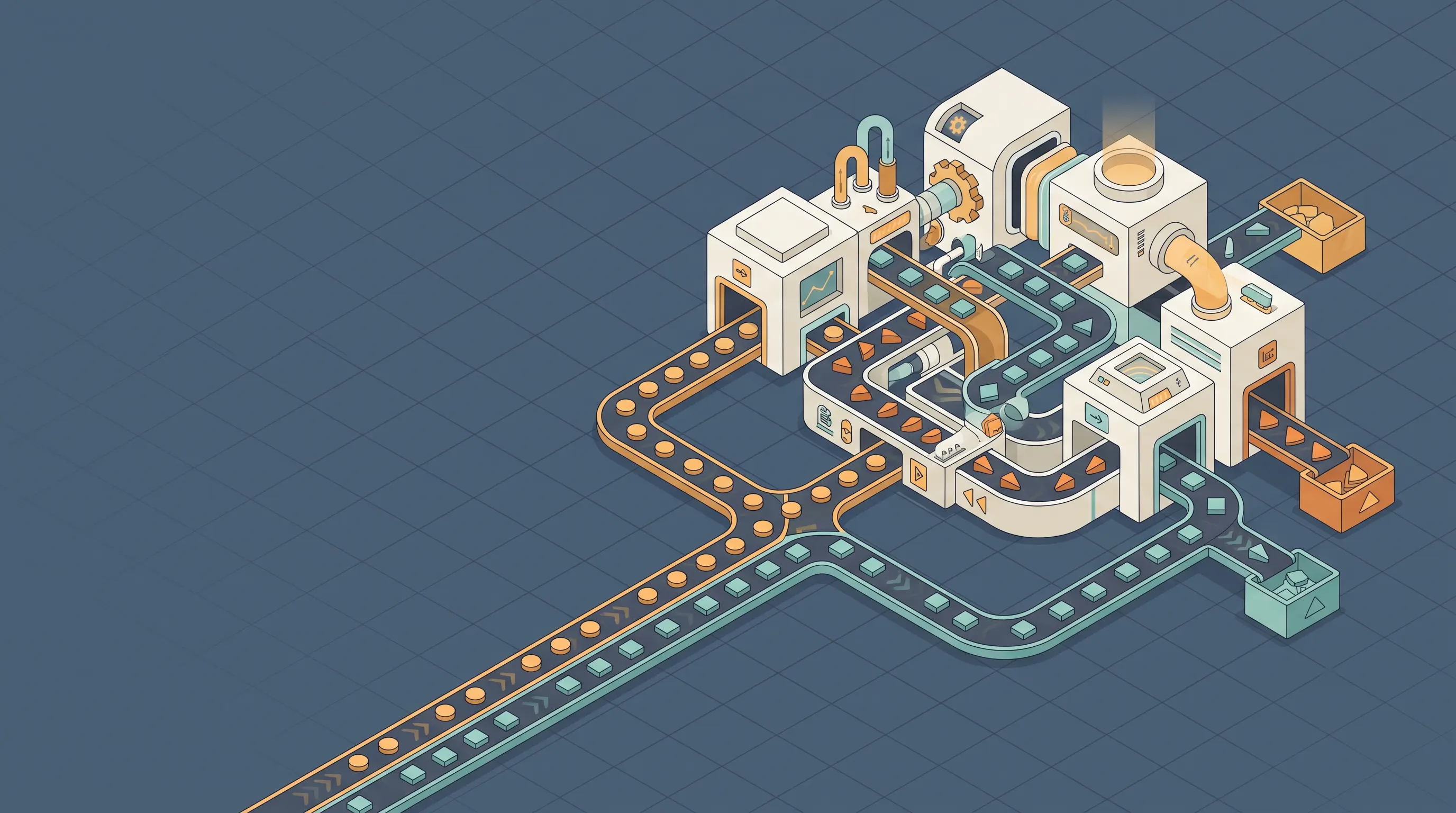
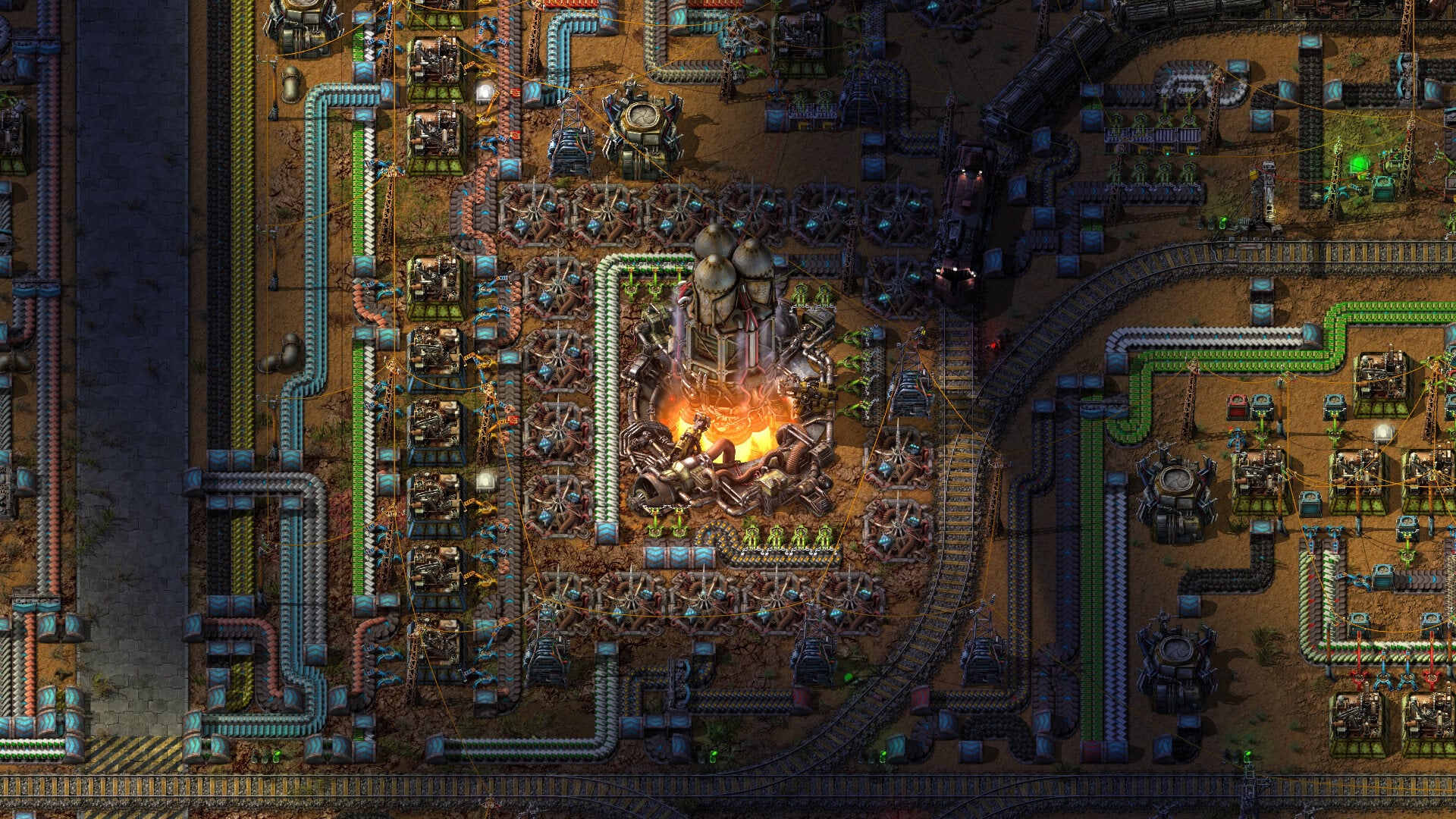
Automation games are about systems that run themselves.
The goal isn't to build a city or manage people. The goal is to design a production chain that works without you touching it.
Core Focus: Production Chains and Logistics
In automation games, you're solving problems like:
- How do I get iron ore from the mine to the smelter to the assembler? (Logistics)
- What's the optimal ratio of miners to furnaces to assemblers? (Optimization)
- How can I design this factory so it never bottlenecks? (System design)
- Can I automate this entire process so I don't have to manually craft anything? (Automation)
The satisfaction comes from watching your factory run smoothly after hours of planning and troubleshooting. When everything clicks, you can stand back and watch resources flow through your systems—and that's the point.
Key Characteristics
Automation games emphasize:
- Production chains: Multi-step processes that transform raw materials into finished products
- Logistics optimization: Moving resources efficiently through belts, pipes, trains, or drones
- Infinite scaling: There's always room to expand and optimize further
- System efficiency: The goal is making things work better, faster, and more efficiently
- Minimal character management: People (if they exist) are just part of the production system
Examples of pure automation games:
- Factorio - The gold standard for factory automation
- Satisfactory - 3D factory building with exploration
- Dyson Sphere Program - Galactic-scale automation
For a deeper dive into automation games, check out my Automation Games Explained guide.
What City Builders Focus On
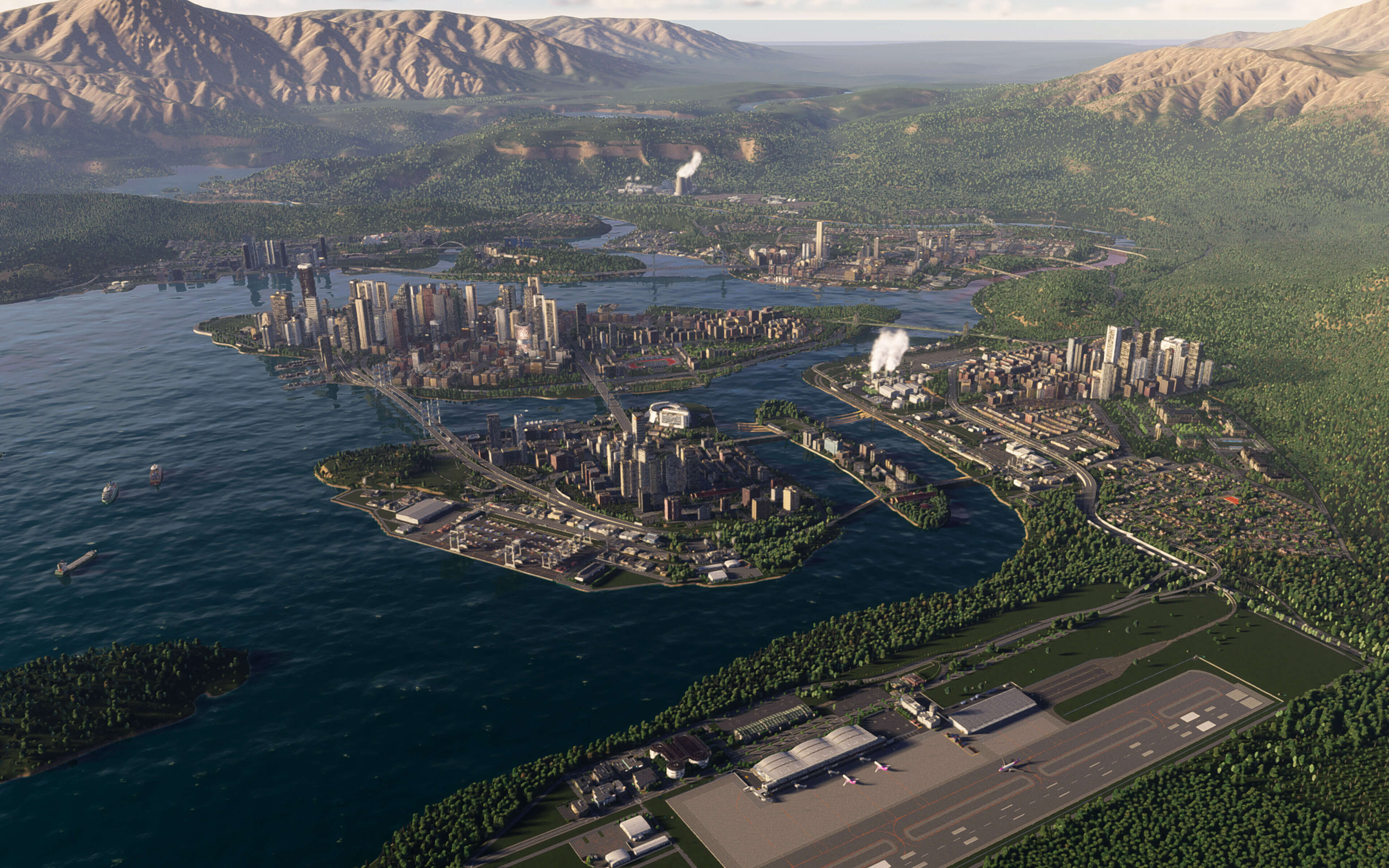
City builders are about creating livable communities.
The goal isn't to optimize production chains. The goal is to design a city that functions well, looks good, and keeps your citizens happy.
Core Focus: Urban Planning and Citizen Management
In city builders, you're solving problems like:
- Where should I place residential zones so people can access jobs and services? (Urban planning)
- How do I manage traffic flow so emergency services can reach every neighborhood? (Infrastructure)
- What's the right balance of residential, commercial, and industrial zones? (City planning)
- How do I keep my citizens happy while managing the budget? (Resource management)
The satisfaction comes from watching your city grow, seeing citizens move in, and creating a functional (and hopefully beautiful) urban environment. You're managing a living, breathing community—not just a production system.
Key Characteristics
City builders emphasize:
- Urban planning: Zoning, road layouts, and infrastructure placement
- Citizen management: Keeping residents happy, healthy, and employed
- Aesthetic design: Creating cities that look good and feel alive
- Service management: Providing utilities, healthcare, education, and emergency services
- Budget and economy: Balancing income, expenses, and city services
Examples of pure city builders:
- Cities: Skylines 2 - Modern city simulation with deep traffic systems
- Foundation - Organic medieval city building
- Timberborn - Unique beaver city builder with water management
For more city builder recommendations, see my Best City Builder Games of 2026 guide.
Where They Overlap
The confusion between these genres exists because some games intentionally blend both approaches. These hybrid games combine elements of automation and city building, creating unique experiences that appeal to fans of both genres.
Hybrid Games
Anno 1800 combines city building with production chain management. You're building beautiful cities, but you're also optimizing trade routes and production chains. The game asks you to do both—and that's what makes it unique.
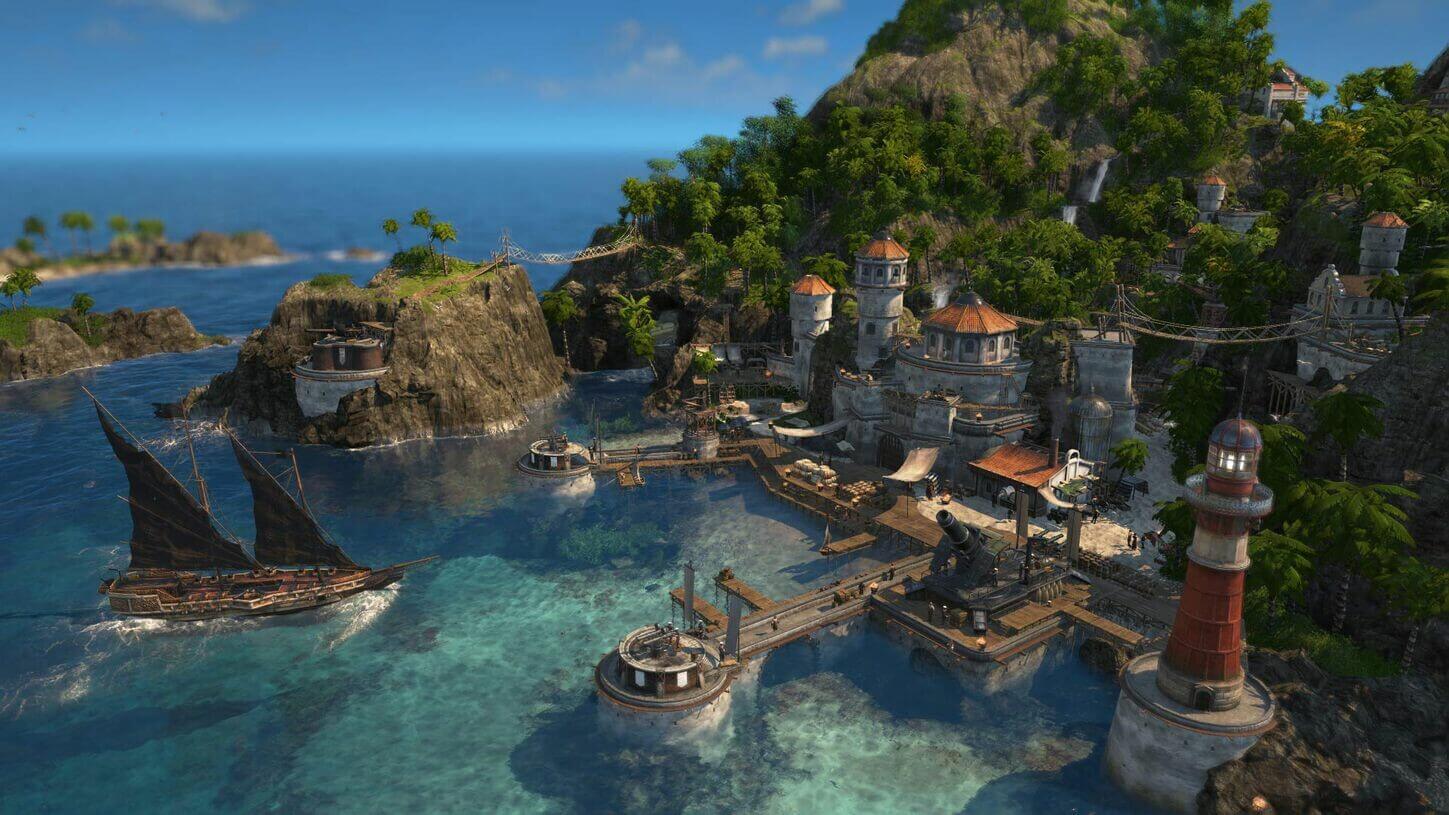
Anno 117: Pax Romana is the modern series example of the same hybrid: provincial city building where trade networks and production chains still do heavy lifting, with optional lighter needs for newcomers.
Whiskerwood sits on the cozy side of that overlap — a city builder where layered production chains matter, but without survival stress or combat. It is a useful reminder that “city builder with industry” does not have to mean Anno-scale juggling.
Captain of Industry merges factory automation with colony management. You're optimizing production chains like in Factorio, but you're also managing a population that needs food, housing, and services like in a city builder.
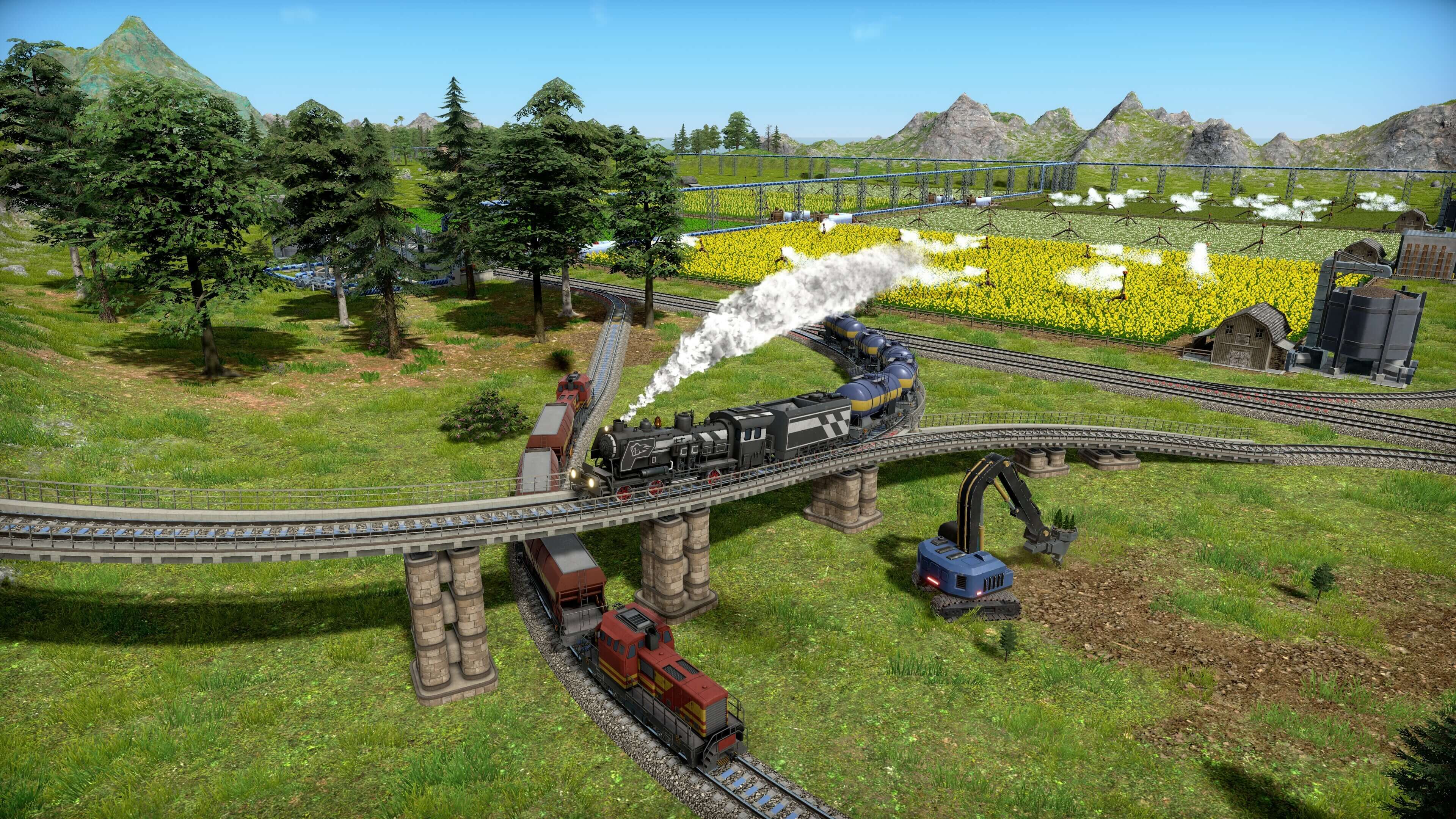
These hybrid games prove that the genres can work together—but they also highlight the differences. When you play Anno 1800 or Anno 117, you can feel the distinct phases: "Now I'm city building" versus "Now I'm optimizing production chains."
Shared Appeal
Both genres attract players who enjoy:
- Systems thinking: Understanding how complex systems work
- Planning and optimization: Thinking ahead and improving efficiency
- Long-term projects: Games you can play for hundreds of hours
- Satisfying progression: Watching your creation grow and improve
But the type of systems thinking is different. Automation games reward logical problem-solving and optimization. City builders reward spatial planning and balancing competing needs.
Which One Is For You?
The best way to choose is to ask yourself what you're actually looking for:
Choose Automation Games If You Want:
✅ To solve logistics puzzles - You enjoy figuring out how to move resources efficiently
✅ To optimize systems - You get satisfaction from making things work better and faster
✅ To design production chains - You like planning multi-step processes that transform materials
✅ Minimal character management - You prefer systems over managing individual people
✅ Infinite scaling - You want a game where you can always expand and improve
✅ Logical problem-solving - You enjoy puzzles with clear, logical solutions
Start with: Factorio if you want the pure experience, or Satisfactory if you prefer 3D exploration. For more options, check out my Games Like Factorio guide.
Choose City Builders If You Want:
✅ To design beautiful cities - You enjoy creating visually appealing urban environments
✅ To manage citizens - You like balancing the needs of a living population
✅ To solve urban planning challenges - You enjoy traffic management, zoning, and infrastructure
✅ Aesthetic satisfaction - You want to create something that looks good, not just works efficiently
✅ Service management - You enjoy providing utilities, healthcare, education, and emergency services
✅ Budget and economy - You like balancing income, expenses, and city growth
Start with: Cities: Skylines 2 if you want modern city simulation, or Foundation if you prefer creative freedom. For more options, see my Best City Builder Games of 2026 guide.
Choose Hybrid Games If You Want:
✅ Both experiences - You enjoy both production chain optimization and city building
✅ More complexity - You want games that combine multiple management systems
✅ Variety in gameplay - You like switching between different types of challenges
Start with: Anno 1800 for historical city building with trade, Anno 117: Pax Romana for the fresher Roman trade-and-production hybrid, Whiskerwood if you want production chains without pressure, or Captain of Industry for factory automation with colony management.
Common Questions
Is Factorio a city builder?
No. Factorio is an automation game. While you build structures and manage resources, the focus is on production chains and logistics optimization—not urban planning or citizen management. Factorio is about making factories work efficiently, not creating livable communities.
Can automation games have cities?
Some automation games include city-like elements, but they're still automation games. For example, Dyson Sphere Program has you building across multiple planets, but the focus remains on production chains and logistics—not urban planning or citizen happiness.
Can city builders have automation?
Yes, but it's usually secondary. Games like Anno 1800 include production chain management, but the primary focus is still city building and citizen management. The automation elements support the city building, not the other way around.
Which genre is harder to learn?
Both have learning curves, but they're different types of difficulty:
- Automation games challenge you with logical problem-solving and system optimization. The difficulty comes from understanding complex production chains and logistics.
- City builders challenge you with spatial planning and balancing competing needs. The difficulty comes from managing multiple systems (traffic, services, budget) simultaneously.
Neither is inherently harder—it depends on what type of thinking you're more comfortable with.
Final Thoughts
Automation games and city builders might look similar on the surface, but they're solving different problems and providing different types of satisfaction.
Automation games are about building systems that work without you. The satisfaction comes from optimization, efficiency, and watching your factory run smoothly.
City builders are about creating livable communities. The satisfaction comes from urban planning, citizen management, and watching your city grow and thrive.
Both genres are excellent—but understanding the difference will help you find the game that matches what you're actually looking for. Whether you want to optimize production chains or design beautiful cities, there's a game out there that's perfect for you.
If you're still not sure, try starting with a hybrid game like Anno 1800 or Captain of Industry. These games let you experience both approaches and discover which one you prefer.
A desk setup note for management-heavy games
Whether you land on automation games or city builders, both genres reward screen space. You are constantly cross-checking production chains, traffic maps, budgets, or logistics routes at the same time. A dual monitor arm frees desk room and makes it easier to keep a reference view open while you fix the bottleneck that just broke.
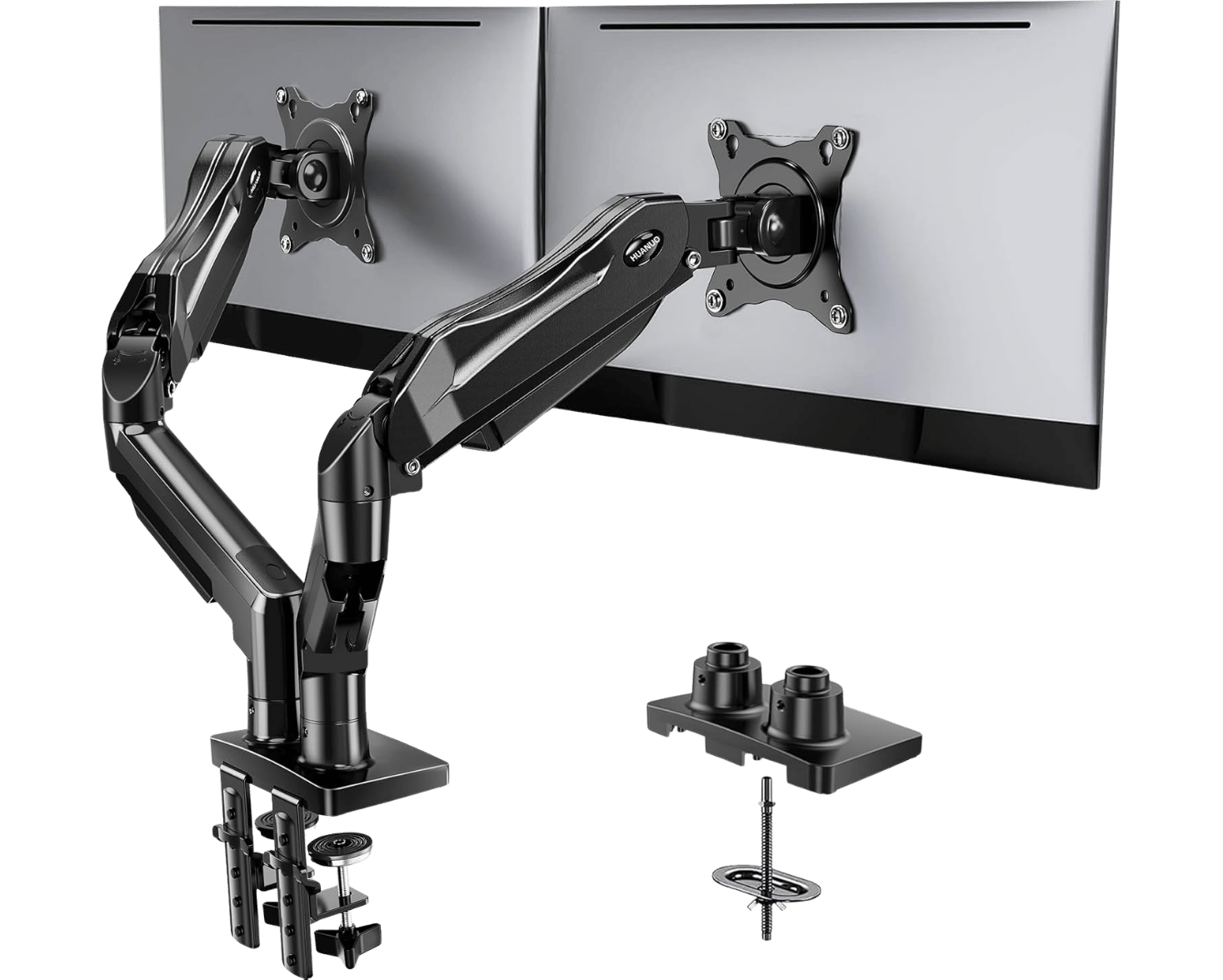
HUANUO FlowLift Dual Monitor Stand
Frees desk space and improves viewing angle for long factory and strategy sessions.
Frequently Asked Questions
What's the main difference between automation games and city builders?
Automation games focus on production chains, logistics optimization, and building systems that run themselves. City builders focus on urban planning, citizen management, and creating livable communities. The core gameplay loops and problems you're solving are fundamentally different.
Can a game be both an automation game and a city builder?
Yes. Hybrid games like Anno 1800 and Captain of Industry combine elements of both genres. However, most games lean more heavily toward one approach or the other.
Which should I play first: automation games or city builders?
It depends on what you enjoy. If you like logical problem-solving and optimization, start with automation games like Factorio. If you prefer spatial planning and managing living communities, start with city builders like Cities: Skylines 2. If you're not sure, try a hybrid game like Anno 1800.
Are factory games the same as automation games?
Factory games are a subset of automation games. All factory games are automation games, but not all automation games are factory games. Factory games specifically focus on building factories and production chains, while automation games can include broader system automation concepts.
Do city builders have production chains?
Some city builders include production chain elements (like Anno 1800), but it's usually secondary to urban planning and citizen management. The production chains support the city building, not the other way around.