Games Like Timberborn
City builders, colony sims, and factory games that capture Timberborn's water management, vertical planning, survival pressure, and relaxed settlement pace.
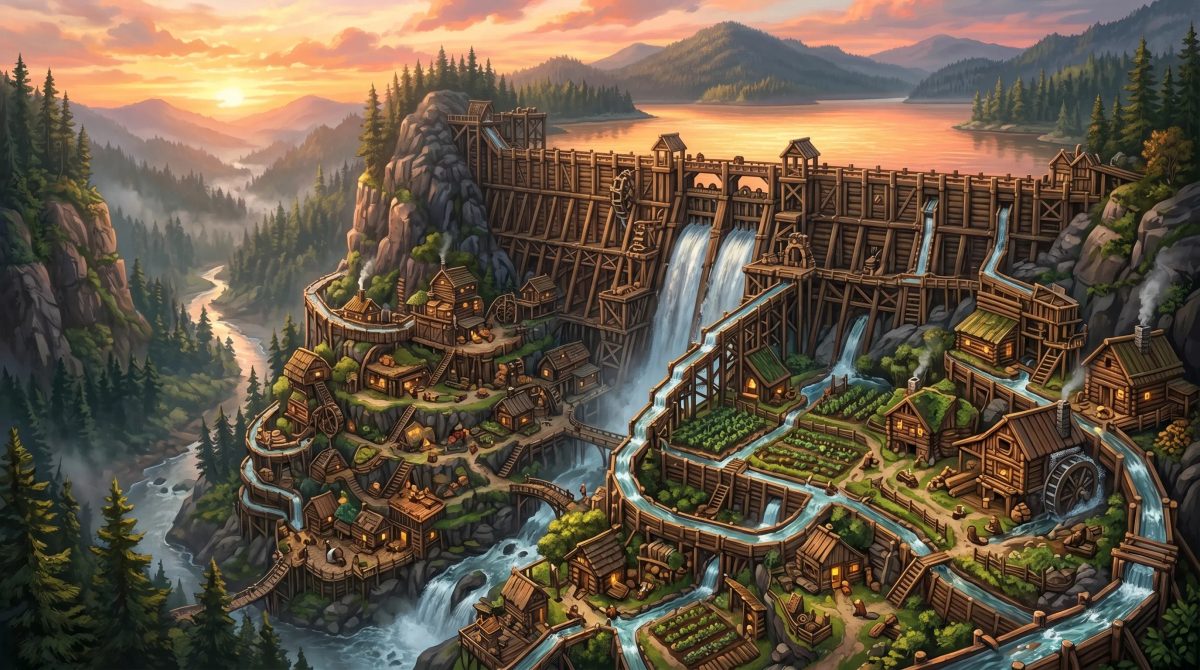
Games like Timberborn are easier to find when you stop looking for more beavers.
The better question is this: which part of Timberborn do you want more of? The calm settlement growth? The water and drought planning? The vertical building? The feeling that every dam, stairway, storage pile, and production route matters?
Timberborn is unusual because it mixes all of those things at once. Most alternatives only match one or two parts of the formula. That does not make them bad picks. It just means you should choose based on the part of Timberborn that actually hooked you.
Quick answer
- Closest relaxed city-builder feel: Foundation or Whiskerwood
- Best pick for water, gases, heat, and engineering systems: Oxygen Not Included
- Best vertical construction pivot: Going Medieval
- Best logistics-heavy city builder: InfraSpace
- Best harsher survival settlement game: Farthest Frontier or Banished
- Best living-island survival city: The Wandering Village
- Best run-based settlement challenge: Against the Storm
If you want water, verticality, survival planning, and a relaxed pace all in one game, none of these fully replaces Timberborn. The smarter move is to pick the game that amplifies the part you care about most.
Comparison table
| Game | Best for | Stress level | Main overlap with Timberborn |
|---|---|---|---|
| Foundation | Calm settlement growth | Low | Relaxed city building and organic expansion |
| Whiskerwood | Cozy production-chain towns | Low | Gentle systems depth without survival panic |
| Oxygen Not Included | Deep engineering systems | High | Fluids, gases, heat, plumbing, vertical base planning |
| Going Medieval | Vertical colony building | Medium | Multi-level construction and settlement survival |
| Against the Storm | Short settlement puzzles | Medium-high | Adapting to constraints and planning under pressure |
| Surviving Mars | Hostile-environment colony planning | Medium | Life support, infrastructure, and careful expansion |
| InfraSpace | Logistics and production flow | Medium | Routing, supply chains, and city systems |
| The Wandering Village | Bounded survival-city management | Medium | Settlement needs tied to a living, constrained map |
| Farthest Frontier | Detailed survival settlement | Medium-high | Seasons, food, disease, and long-term stability |
| Banished | Harsh minimalist survival | High | Resource planning, labor pressure, and winter survival |
The picks
Foundation

Best for: players who want Timberborn’s calm city-builder rhythm without the survival edge.
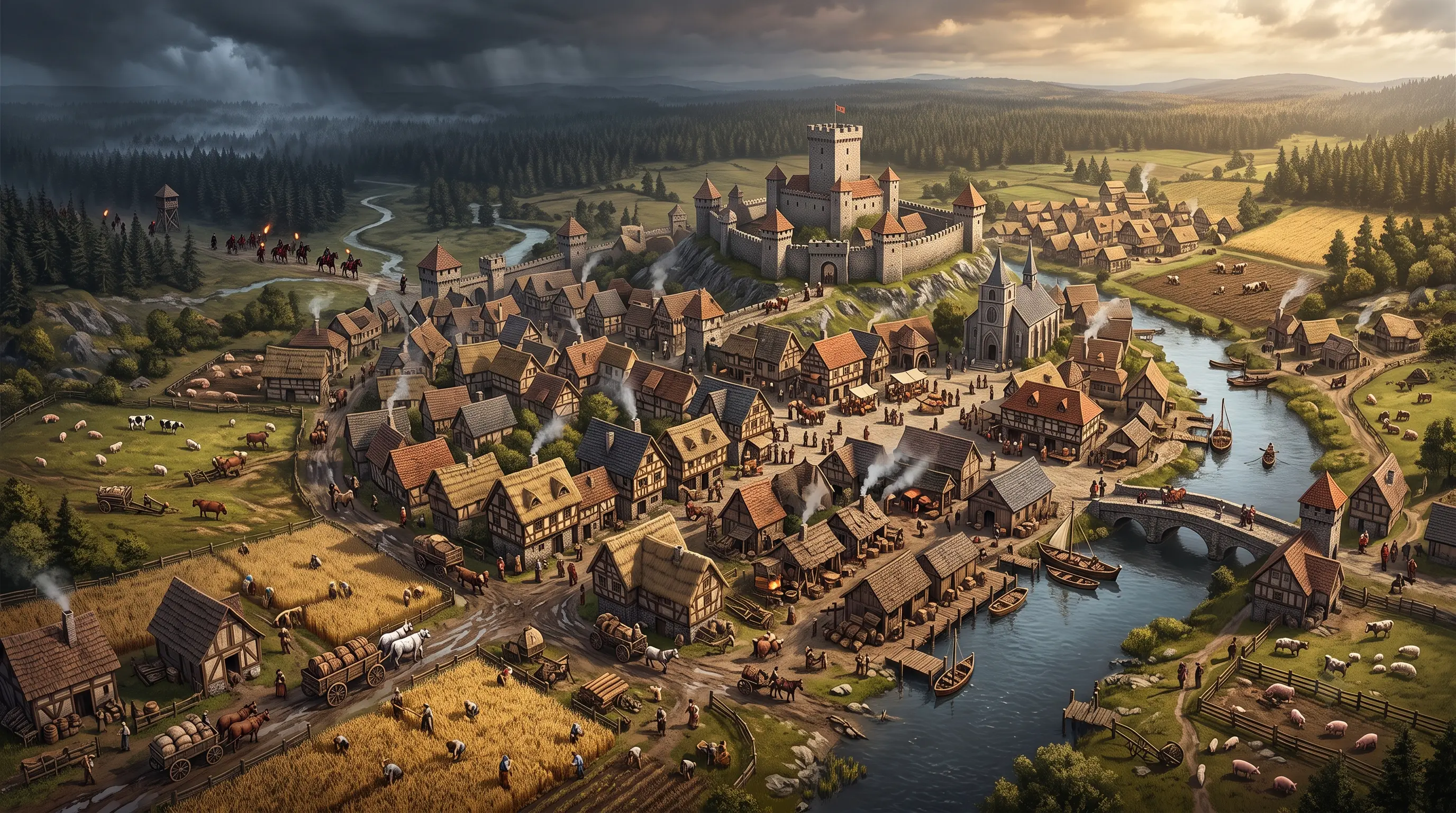
Foundation is the safest recommendation if you mainly like Timberborn as a relaxed settlement game. You expand slowly, build production chains, shape neighborhoods, and watch the village grow into something that feels natural rather than perfectly gridded.
The big strength is pace. Foundation lets you plan, adjust, and decorate without turning every mistake into a disaster. If you enjoy the peaceful side of Timberborn — the part where you zoom out and admire a working settlement — this is probably the first game to try.
The important limit is water. Foundation does not replace Timberborn’s dams, droughts, reservoirs, or river control. It is a mood match more than a mechanical match.
Pick Foundation if you want a calmer medieval city builder with organic growth and less pressure.
Whiskerwood

Best for: players who want Timberborn’s production-chain satisfaction without drought panic.
Whiskerwood is a cozy cat-and-mouse city builder from the Railgrade team. It keeps layered goods chains and town growth front and center, but drops the survival edge that makes Timberborn tense during droughts. If you mainly loved watching a settlement’s industry click into place, this is the softer follow-up.
The big strength is mood. Whiskerwood is built for low-stress evenings: readable chains, whimsical presentation, and gentle systems depth. It will not replace dams, water storage, or vertical beaver engineering.
Pick Whiskerwood if you want production-chain city building that stays cozy.
Oxygen Not Included
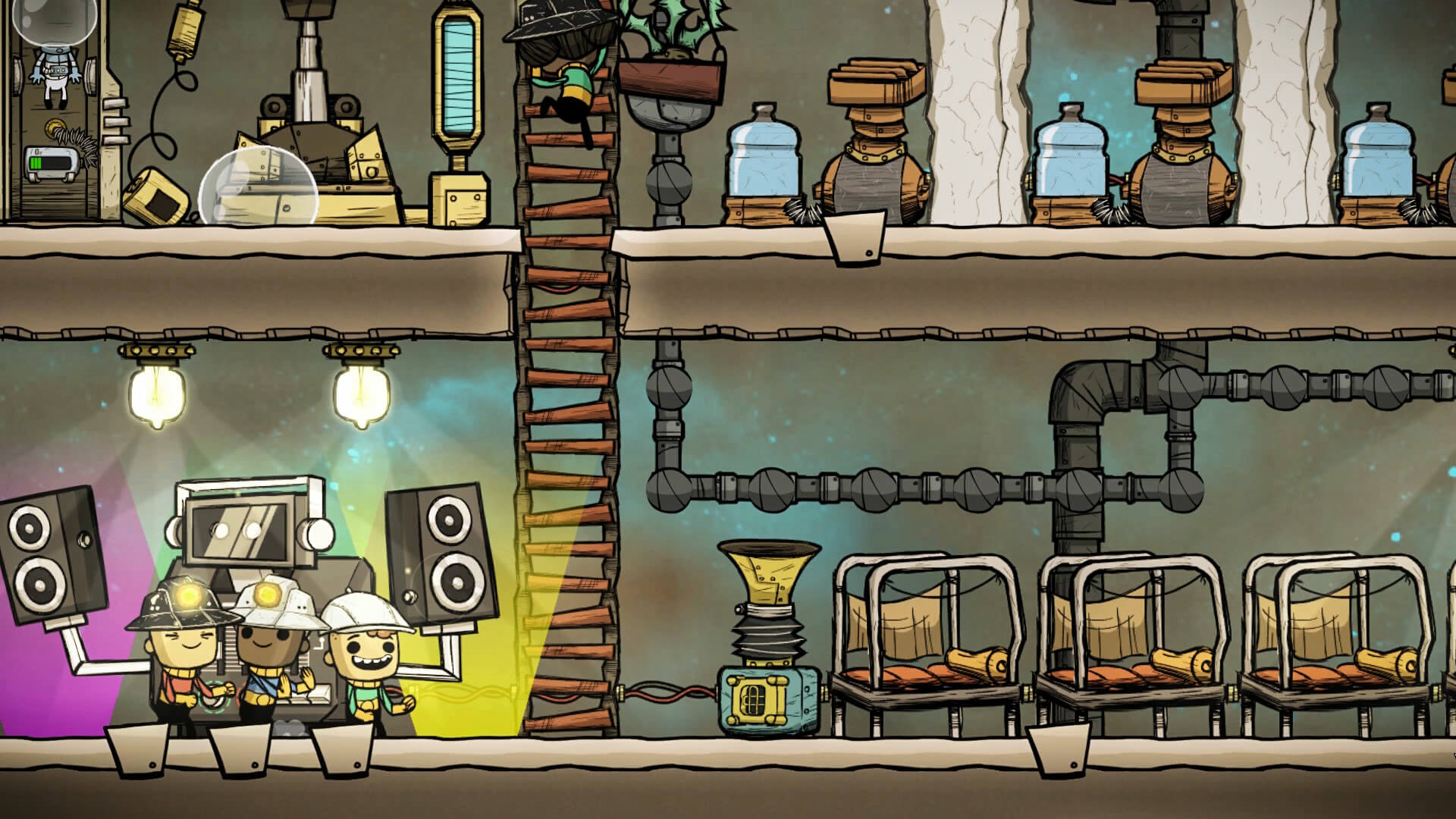
Best for: players who want Timberborn’s engineering brain turned way up.
Oxygen Not Included is the strongest pick if water systems are the real hook for you. It is not a traditional city builder, but it gives you liquids, gases, heat, plumbing, power, food, oxygen, and vertical base layouts all pushing against each other.
This is the closest match for the feeling of building a system and then realizing one bad decision has consequences later. Pipes back up. Heat spreads. Water goes where you did not want it to go. Your base becomes a machine, and every part of that machine affects another part.
The cost is complexity. Oxygen Not Included is much harder than Timberborn and much less cozy. It can be funny and charming, but it is not chill in the same way.
Pick Oxygen Not Included if you want deep systems, fluids, and engineering problems more than a peaceful city-building sandbox.
Going Medieval
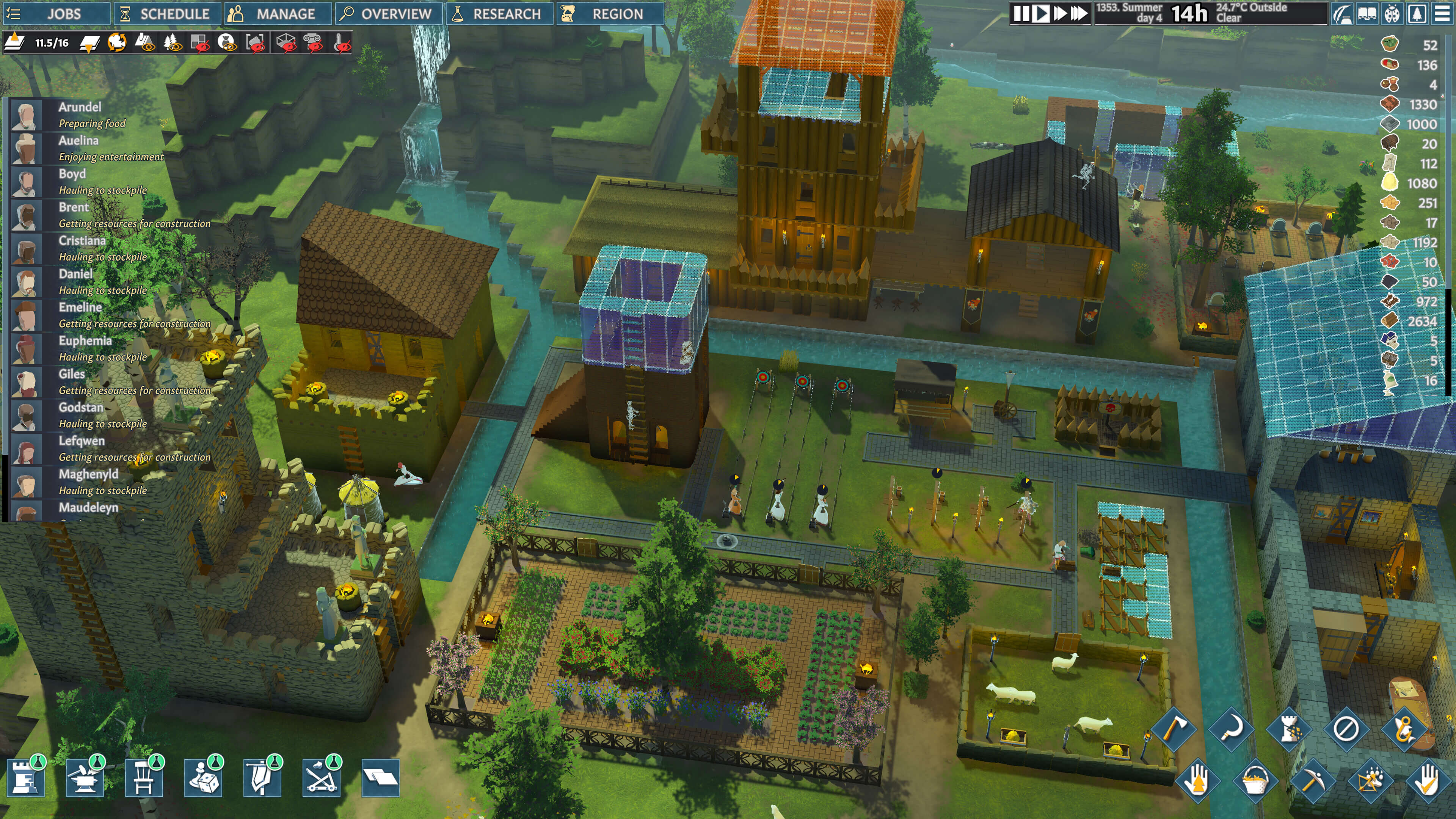
Best for: players who love Timberborn’s vertical building.
Going Medieval earns its place because height matters. Timberborn makes you think in layers with platforms, levees, stairs, roofs, and stacked districts. Going Medieval moves that idea into a 3D medieval colony sim where rooms, walls, storage, defenses, farms, and underground spaces all matter.
It is a good fit if you like settlements that feel physically built instead of simply placed on flat ground. You can shape a colony upward, downward, and around the terrain in a way that feels more architectural than many colony sims.
The overlap is mostly verticality, not water management. You are dealing with survival, defense, farming, temperature, and colonist needs, not drought cycles or dams.
Pick Going Medieval if you want more 3D settlement construction and are okay trading water puzzles for colony survival.
Against the Storm
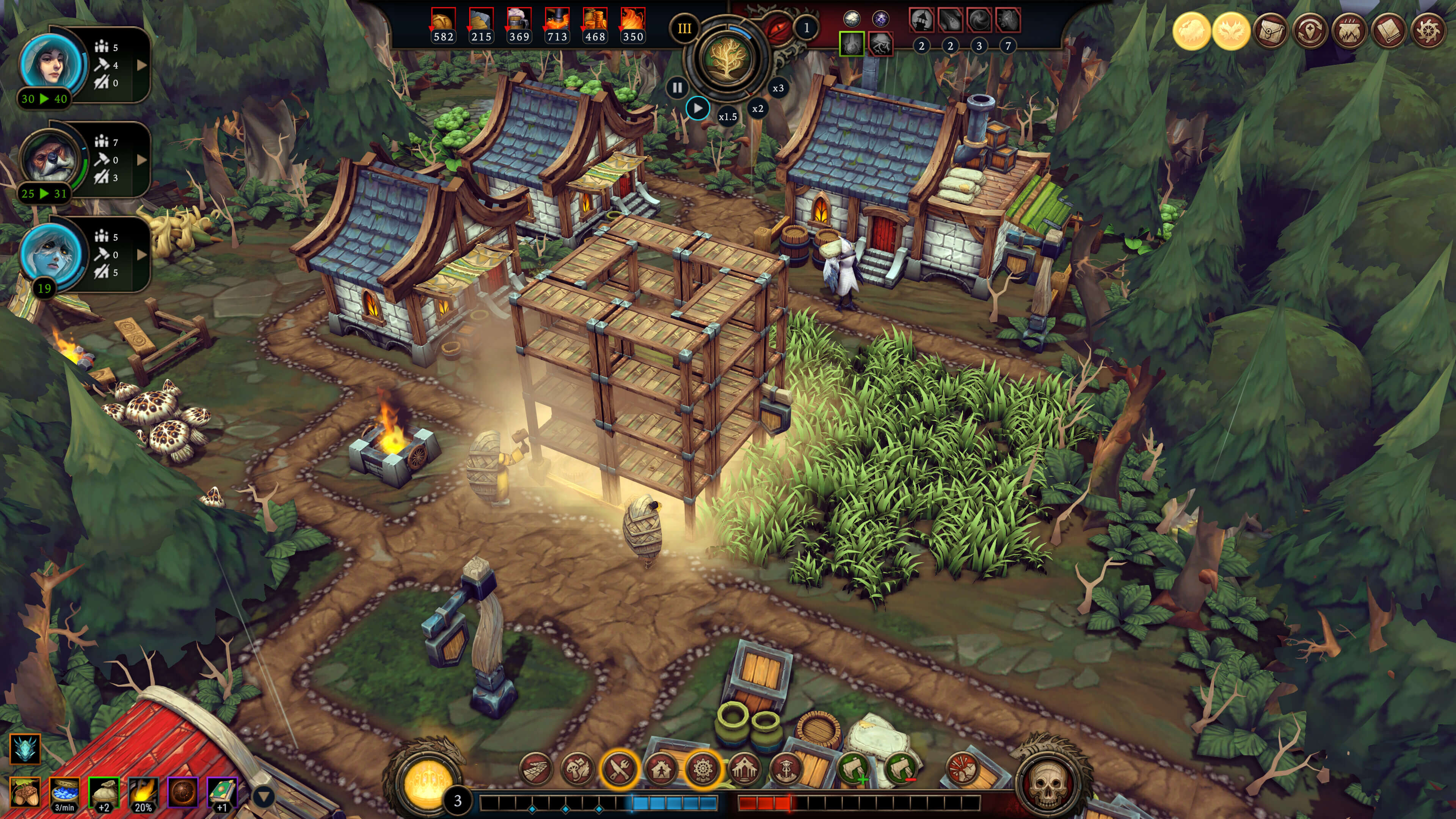
Best for: players who like Timberborn’s planning pressure but want shorter runs.
Against the Storm is not a calm beaver-town sandbox. It belongs here because it understands constrained settlement planning. You read the map, adapt your production, manage different species, and solve problems before the settlement falls behind.
The biggest difference is structure. Timberborn is about growing one long-running settlement. Against the Storm is about building many settlements across shorter, more focused runs. That makes it great if you enjoy the early and mid-game planning phase more than endless sandbox expansion.
It is more goal-driven and more stressful than Timberborn. The pressure is part of the design.
Pick Against the Storm if you want repeated settlement puzzles with roguelite progression instead of one permanent city.
Surviving Mars

Best for: players who want careful colony planning in a hostile environment.
Surviving Mars shares Timberborn’s “build carefully or suffer later” feeling. You are not controlling rivers or storing water behind dams, but you are managing domes, life support, resources, logistics, and expansion in a place that does not naturally support life.
This works well if you like Timberborn because every new district needs support. In Surviving Mars, expansion is not just “place more stuff.” New domes, workers, power, oxygen, water, and supply lines need to fit together.
The game is more modular and less tactile than Timberborn. Domes give your colony a clean structure, but they do not feel as physical as dams, levees, platforms, and water channels.
Pick Surviving Mars if you want thoughtful colony survival with a slower, infrastructure-first pace.
InfraSpace
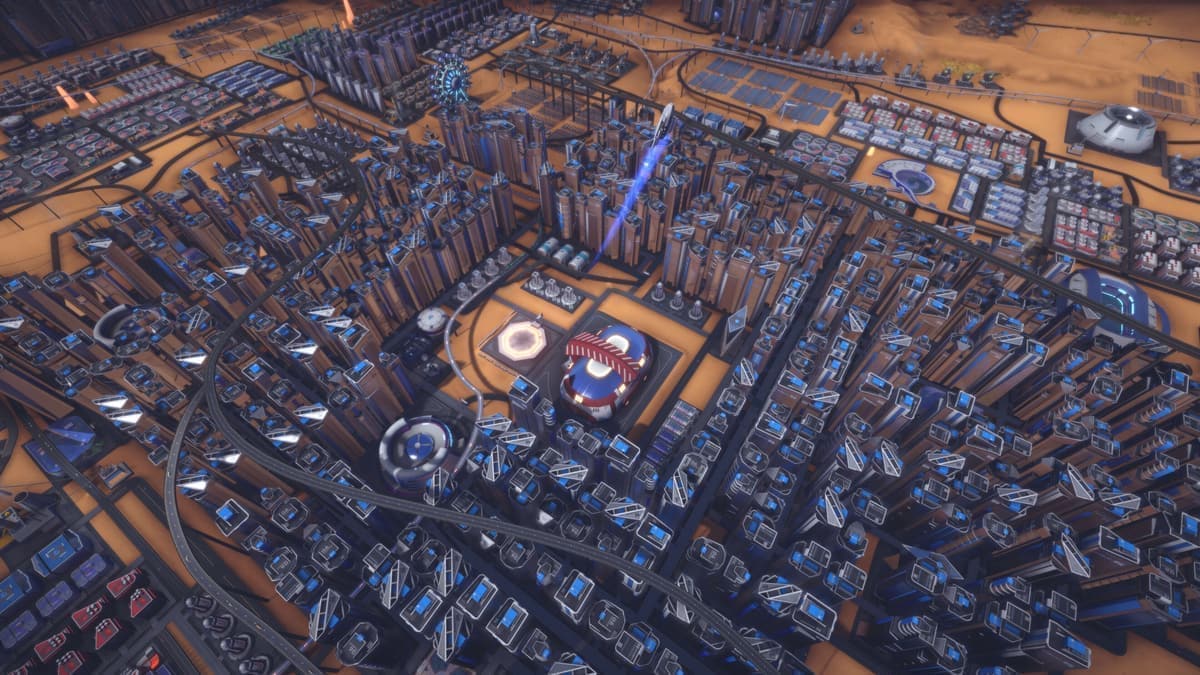
Best for: players who care about flow, traffic, and production chains.
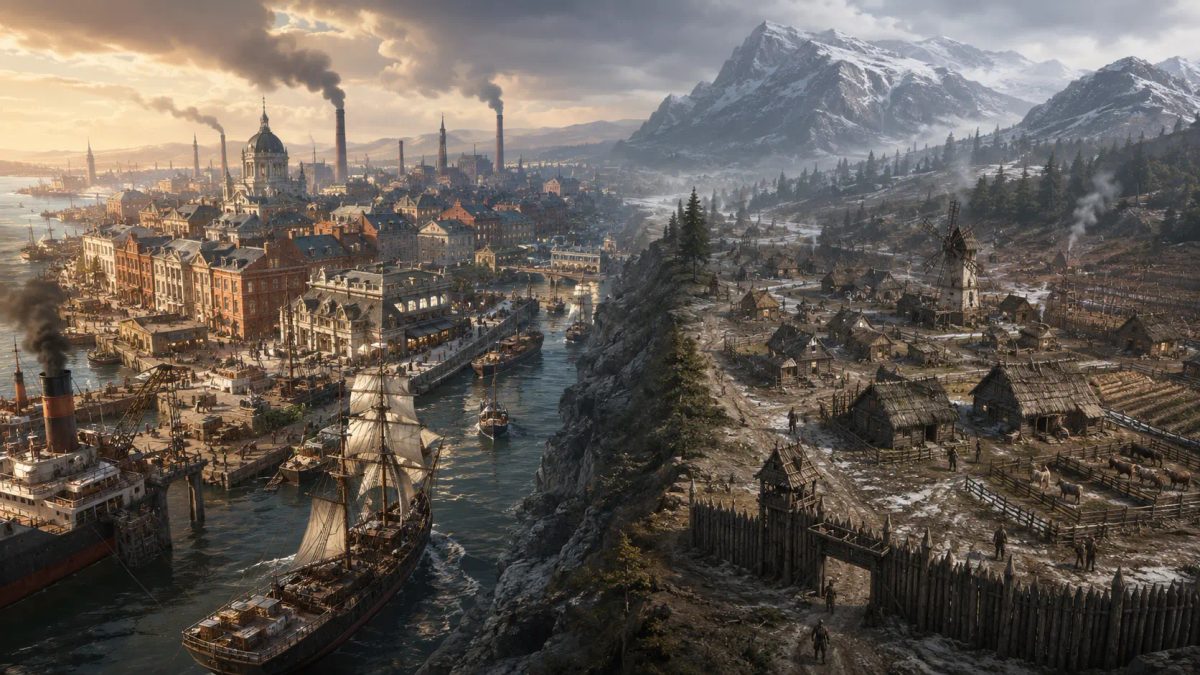
InfraSpace is for the Timberborn player who secretly loves logistics. Timberborn asks you to move water, goods, workers, and power through a constrained settlement. InfraSpace swaps the beaver valley for a sci-fi city where roads, traffic, mining, factories, and supply chains are the main puzzle.
The connection is not theme. It is flow. Bad transport planning shows up quickly, and your city only works when the system behind it works.
It is less warm and less characterful than Timberborn. The tone is cleaner, more industrial, and more abstract. You also lose the central drought-and-dam loop.
Pick InfraSpace if the satisfying part of Timberborn is making a settlement’s arteries work.
The Wandering Village

Best for: players who want Timberborn’s constrained settlement planning with a living map.
The Wandering Village puts your entire economy on the back of Onbu, a giant wandering creature. Space is bounded, the environment changes as Onbu travels, and colony needs share priority with the creature’s health. That constrained, symbiotic planning is closer to Timberborn’s “the map is part of the puzzle” feeling than a freeform mega-city sandbox.
It is more melancholic and story-flavored than Timberborn’s beaver engineering fantasy. You lose dams and drought cycles, but you keep survival-city pressure tied to a distinctive spatial limit.
Pick The Wandering Village if you want a smaller-scope survival city builder where the living world shapes every layout choice.
Farthest Frontier
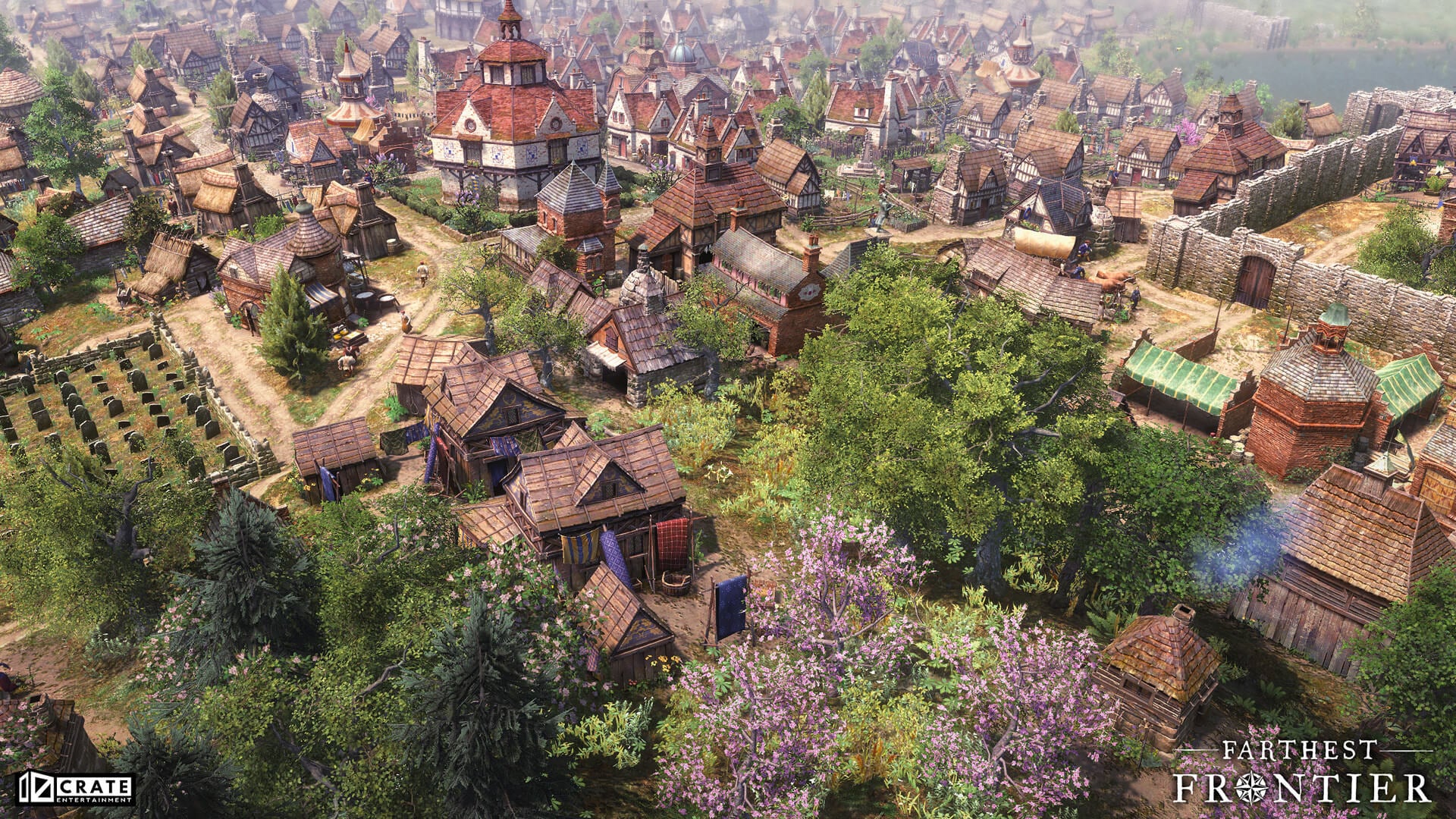
Best for: players who want a more demanding survival settlement.
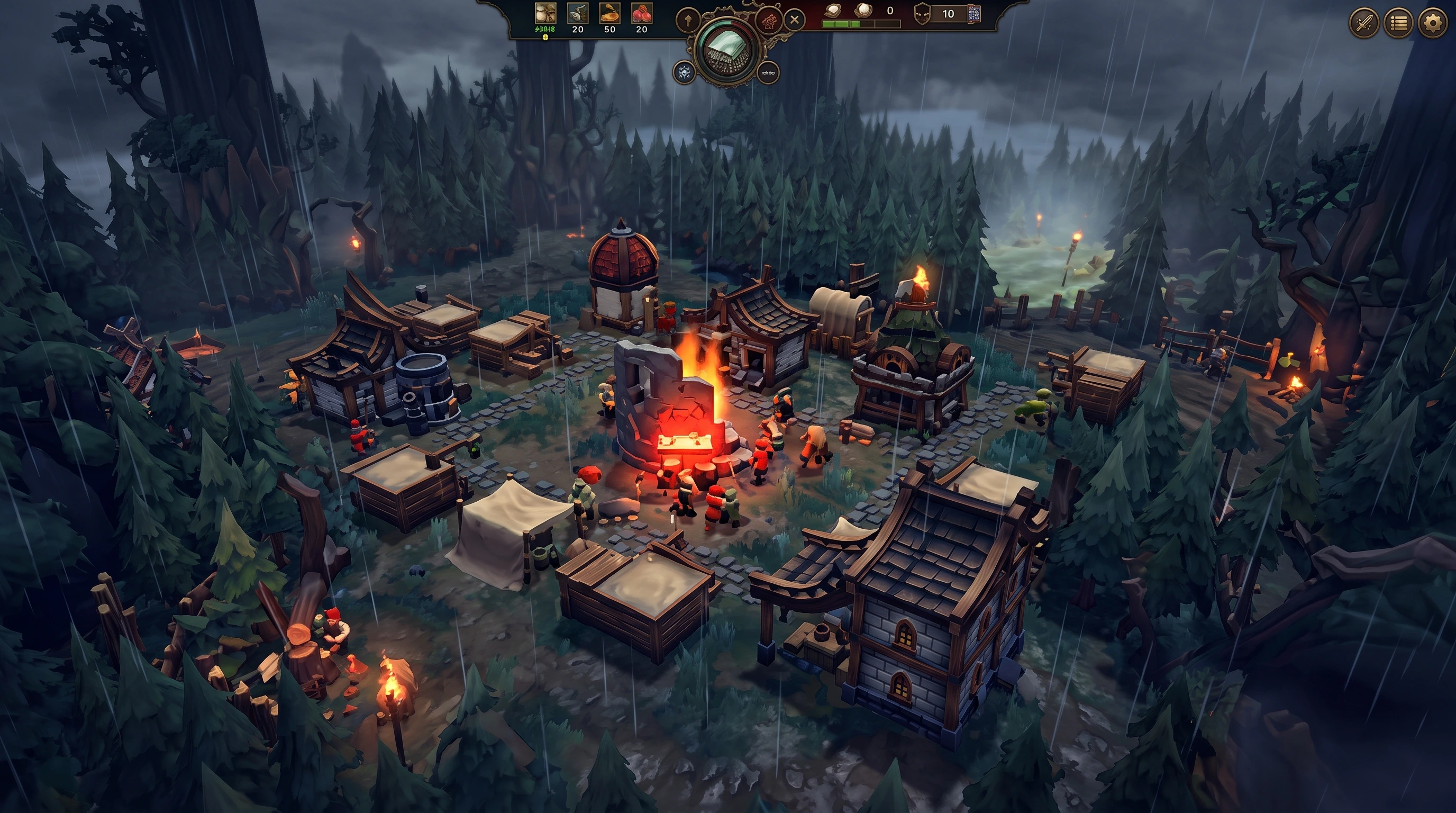
Farthest Frontier is a strong fit if Timberborn’s appeal is preparing for bad seasons. Food, disease, weather, storage, production, defense, and town growth are all connected, so careless expansion can create real problems later.
It is more grounded and more stressful than Timberborn. Your settlement has to support itself through changing conditions, and growth is not just about placing more houses. You need the workers, food, tools, storage, and defenses to make that growth safe.
The catch is pressure. Raids, disease, and harsher survival systems push it away from Timberborn’s softer rhythm.
Pick Farthest Frontier if you want a deeper frontier town sim where preparation matters.
Banished
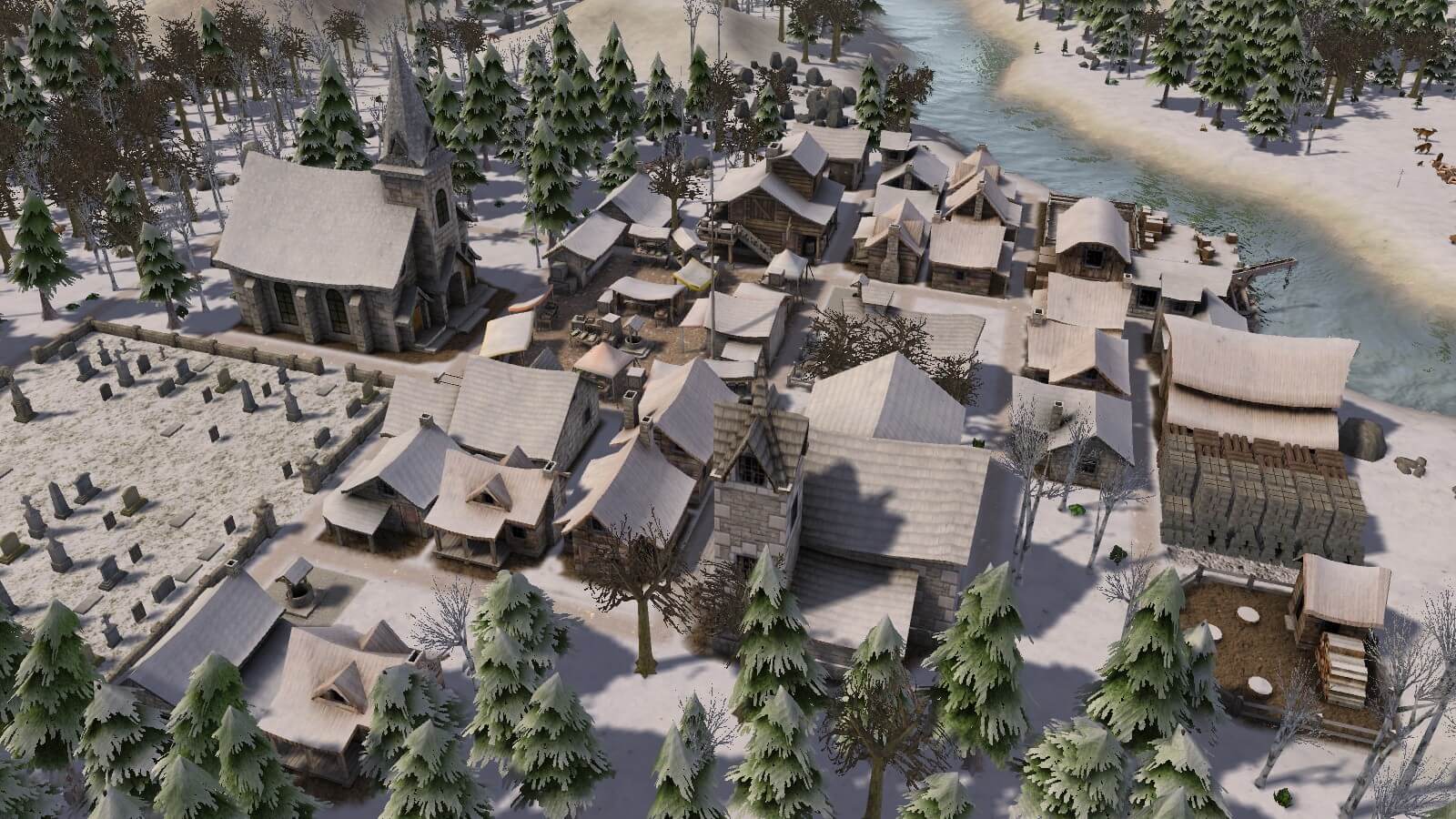
Best for: players who want the harsh survival-planning version of Timberborn.
Banished is older, simpler, and much less forgiving. Instead of droughts and water engineering, the pressure comes from food, labor, seasons, health, storage, and population balance.
It belongs here because it treats the settlement like a fragile machine. You cannot expand just because you have space. Every new house, field, job, and storage area affects whether the town survives the next winter.
This is not the cozy pick. Banished is stripped back and punishing, and it does not offer Timberborn’s vertical construction or water systems.
Pick Banished if you want survival consequences without much decoration or softness.
Who these Timberborn alternatives are really for
The common mistake is treating Timberborn as just a chill city builder. It is chill, but it is not shallow. The water layer, drought timing, vertical layouts, and production chains are what give the calm pace its bite.
If you want the closest relaxed city-builder feel, start with Foundation or Whiskerwood. If you want the deepest engineering systems, go straight to Oxygen Not Included, but expect a much steeper learning curve.
For vertical construction, Going Medieval is the cleanest colony-sim pivot. For a living, bounded survival city, The Wandering Village is the stronger thematic neighbor than sprawling urban sandboxes or pure factory games.
If the survival planning matters more than the water, Farthest Frontier and Banished are better fits. If you want shorter settlement challenges with repeatable pressure, Against the Storm is the smarter choice. For logistics, production flow, and traffic planning, InfraSpace is the most natural bridge between city builders and factory games.
How to choose without chasing the wrong match
There are not many city builders that match Timberborn’s exact dam-and-drought loop. That is the key thing to accept before buying a substitute.
Choose based on your priority:
- Want calm settlement growth: Foundation or Whiskerwood
- Want hard fluid systems: Oxygen Not Included
- Want vertical construction: Going Medieval
- Want seasonal survival: Farthest Frontier or Banished
- Want logistics and traffic: InfraSpace
- Want a living, constrained survival city: The Wandering Village
- Want repeated settlement puzzles: Against the Storm
- Want hostile-environment colony planning: Surviving Mars
If you need water, height, survival planning, and a relaxed city pace all at once, none of these fully replaces Timberborn. The better move is to pick the one part of Timberborn you want amplified.
A desk pick for long planning sessions
City builders, colony sims, and factory games are slow games in the best way. You spend a lot of time moving the camera, editing layouts, checking production, and making small changes across a large map.
A large, stable mouse pad is a practical upgrade for that kind of play, especially if you play long planning sessions where precision and comfort matter more than reaction speed.

Canjoy Gaming Mouse Pad
Desk-size pad for more room and smoother mouse travel in long strategy sessions.
FAQ
What is the closest game to Timberborn?
Foundation is the closest match for relaxed city-builder pacing. Whiskerwood is close if you mainly want cozy production chains. Oxygen Not Included is closer if you mainly want fluid systems, plumbing, heat, and vertical engineering, but it is much harder. The Wandering Village is the best “living map / constrained survival city” neighbor.
Are there other water management city builders like Timberborn?
Very few match Timberborn directly. Oxygen Not Included has the strongest liquid and gas systems on this list, but it plays more like a systems-heavy colony sim than a traditional city builder.
Which game should I play if I want something low-stress?
Start with Foundation or Whiskerwood. Both keep settlement growth readable without turning every mistake into a crisis.
Which game is best for vertical building?
Going Medieval is the best colony-sim choice for vertical construction on this list.
Which game is best if I like Timberborn's survival pressure?
Farthest Frontier and Banished are the strongest survival settlement picks. The Wandering Village is the better atmospheric alternative if you want survival stakes on a bounded, living map. Farthest Frontier is more detailed and modern. Banished is simpler, harsher, and more minimalist.
Do any of these match Timberborn's beaver theme?
Not really. Timberborn's beaver identity is very specific. These games are recommended because they match the water systems, vertical planning, survival pressure, logistics, or relaxed settlement pace around that theme.
Takeaway
The best games like Timberborn depend on what you want more of. Pick Foundation or Whiskerwood for calm city growth, Oxygen Not Included for fluid engineering, Going Medieval for vertical construction, InfraSpace for logistics, The Wandering Village for a living survival city, and Farthest Frontier or Banished for survival settlement pressure.
Timberborn’s exact water-and-height loop is rare. The right alternative is the game that carries the part you care about most.