10 Best Medieval City Builders and Colony Sims for Deep Settlement Management
The best medieval settlement games for production chains, winter survival, fortress building, family management, politics, and large-scale simulation.
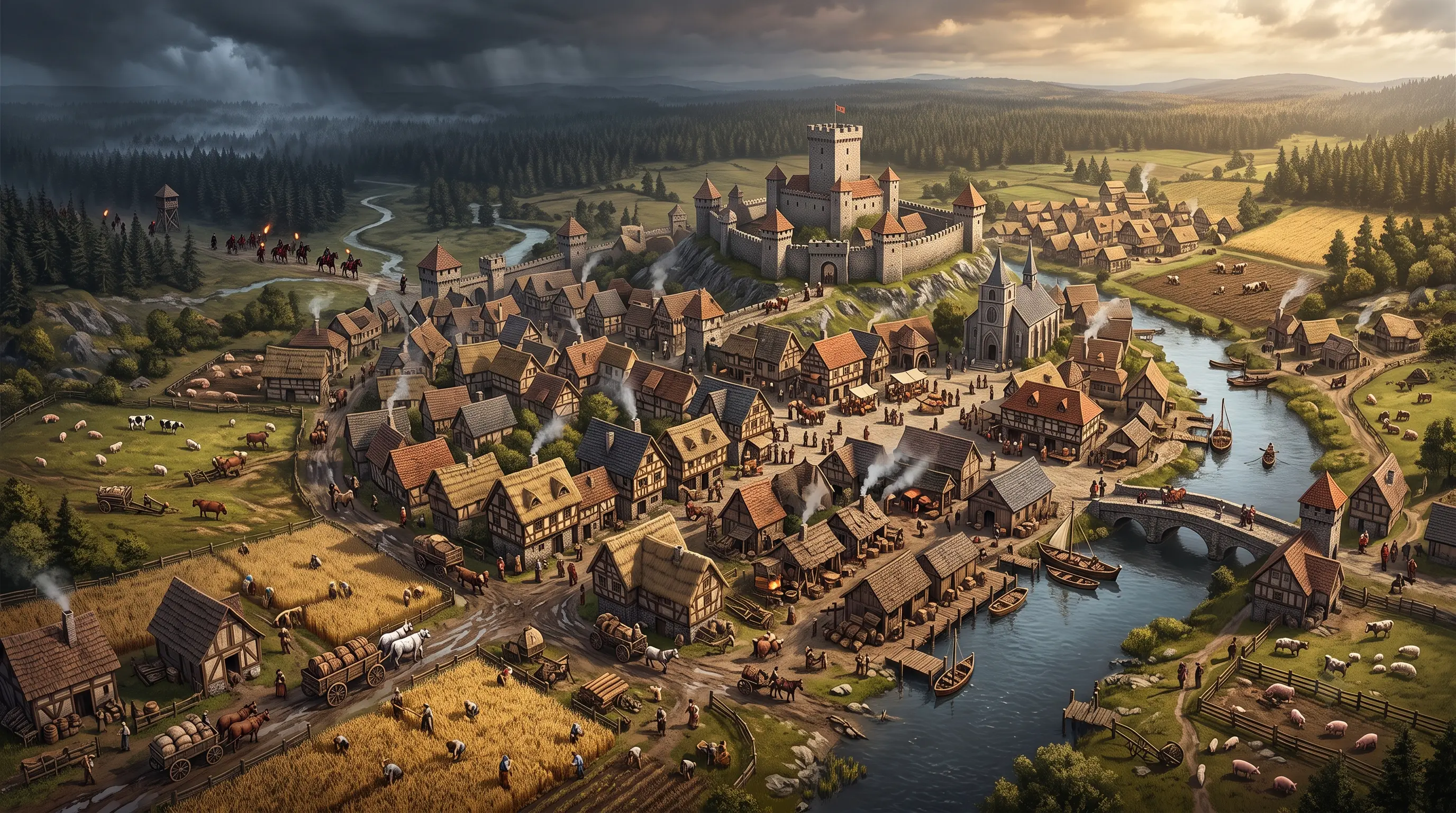
The best medieval city builders make growth feel dangerous. Another row of houses looks like progress, but it also means more mouths to feed, more firewood to cut, longer walks to work, and more families to protect when winter or raiders arrive.
That pressure is the reason these games work. A convincing settlement is not just a collection of pretty timber buildings. It is a machine made from labor, storage, roads, production chains, trade, and people who are always one bad harvest away from exposing your mistakes.
The ten games below approach that machine at different scales. Some let you shape an entire town; others follow a single family or fortress. A few use fantasy or frontier settings rather than strict medieval history, but every pick gives the settlement itself enough depth to matter.
Quick recommendations
| Game | Best for | Main pressure | Scale |
|---|---|---|---|
| Manor Lords | Best overall medieval city builder | Economy, logistics, and war | Village to regional domain |
| Farthest Frontier | Harsh survival and detailed farming | Food, disease, weather, and raids | Frontier town |
| Foundation | Relaxed, organic town growth | Travel distance and production flow | Village to city |
| Going Medieval | Building a functional 3D fortress | Colonist needs, temperature, and defense | Small fortified colony |
| Banished | Pure settlement-survival fundamentals | Winter, demographics, tools, and food | Compact town |
| Clanfolk | Family and seasonal survival | Daily labor, winter preparation, and lineage | Homestead to trade hub |
| Norland | Politics inside a working medieval economy | Class tension, noble relationships, and scarcity | Small kingdom |
| Kingdoms Reborn | Multiplayer city building | Expansion, trade, cards, and progression | Hamlet to empire |
| Songs of Syx | Huge populations and empire building | Labor, supply, politics, and warfare | Village to vast city-state |
| Dwarf Fortress | The deepest emergent simulation | Almost everything | Fortress civilization |
If you want one answer, start with Manor Lords. Choose Farthest Frontier if survival systems matter more than historical town design, or Foundation if you want to build without constantly waiting for disaster. Colony sim players should look first at Going Medieval, Clanfolk, or Norland.
1. Manor Lords — best overall medieval city builder
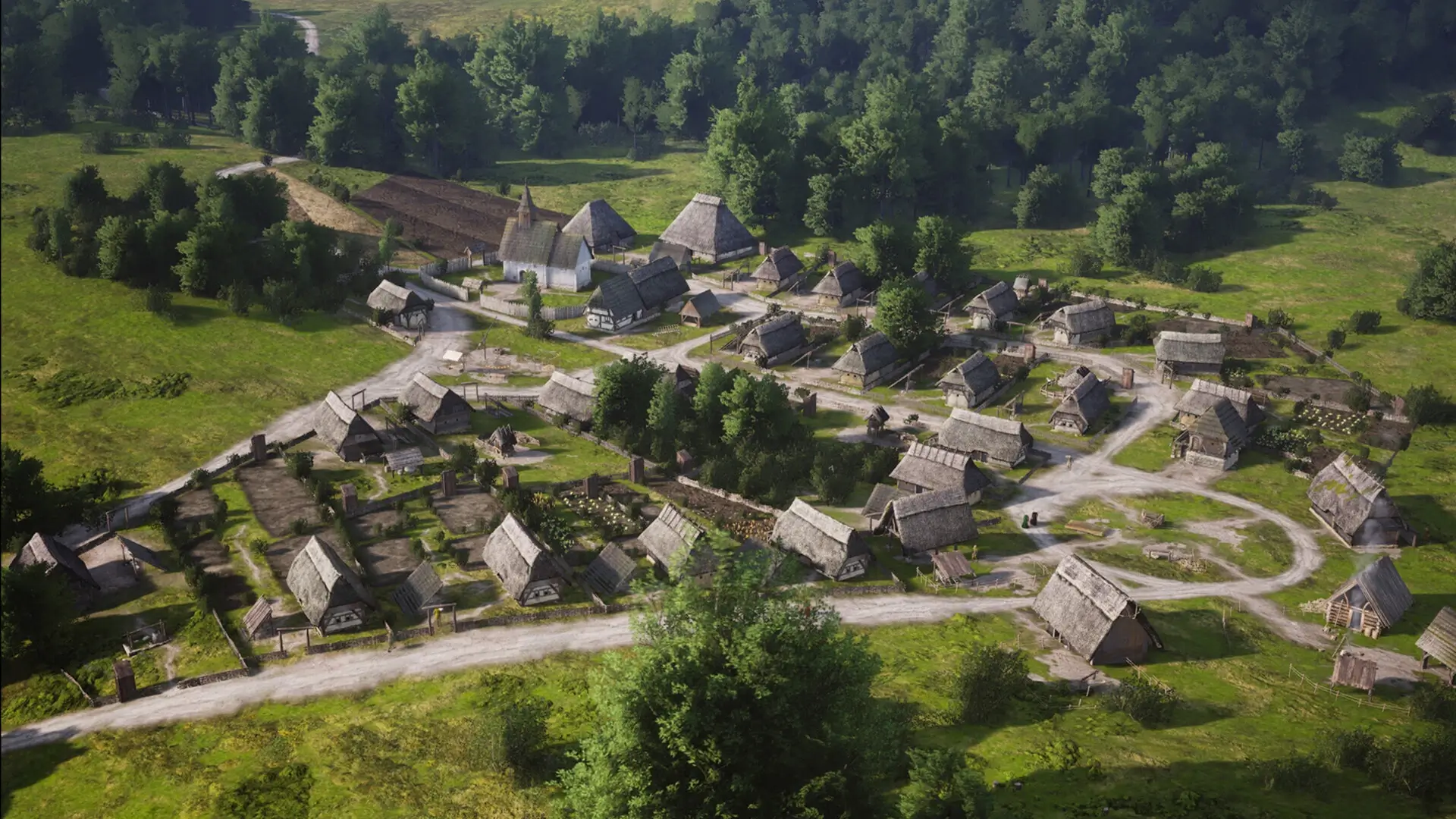
Manor Lords comes closest to the complete medieval settlement fantasy. Roads curve around the land, burgage plots adapt to the space you give them, families move between seasonal jobs, and backyard workshops turn residential plots into parts of the economy. The town looks organic because its shape emerges from terrain and roads rather than a rigid grid.
The important part is that the beauty has consequences. A poorly placed industry creates long hauling routes. Expanding housing too quickly strains food and fuel. Converting families into artisans removes them from the general labor pool. Military losses hurt because the people holding spears are also part of the workforce that keeps the settlement alive.
Its regional conflicts and real-time battles give economic planning a purpose beyond making numbers rise. You are not merely producing weapons and wealth; you are supporting the force that protects or expands your territory.
Know before you buy: Manor Lords is still in Early Access as of July 2026. Its central loop is already strong, but it is not the finished, endlessly broad medieval sandbox its ambition suggests. Buy it for the town-building and economy that exist now, not for every planned system.
2. Farthest Frontier — best for survival pressure
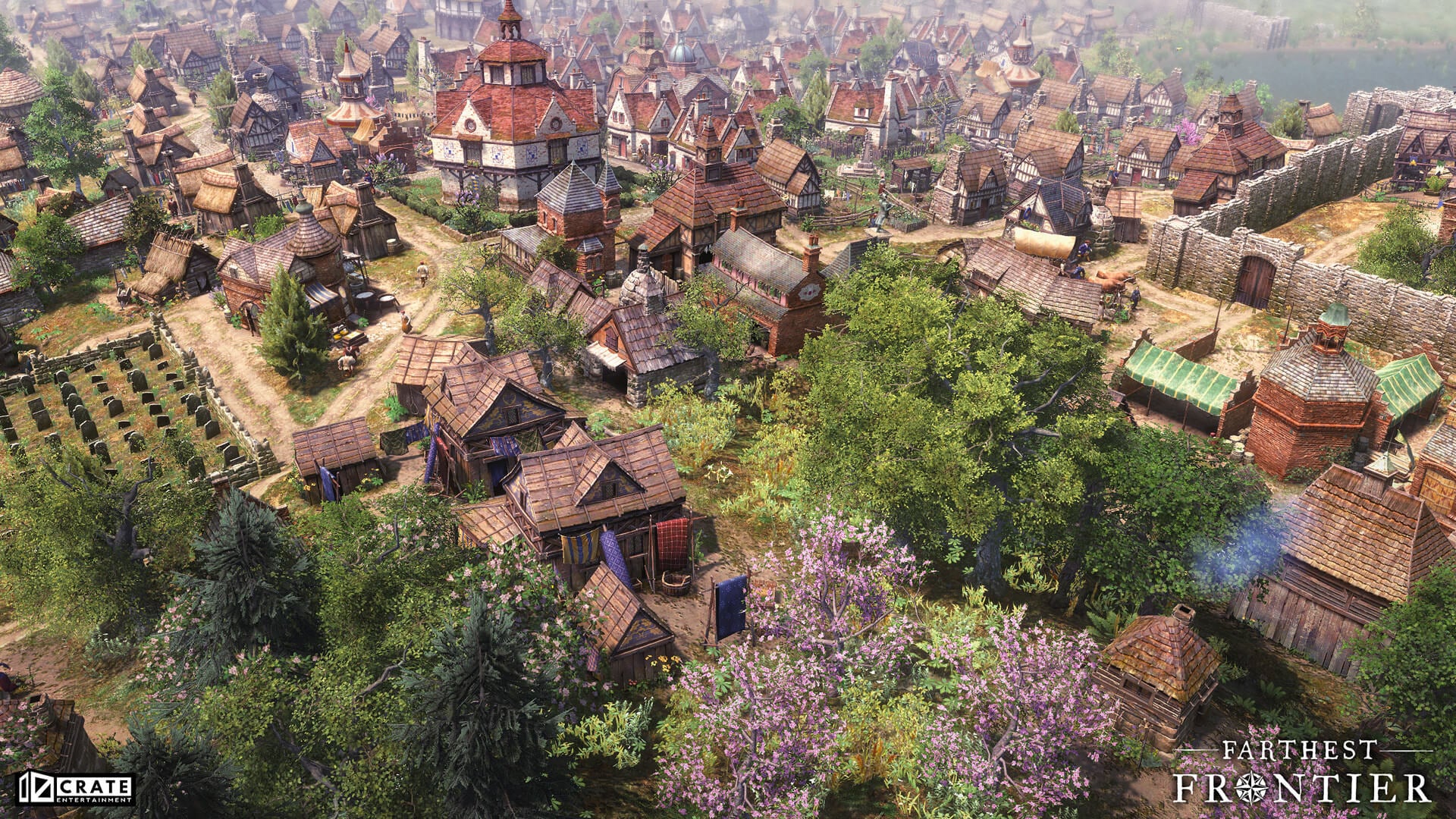
Farthest Frontier is the stronger choice when you want the land itself to fight back. Food spoils, crops suffer from disease and poor soil, villagers carry goods through the town in real time, and weak sanitation can turn population growth into a health problem. Raiders matter, but they are only one threat among many.
Farming is the standout system. Crop rotation, fertility, weeds, frost, heat, and disease make fields something you manage over time instead of buildings that periodically create food. Storage and wagon routes are just as important: a productive settlement can still fail if goods spend too long moving between distant work sites, storehouses, and homes.
The setting is more frontier than courtly medieval, and the town grows through clear building tiers rather than Manor Lords' looser historical shape. In exchange, you get one of the most complete survival-city loops in the genre. There is also a pacifist option if you want the environmental and economic pressure without raids.
Know before you buy: This is a methodical game. Large towns ask for a lot of supply-chain tuning, and players who mainly want freeform construction may find the constant optimization tiring.
3. Foundation — best for relaxed, organic growth

Foundation is the gentler alternative, but it is not an empty village painter. Villagers create paths by walking them, housing develops around desirability, and workplaces still need sensible access to labor, storage, and raw materials. A settlement that looks natural can also be badly organized.
Its gridless construction and modular monuments are the main attraction. Instead of placing the same church or manor every time, you assemble major buildings from parts and let the surrounding town form around them. The result feels less like solving a preset layout and more like watching a place acquire history.
Failure is less brutal here than in Banished or Farthest Frontier. Most pressure comes from movement, zoning, production, and satisfying the needs of different estates rather than surviving a death spiral. That makes Foundation the easiest recommendation for players who enjoy logistics but do not want every winter to become an emergency.
Know before you buy: If raids, hard scarcity, or defensive walls are essential to your medieval fantasy, Foundation will probably feel too peaceful.
4. Going Medieval — best for fortress building
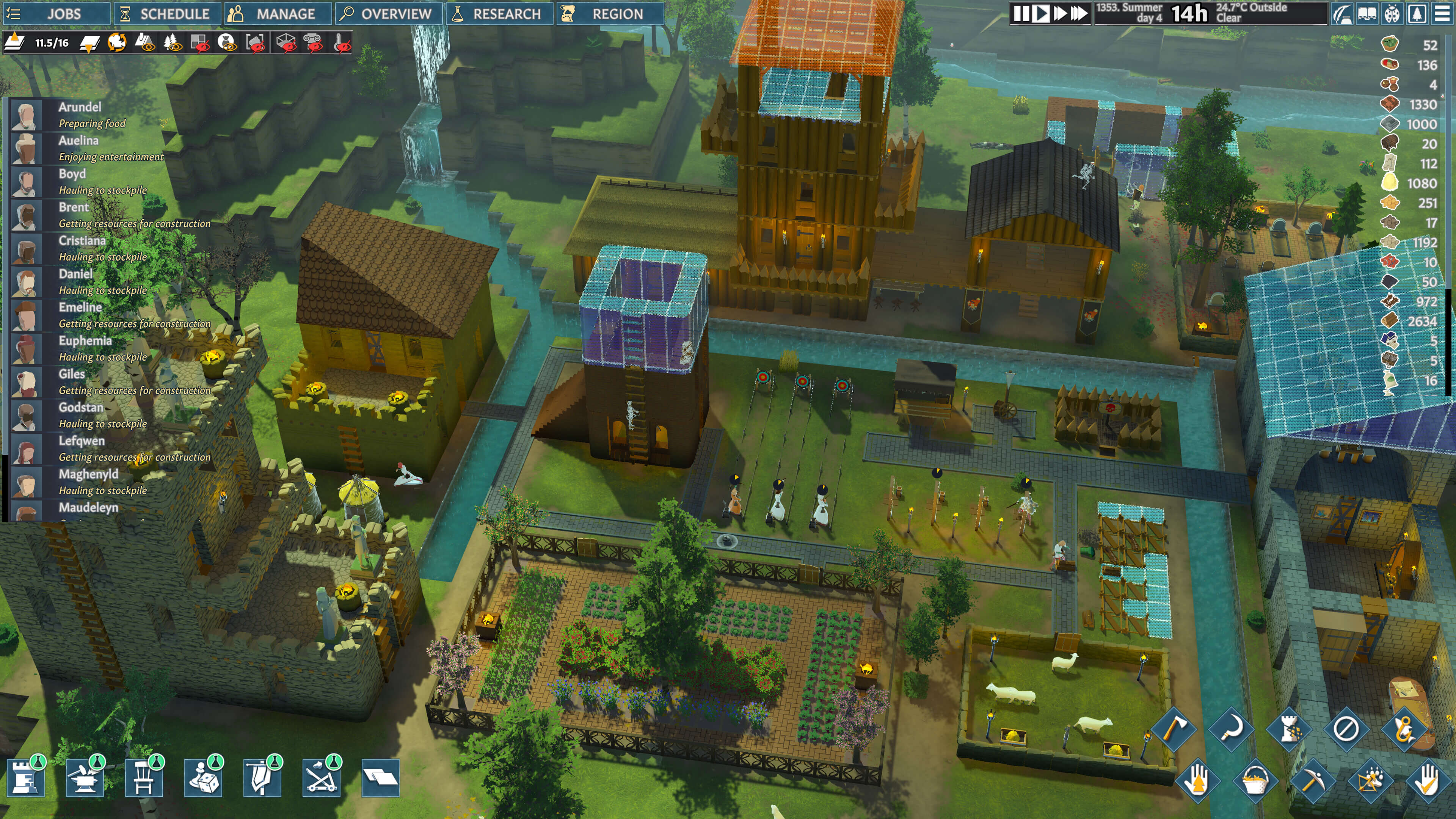
Going Medieval treats the map as a volume rather than a flat surface. You can stack floors, carve cellars into hills, redirect terrain, and build walls that follow the actual shape of your stronghold. Verticality is not cosmetic: it changes travel time, temperature, food storage, firing positions, and how raiders reach your settlers.
That makes construction unusually meaningful. A deep underground pantry can protect food from heat, but workers still need to carry every ingredient down and every meal back up. A dramatic tower may give archers a strong position while quietly wasting hours of daily movement. The best fortress is not merely hard to attack; it is easy to live in.
The game sits firmly on the colony sim side of the line. Settlers have skills, needs, personalities, religious beliefs, and preferred work. You manage a small group closely rather than directing an anonymous urban population.
Know before you buy: Going Medieval reached its full release in March 2026, but its intimate scale remains part of the design. Choose it for a detailed castle settlement, not for broad civic planning or a city of thousands.
5. Banished — best for pure settlement fundamentals
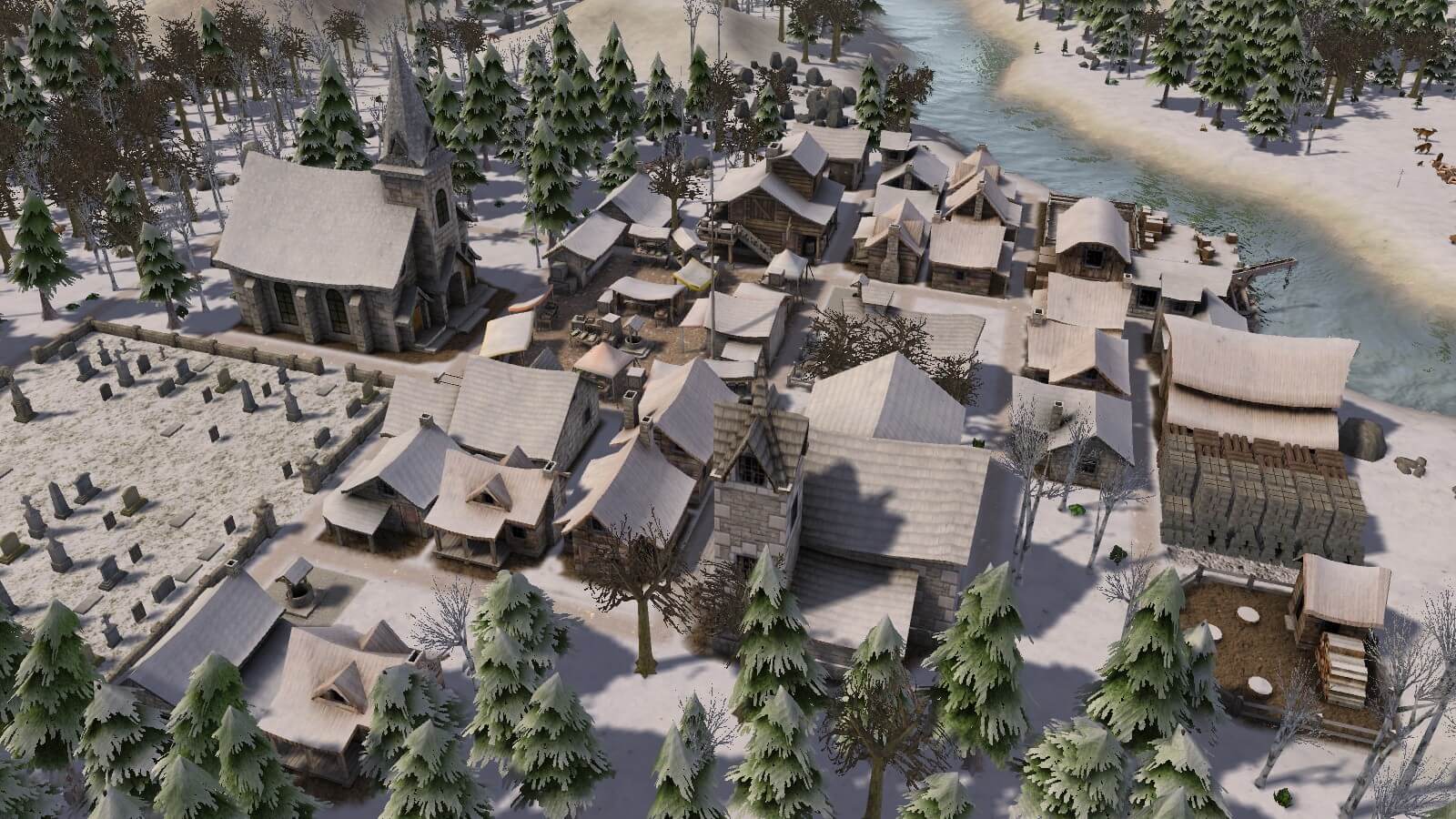
Banished is old, spare, and still one of the clearest demonstrations of why uncontrolled growth kills towns. New houses encourage new families and children, but those children consume food for years before joining the workforce. Delay expansion for too long and the population ages without enough young adults to replace it. Grow too quickly and winter exposes the shortage immediately.
The same brutal clarity applies everywhere else. Tools wear out. Firewood competes with construction for logs. Distant workers lose productive time walking. A large harvest means little without storage, and a healthy food total can hide a dangerous lack of variety or a badly distributed supply.
Banished has fewer systems than newer games, but they interlock cleanly. There are no battles, noble families, or elaborate monuments to distract from the central question: can this town reproduce itself without consuming its future?
Know before you buy: The presentation and interface show their age, and the base game offers less long-term variety than modern rivals. Its strength is focus, not breadth.
6. Clanfolk — best for family and seasonal survival
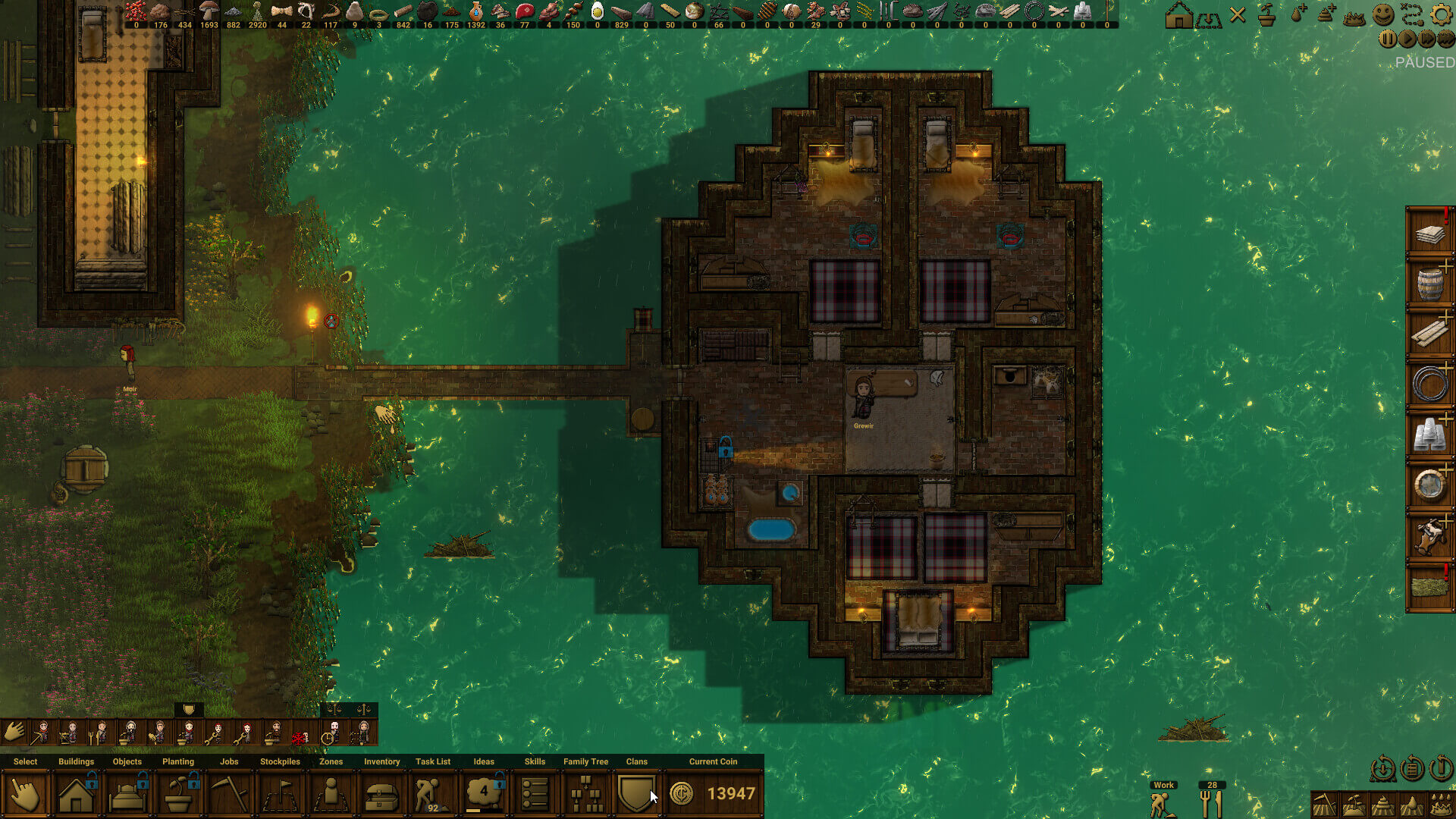
Clanfolk begins with a family and an empty patch of the Scottish Highlands, not a mayor and a town plan. Early progress is measured in beds, preserved food, warm clothing, and whether the day's work was scheduled well enough to prepare for the first winter.
That smaller scale changes how decisions feel. A delayed harvest is not an abstract production dip; it is a problem for people whose relationships, skills, ages, and future children shape the household. Over time, the homestead can become an inn, ranch, or trade hub, while marriage and children turn survival into a multi-generational project.
The pressure is mostly domestic and environmental. Clanfolk is about organizing routines, using seasonal resources, caring for livestock, and creating a home that can outlast its founders. It is a better fit for players who enjoyed the household side of RimWorld but want less combat and a more grounded setting.
Know before you buy: Clanfolk remains in Early Access as of July 2026. Its deliberate pace and limited settlement scale are central to the experience, not obstacles on the way to a large city.
7. Norland — best for politics and social conflict
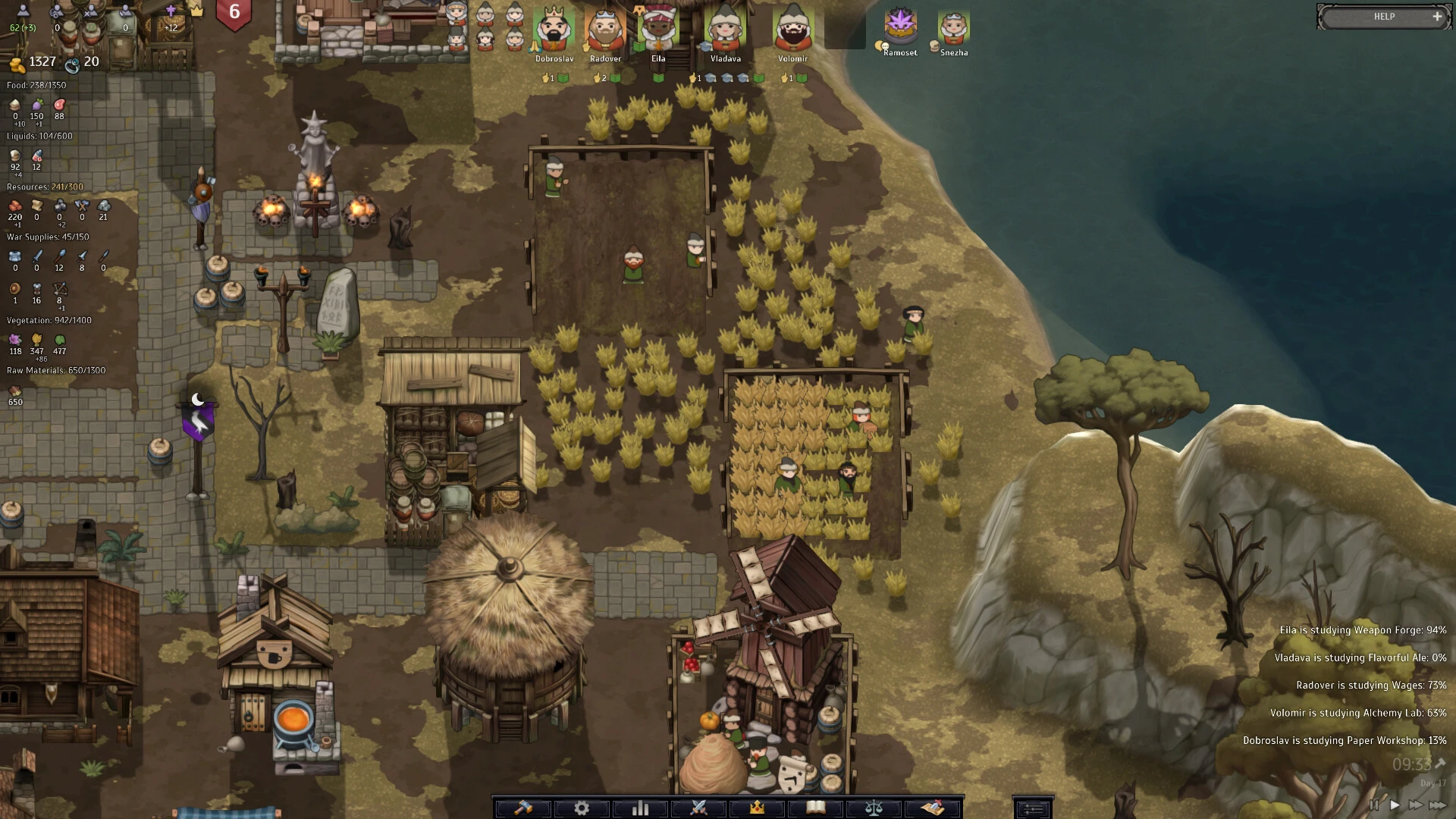
Most games on this list ask whether your production chain works. Norland also asks who controls it, who benefits from it, and how long the population will tolerate the answer. Peasants need food, wages, and beer; nobles carry knowledge, ambitions, relationships, and grudges; religious and cultural groups can pull the kingdom in different directions.
You govern through a noble family rather than issuing every order directly. Those nobles study books to learn technologies, lead armies, negotiate marriages, and plot against rivals. If a knowledgeable lord dies before passing on what they know, the kingdom can lose access to that expertise. Economic management and character drama are therefore part of the same system.
Norland is strongest when you want settlement problems to become political stories. A food shortage can create unrest, a bad marriage can become a diplomatic problem, and an unpopular ruler may discover that city management is easier than family management.
Know before you buy: Norland is in Early Access and leans harder into characters, class tension, and intrigue than architecture. If you mainly want to design a beautiful town, choose Manor Lords or Foundation instead.
8. Kingdoms Reborn — best for multiplayer city building
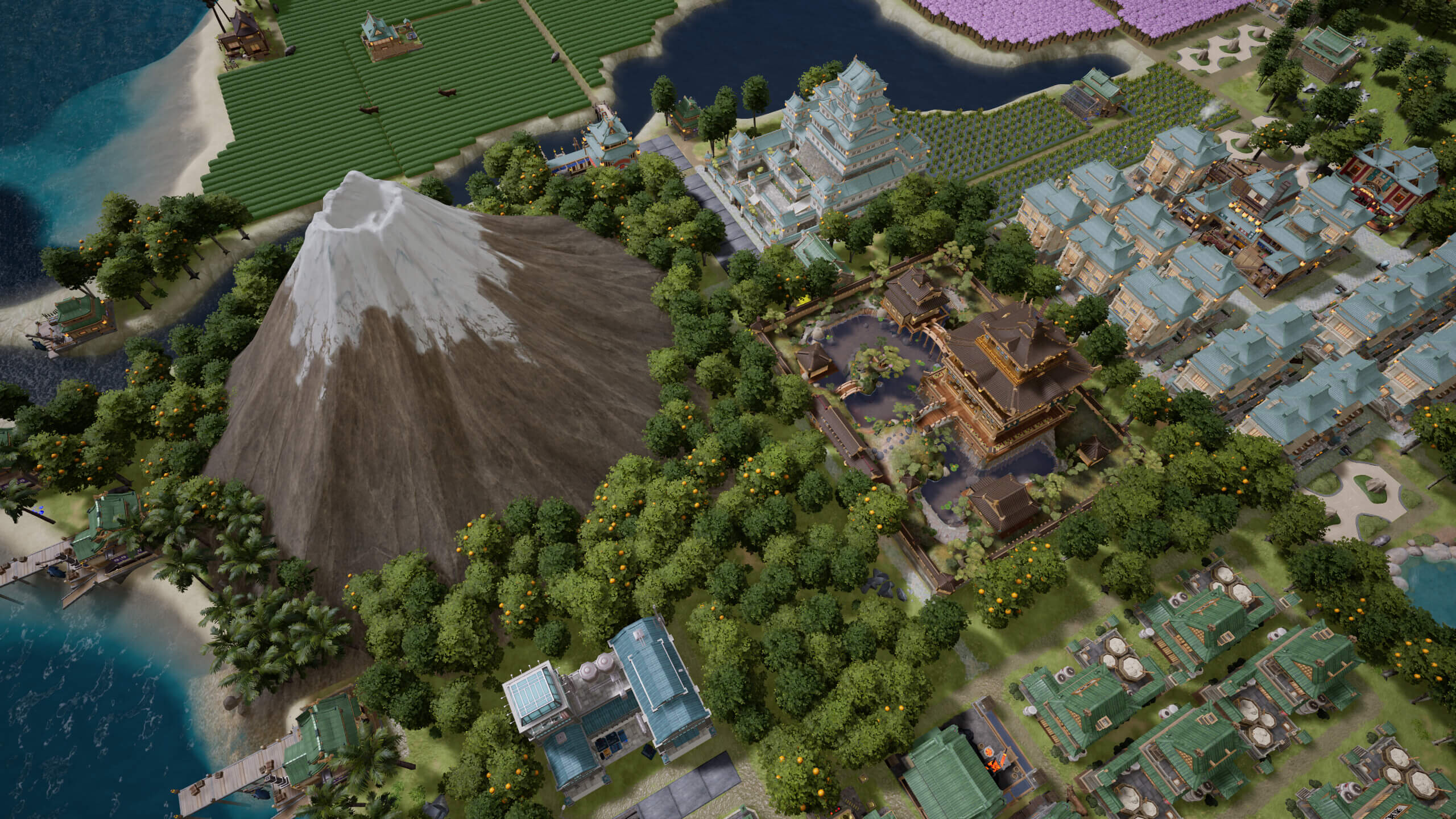
Kingdoms Reborn starts with a medieval hamlet but does not stay medieval forever. Its technology progression carries a settlement through later eras, while procedurally generated biomes, trade, and card-based building choices make each expansion feel more like adapting a strategy than reproducing a fixed build order.
Its clearest advantage is multiplayer. You can cooperate or compete on the same world map, specialize around different resources, and use trade to cover gaps in your own economy. That social layer gives expansion a context missing from most single-player settlement games.
The cards and colorful presentation also make it less grounded than Manor Lords or Banished. This is a flexible economy game wearing medieval and frontier clothing, not a historical simulation. That distinction matters, but it is also why Kingdoms Reborn supports more varied and multiplayer-friendly runs.
Know before you buy: It remains in Early Access as of July 2026, and its era progression moves beyond the medieval theme. Pick it because you want a long economic climb with friends, not because you want strict historical authenticity.
9. Songs of Syx — best for enormous settlements
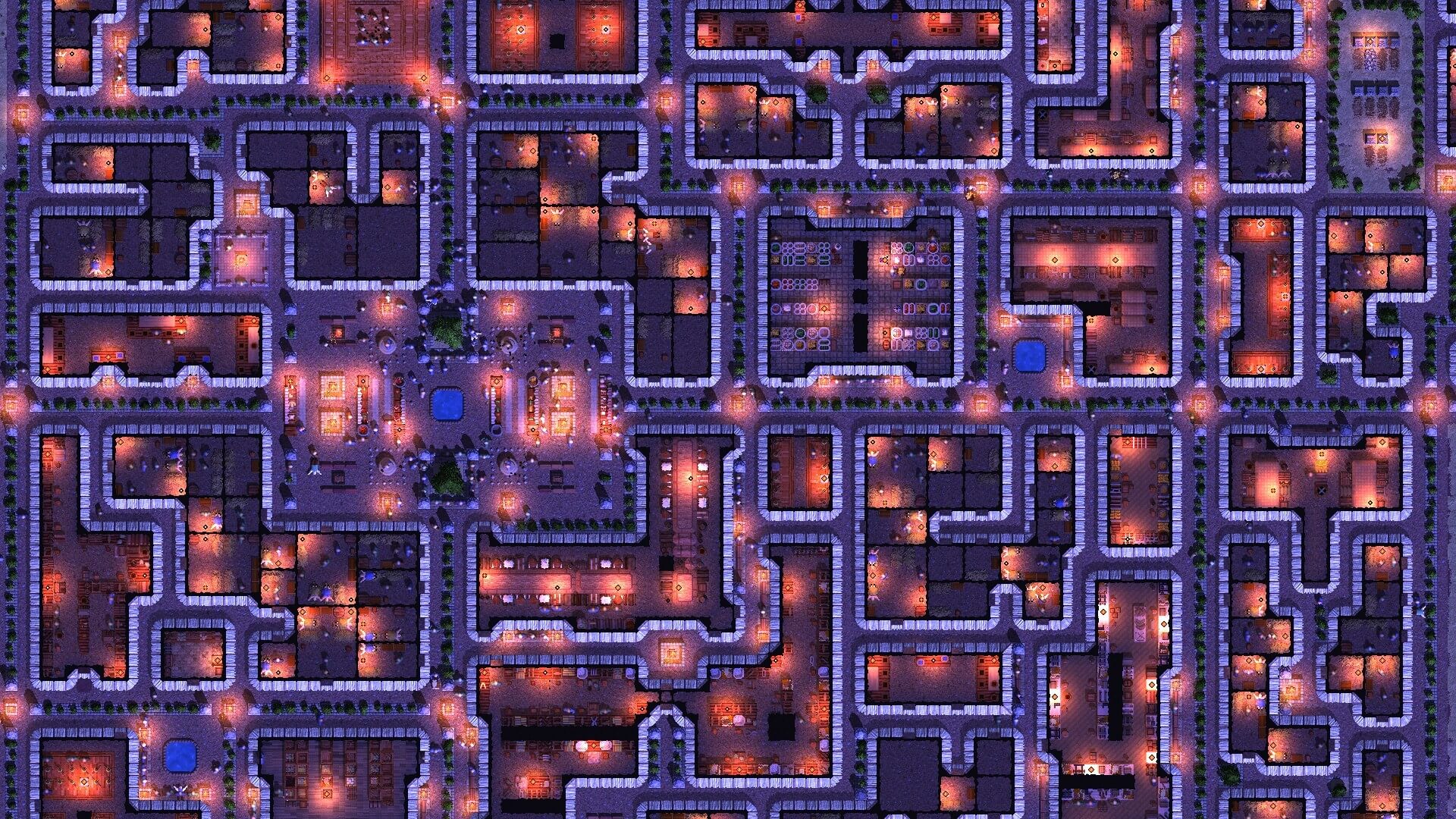
Songs of Syx begins where many colony sims are most comfortable: a few people, a limited stockpile, and an urgent need for food and shelter. It then keeps going. Dozens become hundreds, hundreds become thousands, and the settlement eventually turns into a city-state with industries, armies, administration, and political problems that small colonies never face.
Scale is not just visual. Species and social groups have different needs, large workforces need efficient rooms and supply routes, and a shortage in one basic resource can travel through an economy supporting thousands of citizens. Battles can involve huge armies, but their strength still depends on the population and production base behind them.
This is the right direction for players who enjoy optimizing a settlement and always wish they could push it one order of magnitude further. It trades the readable streets of Manor Lords for dense information and systemic reach.
Know before you buy: Songs of Syx is a fantasy game in Early Access, and its learning curve is steep. A free demo is available, which is the sensible place to discover whether its interface and scale suit you.
10. Dwarf Fortress — deepest simulation
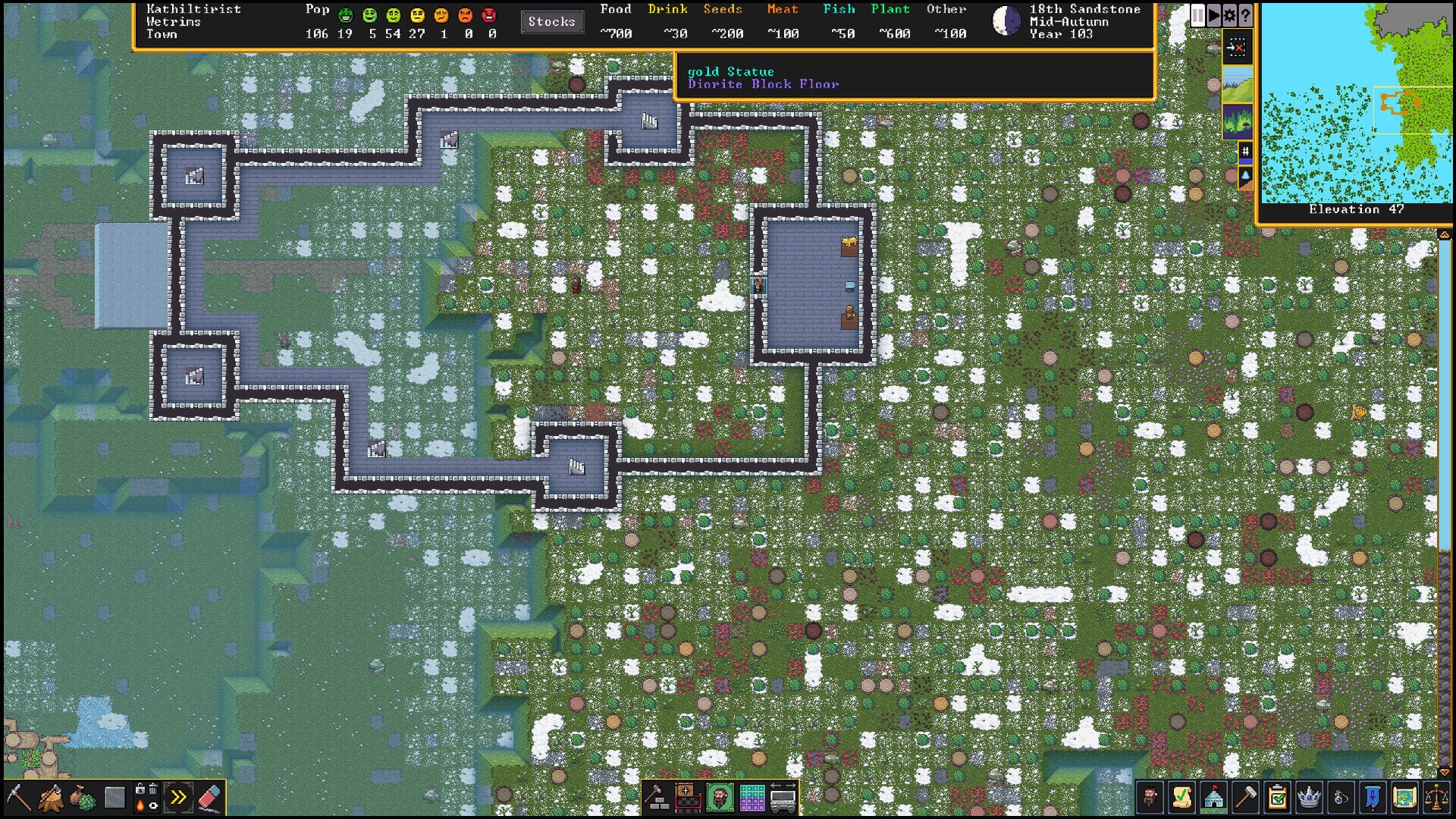
Dwarf Fortress is the least tidy recommendation and the deepest simulation here. Every fortress exists inside a generated world with its own geography, civilizations, wars, artifacts, and history. Your dwarves have individual skills, relationships, preferences, memories, and moods, but they also form the workforce behind mining, farming, crafting, trade, defense, and construction.
Its best stories are consequences rather than scripted events. A badly planned staircase can ruin logistics. A treasured object can reshape a dwarf's mood. Digging into the wrong cavern can turn an engineering project into a military disaster. The game remembers enough detail for small decisions to return years later in forms you did not predict.
The Steam edition makes the game far easier to approach than its old text-heavy interface, but it does not make the simulation simple. You will still spend time learning menus, reading alerts, and discovering that your solution created three new problems elsewhere.
Know before you buy: Dwarf Fortress is fantasy, not a historical medieval city builder. It belongs here for players whose real priority is systemic depth and emergent settlement stories.
City builder or colony sim: which side do you want?
The label matters because it changes what you manage.
In city builders, people usually act as parts of a larger economy. You think about roads, districts, workplaces, storage, trade, services, and the flow of materials across the map. Manor Lords, Foundation, Farthest Frontier, Banished, and Kingdoms Reborn lean in this direction.
In colony sims, individual people receive more attention. Their skills, schedules, relationships, health, and survival can matter as much as the settlement layout. Going Medieval, Clanfolk, Norland, and Dwarf Fortress sit closer to this side.
Songs of Syx is the unusual bridge. It starts with colony-level pressure, then grows into city and empire management without fully discarding its population simulation.
How to avoid buying the wrong settlement game
Start by deciding what kind of failure you want to solve.
- Choose Manor Lords when you want medieval town planning tied to an economy and military.
- Choose Farthest Frontier or Banished when you want winter, food, and logistics to punish bad growth.
- Choose Foundation when you care more about organic layout and production flow than survival.
- Choose Going Medieval when the shape and defense of a fortress should matter.
- Choose Clanfolk when a family's routine and future matter more than city scale.
- Choose Norland when economics should create political and personal conflict.
- Choose Kingdoms Reborn when multiplayer is a priority.
- Choose Songs of Syx or Dwarf Fortress when depth matters more than approachability.
Also check the release state before buying. Manor Lords, Clanfolk, Norland, Kingdoms Reborn, and Songs of Syx were still in Early Access when this guide was updated in July 2026. Their current versions may already offer dozens or hundreds of hours, but unfinished balancing, changing systems, and broken saves are part of the risk.
The single best starting point
If you want one game that anchors the medieval settlement fantasy, pick Manor Lords. It is the clearest match for organic town growth, production chains, trade, and battles that all feed the same settlement. It is still in Early Access, but its current loop is strong enough to justify starting here before branching into survival, politics, or fortress-focused picks.
A desk setup note for settlement-heavy sessions
Medieval city builders and colony sims reward screen space. You are constantly cross-checking resource panels, storage, housing, production routes, and the map while deciding where the next expansion should go. A dual monitor arm frees desk room and makes it easier to keep a reference view open while you fix the bottleneck that just broke your winter prep.
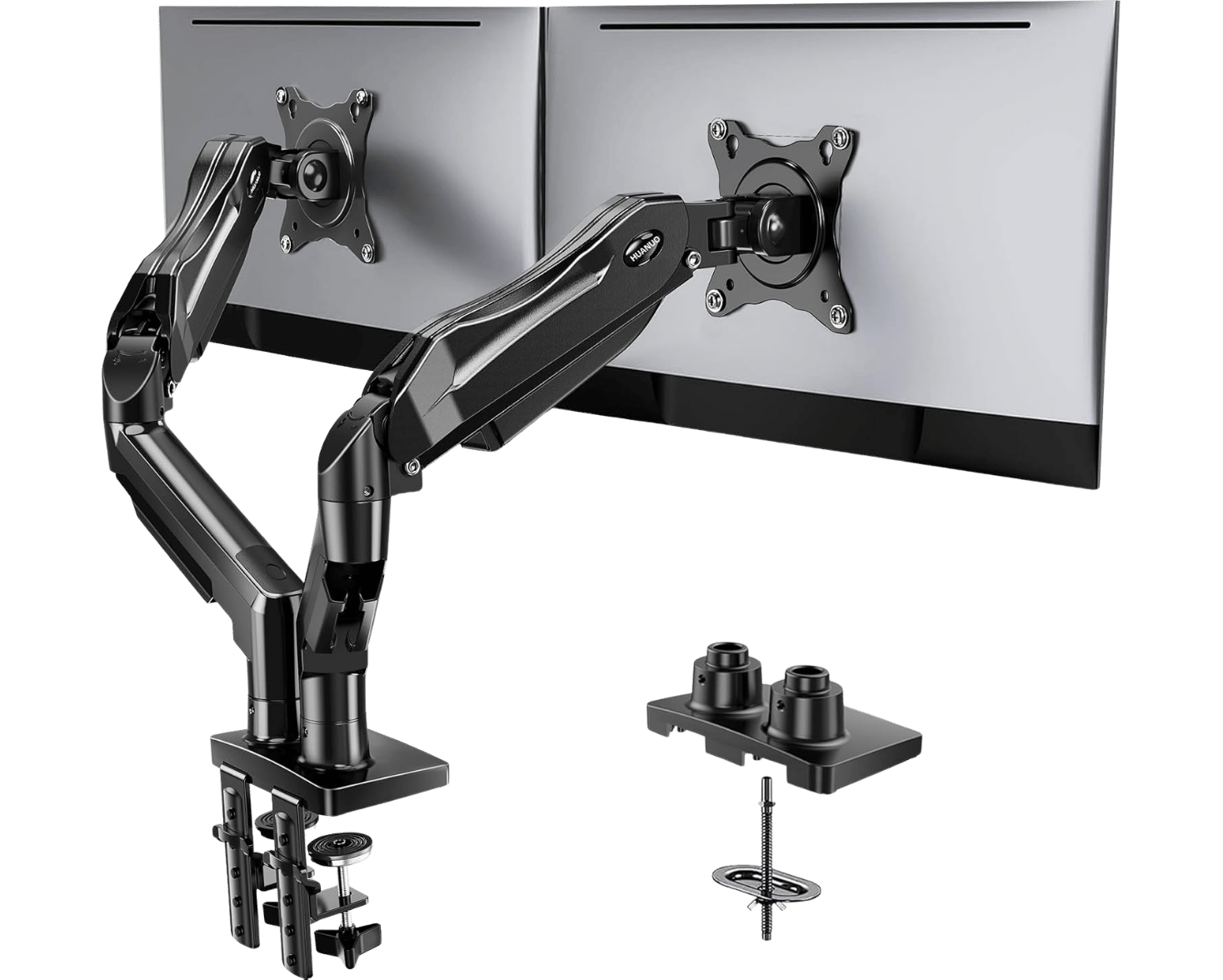
HUANUO FlowLift Dual Monitor Stand
Frees desk space and improves viewing angle for long factory and strategy sessions.
FAQ
What is the best medieval city builder overall?
Manor Lords is the strongest overall match because its organic town planning, burgage plots, production chains, trade, and battles all support the same medieval settlement fantasy. It is still in Early Access, so choose Farthest Frontier if you would rather buy a finished survival city builder.
What should I play if I want a game like Banished?
Farthest Frontier is the best modern step up if you want food, weather, disease, logistics, and population pressure with more systems. Settlement Survival follows the Banished formula more directly and adds a wider progression tree, although it has less identity than the main picks above.
Which medieval city builder is the most relaxing?
Foundation is the best relaxed choice. Travel distance, desirability, labor, and production still matter, but mistakes are less likely to destroy the entire settlement. Farthest Frontier also offers a pacifist mode if you want survival management without raids.
Which game is best for building castles?
Going Medieval gives you the most control over a functional castle. Its multi-level construction, underground rooms, temperature simulation, traps, walls, and firing positions make the fortress part of both daily logistics and defense.
Which game has the deepest simulation?
Dwarf Fortress has the deepest individual and world simulation. Songs of Syx is the better choice if you want deep economic management at the scale of thousands of citizens rather than the highly personal chaos of a fortress.
Are all of these games historically medieval?
No. Manor Lords, Foundation, Going Medieval, Clanfolk, and Norland are the closest thematic matches. Farthest Frontier uses a broader frontier setting, Kingdoms Reborn advances through multiple eras, and Songs of Syx and Dwarf Fortress are fantasy. They are included because their labor, survival, production, and settlement systems answer the same management itch.
Takeaway
Pick Manor Lords for the best all-around medieval settlement fantasy, Farthest Frontier for the strongest survival town, and Foundation for low-pressure organic growth. If you want to know the people behind the production numbers, move toward Going Medieval, Clanfolk, or Norland. If no settlement ever feels large or complicated enough, Songs of Syx and Dwarf Fortress are waiting at the deep end.